
To call Atlanta the New York or Los Angeles of the South would be a sore understatement. A half-hearted comparison of one media hub to another would be an injustice to the Peachtree city.
Atlanta is Atlanta. End of statement.
It is distinctly unique and strong enough to stand on its own; especially as a creative and cultural hub. Atlanta Fashion Week, created by Angela Watts in 2006, focuses on how the city shapes the fashion flavor. At ATLFW’s 2026 season, we had the opportunity to speak with Atlanta creatives and designers to see if they could aid us in identifying what it is that makes the Atlanta fashion scene thrive.
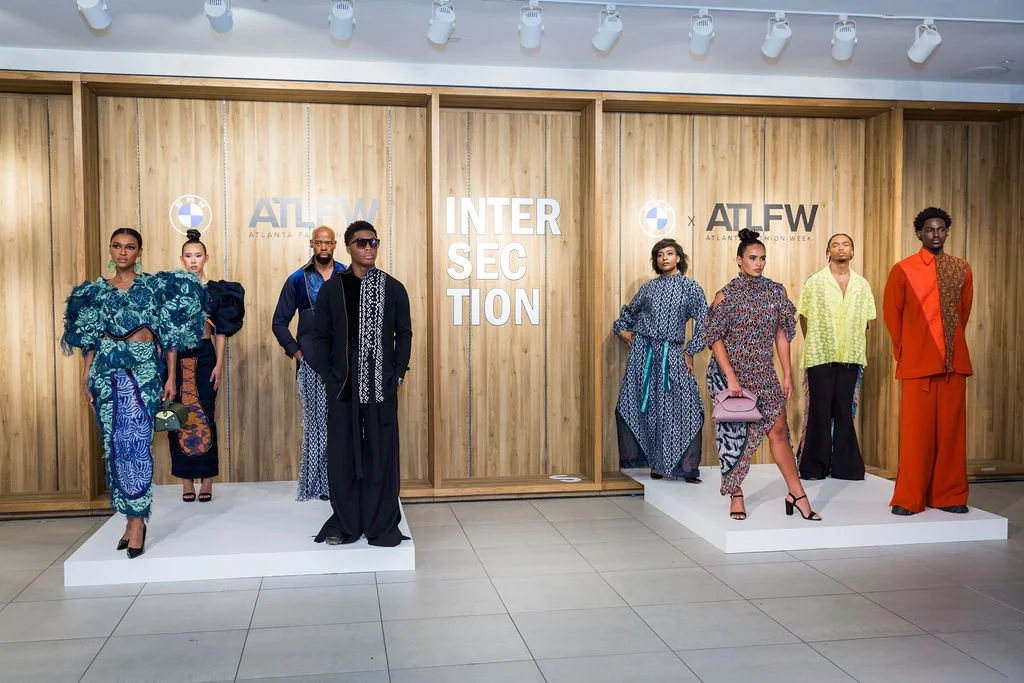
ATLFW has been running shows since January 2006, and is now organized by RAGTRADE Atlanta. The company aims to create a sustainable fashion space in the city, including citywide events for the entire week. ATLFW2026 held informational panels focused on mentorship, a curated shopping experience with Bloomingdales, and even influencer rooftop cocktail hours.
“A cultural melting pot” was repeated over and over again when asking Atlanta creatives to describe their home base, and while it is true that this can be said of many cities, none of them are quite like Atlanta.
The city is full of all different kinds of people, and in the words of Atlanta native and media host, Jasmyne Flowers, it is a city that “has always been ever-evolving.”
The 2026 New Georgia Encyclopedia shows that before Atlanta was the metropolis it is now, it was originally a town founded in the 1830s centered around the southern terminus at the end of the Western & Atlantic Railroad line. Its name then was, fittingly, Terminus.
Rapidly though, the town of Terminus transformed into a booming transportation hub where numerous trainlines intersected, renamed to be Atlanta. Upon the conclusion of the Civil War, growing industrial jobs and the establishment of several premier HBCUs made Atlanta a beacon for newly liberated African Americans as the city continued to grow. Over decades, Auburn Avenue became the beating heart of Black Atlanta business and culture. The neighborhood was also an epicenter for the Civil Rights movement as Martin Luther King Jr. was born on this street, and his center still sits there today.
Despite the thriving city, Urban Displacement Project records the Atlanta gentrification and displacement, experienced by majority Black and Latino neighborhoods. Atlanta is currently ranked fourth among cities in the US where gentrification has eliminated majority-Black areas, but despite this, the Black community still makes up an estimated 46% of Atlanta’s population and continues to find ways to resist the everchanging nature of the city, according to the 2025 U.S. Census.
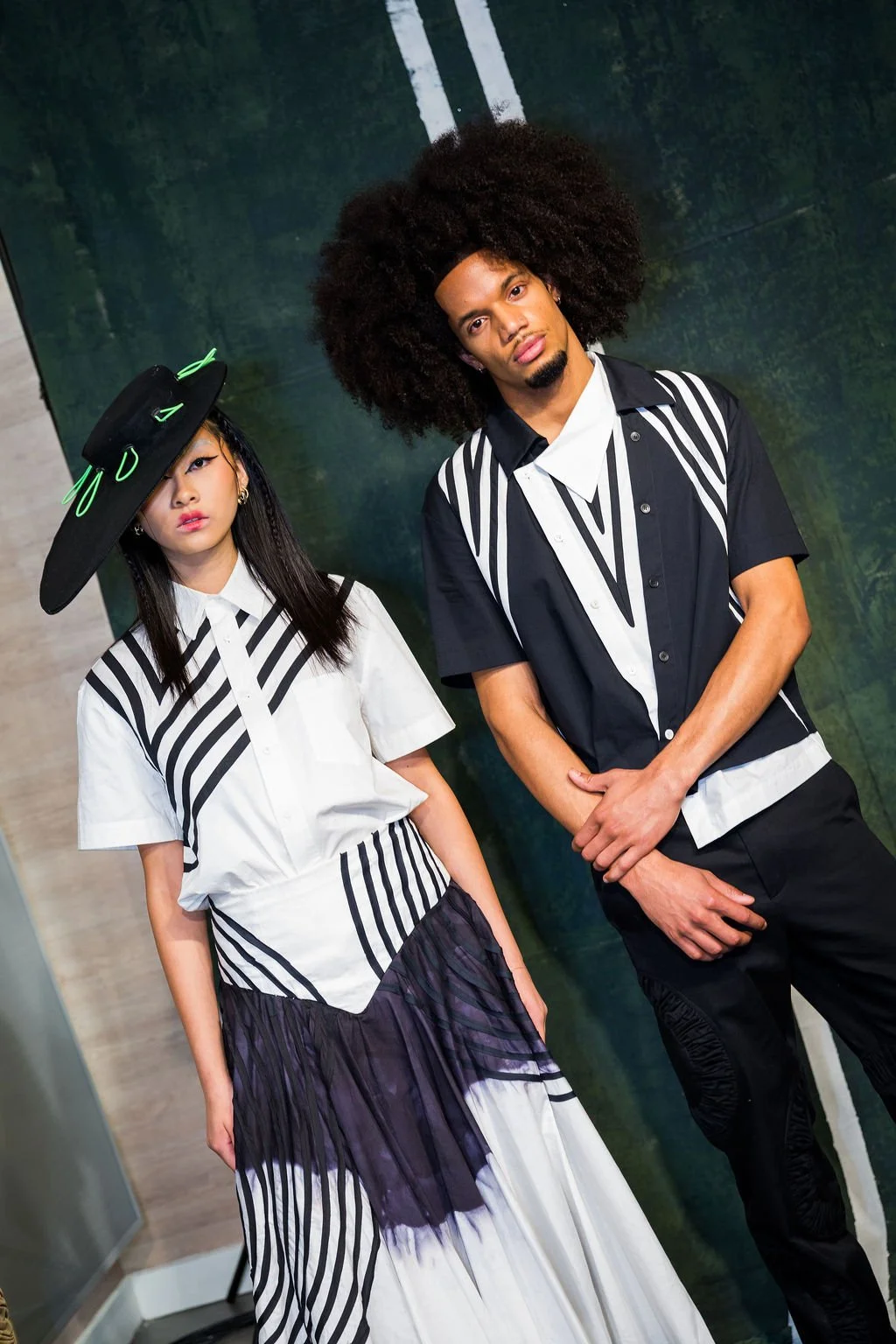
This seems to be especially true for Atlanta’s Black creatives, with brilliant artists such as Flowers and Melissa Mitchell consistently returning to the importance of upholding community, specifically within Atlanta's creative industry.
“All you can really do is stand up for your community…You have to care about your community,”
said Flowers.
Mitchell, wearing the collaborative jacket made between herself and a designer of the evening, Jai Lyle, expands on the diversity of Atlanta’s Black community even within the changing landscape.
“We [have learned to] embrace the changing culture while changing culture,” said Mitchell.
The city’s will to persevere through cultural hardship has had a clear impact on its creative community. As ATLFW26 designer Aakofii says, Atlanta is full of creatives and “we feel good being us…I feel like I can do whatever, be whatever and I appreciate being around that energy, it allows me to be creative.”
This energy she talks about is tangible and infectious, as the city pulls from a multitude of cultures and sources of inspiration, artists can’t help but be drawn to Atlanta––whether they’re born in Atlanta like the Life or Death designer, Smiff, who is working on his first full collection, or just moved to Atlanta to pursue their artistic dreams like creative Keianna Summers.
The best part of Atlanta is that everyone within the arts scene seems to know each other in some capacity, no matter who they are or where they come from. Fostering an environment of community building and support is so important to keeping the culture alive, because, as Aakofii says “If the people that live near you don’t know you, how are you going to go somewhere else and make a name for yourself?” Her collection brought out Atlanta’s defining feature of an open, welcoming, and dedicated sense of community.
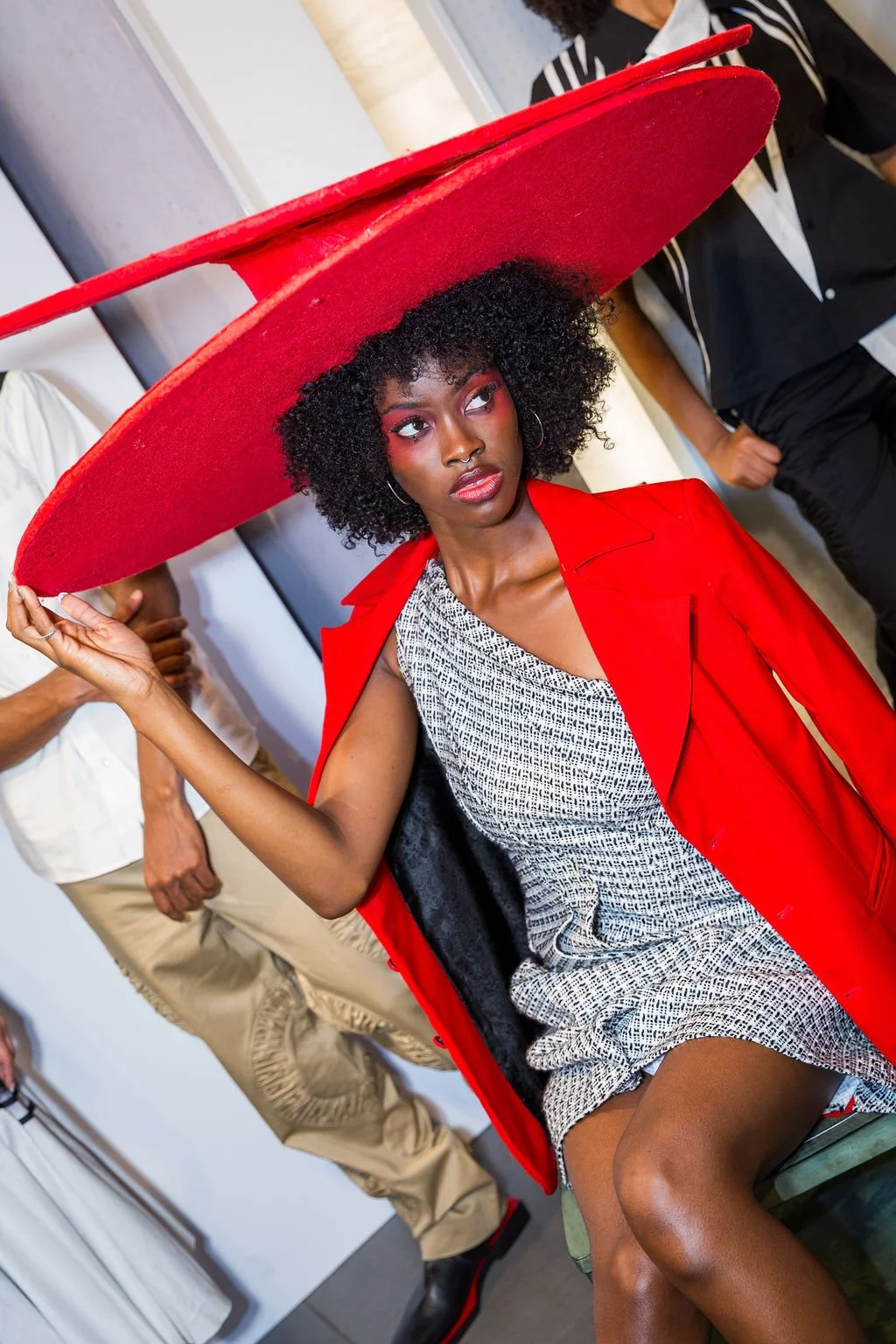
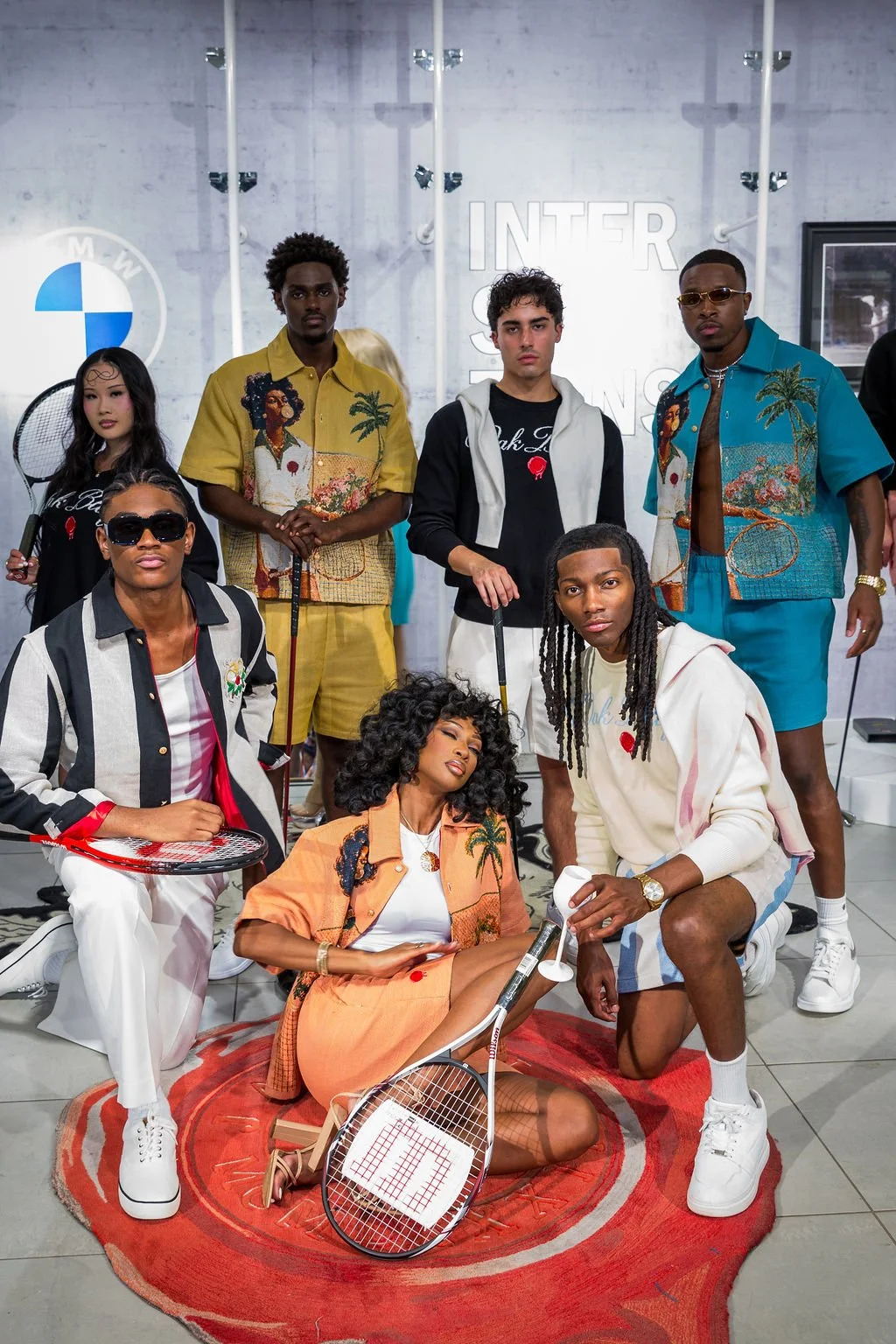
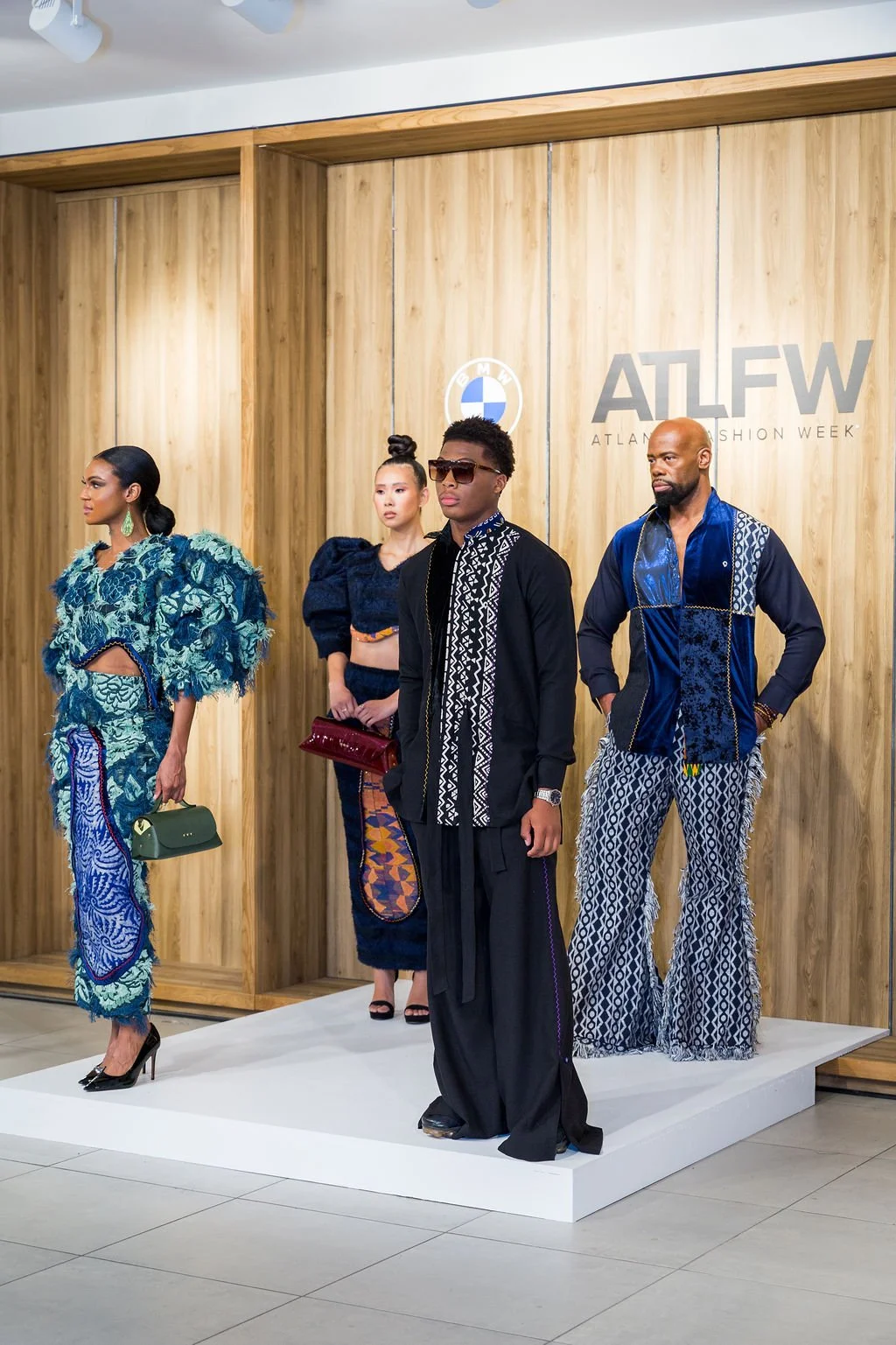
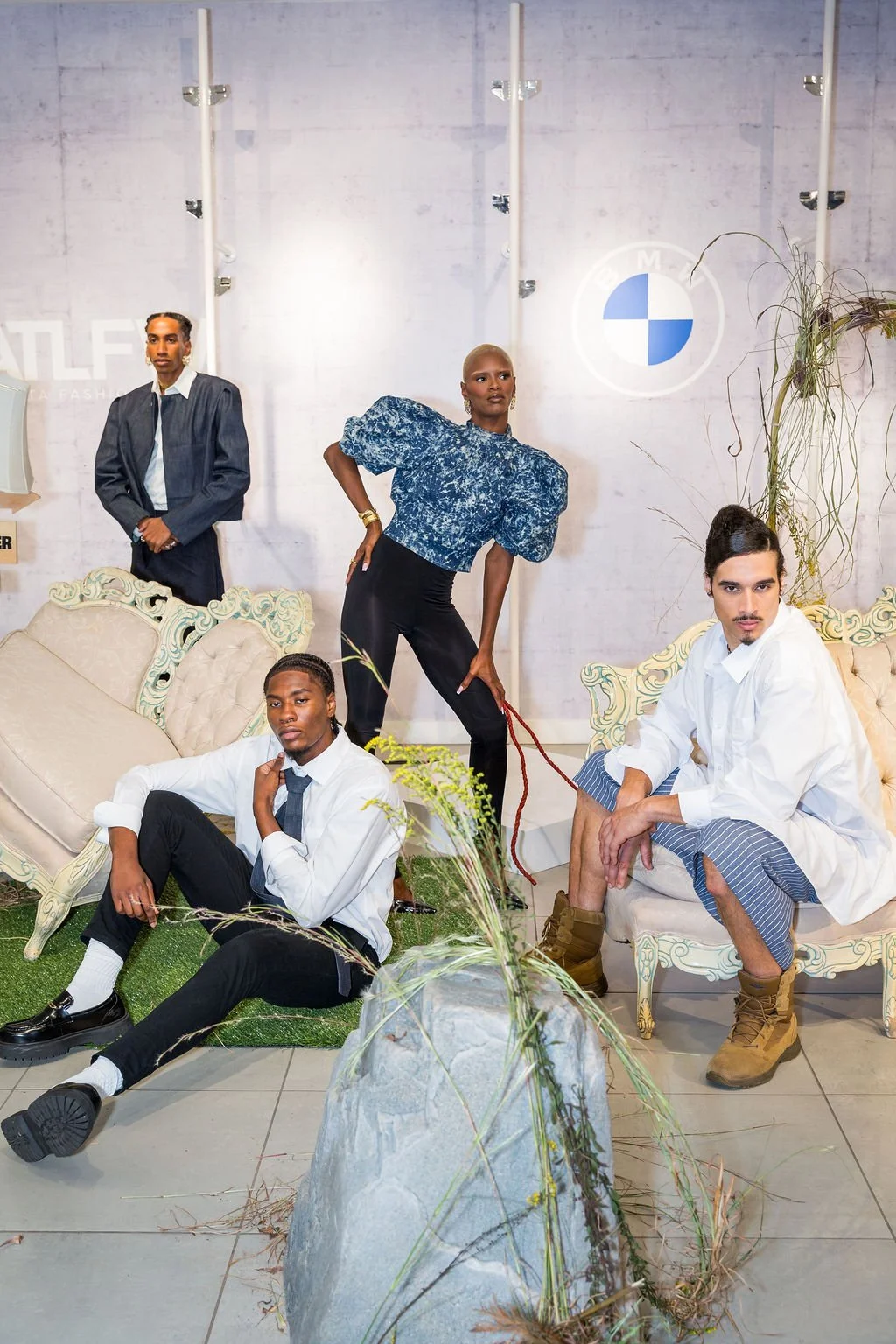
The weekend’s designer showcase was held in the form of Intersections, an interactive exhibition.
Intersections opened the room to the audience beyond the designers, encouraging conversation and heightened reactions. Upon reaching Atlanta’s famous Atlantic Station, the white curtains and deep blue carpet was enough to alert the average attendee that this show was going to be different. Intersections did not just settle for a passive viewing but commanded the attention of its onlookers in the form of an exhibition and no runway at all.
While this nontraditional display might have felt foreign to some, it was absolutely captivating to see the five collections spread throughout the space. There was something eerie about the models standing there making direct eye contact with you. They taunt your uncomfortability, alerting you that despite taking place in a mall, this was not a space you could not simply go shopping – they were the ones sizing the audience up, not the other way around.
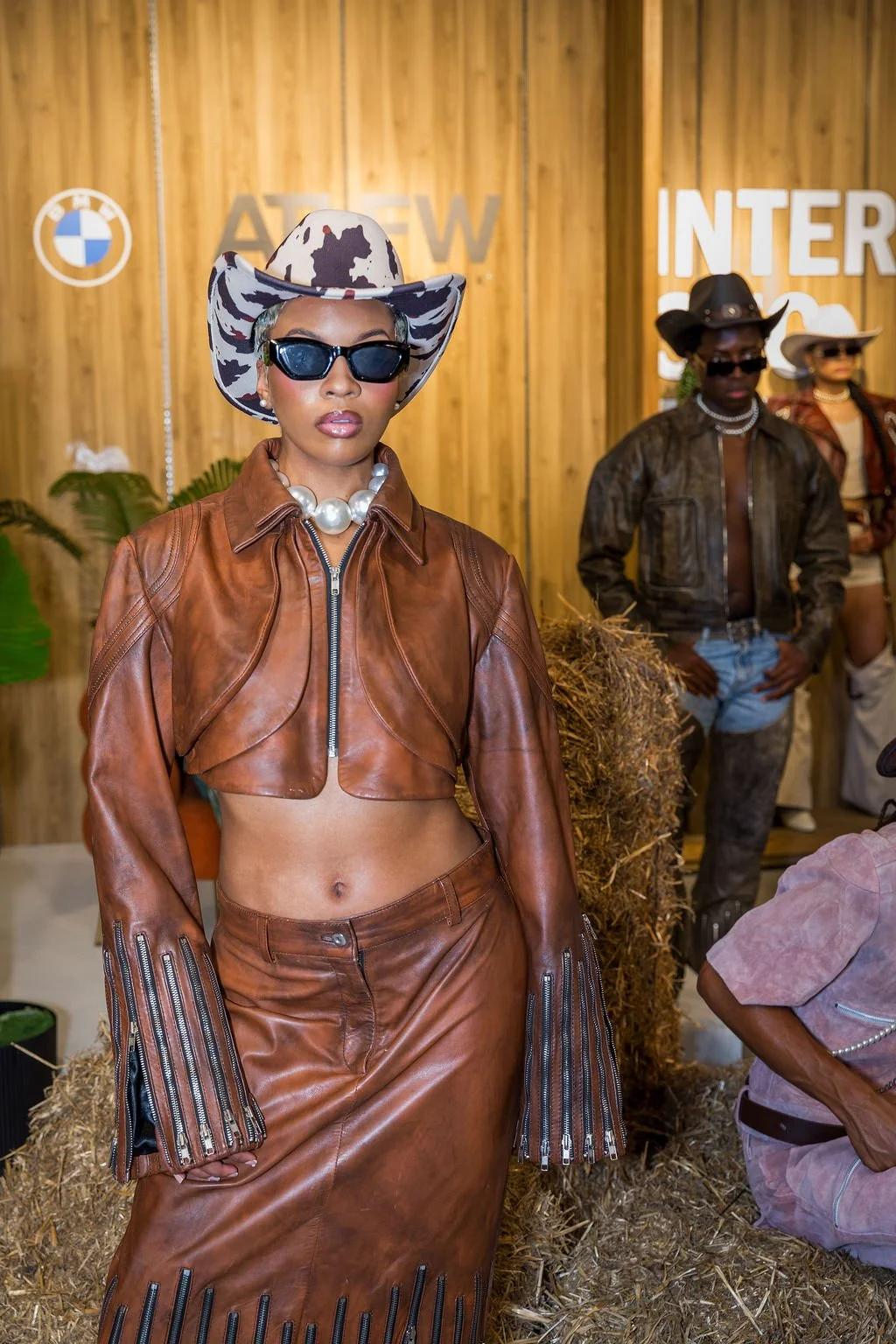
There were five designers featured, each pulling from their own unique inspiration. Timeekah “Murph” Murphy had her Southern Outlaws collection on display as a celebration of her brand Alani Taylor’s ten-year anniversary.
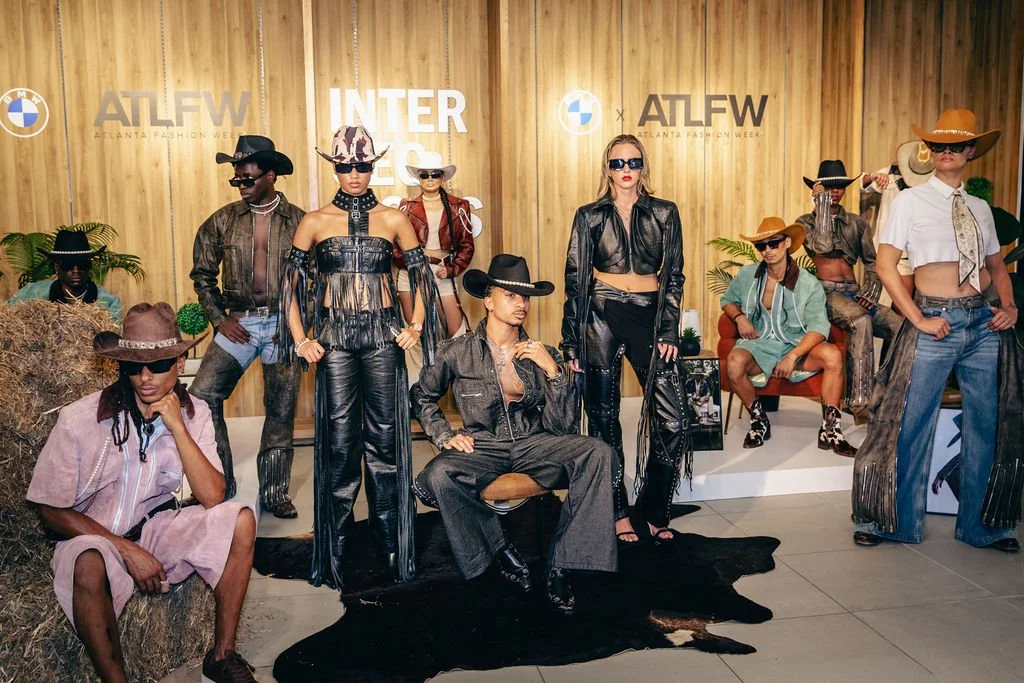
Nearly every model donned a cowboy hat, complete with excellent craftsmanship; wearing pearls draped over zippers, left open to reveal the slightest bit of skin. Murph flitted between conversations with models, restaging pieces, and humbly answering questions from the crowd. She made it plain that her inspiration always comes home to Atlanta, a place where all kinds of people can thrive.
“We are all here for the same thing, all in that one city,” she said. “You gotta find yourself.”
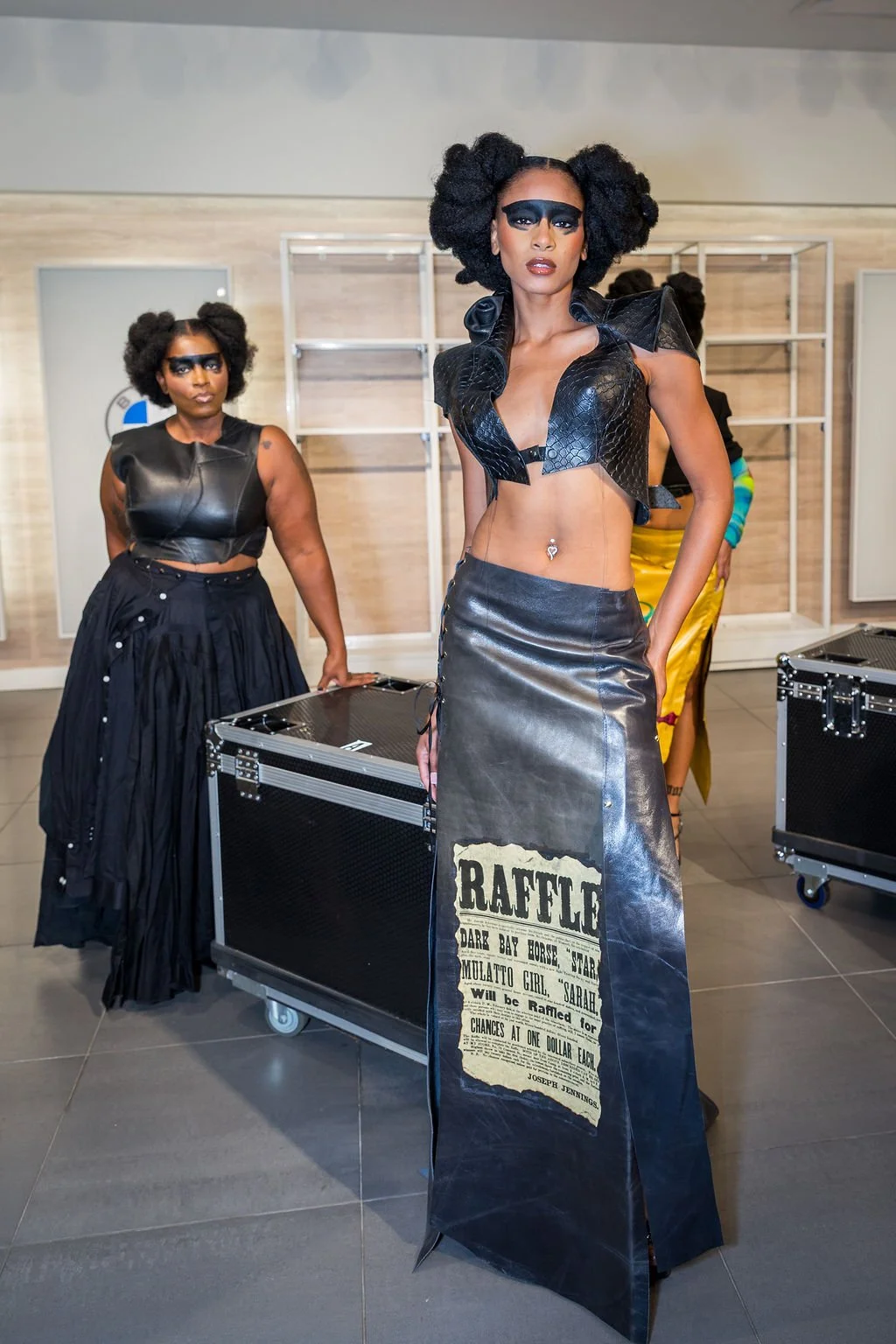
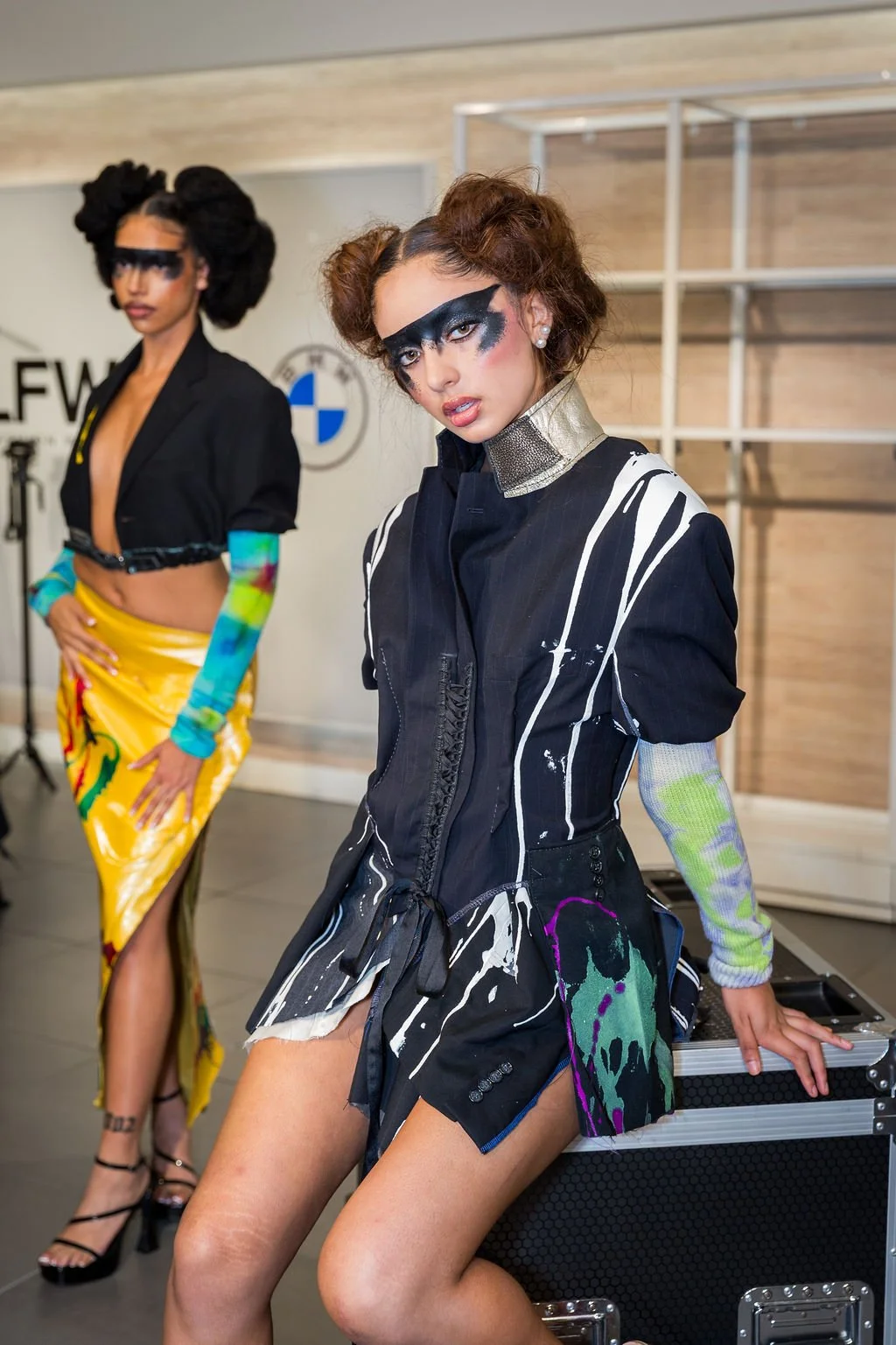
Designer Aakofii agreed that Atlanta is a place where artists are able to flourish from the infectious energy alone. It is “the energy here, I don’t feel racism, I don’t feel sexism.” A different feel than Murph’s luxury outlaws, Her models stand in one-of-a-kind upcycled pieces, combining the new and old through the inclusion of slave auction advertisements and the incorporation of works made by her daughter. The models peer into the souls of their viewers, cohesive with black war-paint across their eyes despite the exhibition being made up of individual looks. Community and empowerment is at the forefront of her mind when it comes to her designs, as well as in her approach when speaking with us.
In fact, none of the designers blinked an eye when requested to be interviewed, despite the small quarters of the room, ongoing chaos, and rush for time. Everybody was happy to talk to us, nobody was too busy or self-important to spare us a little time.
Atlanta is the city that relishes in opportunity. Even at SOUND CHECK: The Atlanta Fashion Week Edit, a cocktail night and kickoff to ATLFW26, Atlanta creatives were encouraged to meet and connect with each other, they took time out of their networking for us.
Regardless of any external factors, every designer, influencer, and executive was eager to speak to us about how much they loved this city, its people, and its fashion. We love it too.
All photos courtesy of Shannel Resto | @s.j.photography.