We Are Self Through Other
The lukewarm water swallows the end of my fingertip. Hugging it, familiarizing itself with this new object [me], and ultimately, being changed by it. On the surface, spirals ripple across the waves from my hand, new patterns of liquid movement building and interacting; the external to its internal.
As I looked down to my hand, droplets beading off of my pointer, my fingerprint glistening in the sun, I couldn’t help but think, maybe we all work this way too. After all, everything is interconnected.

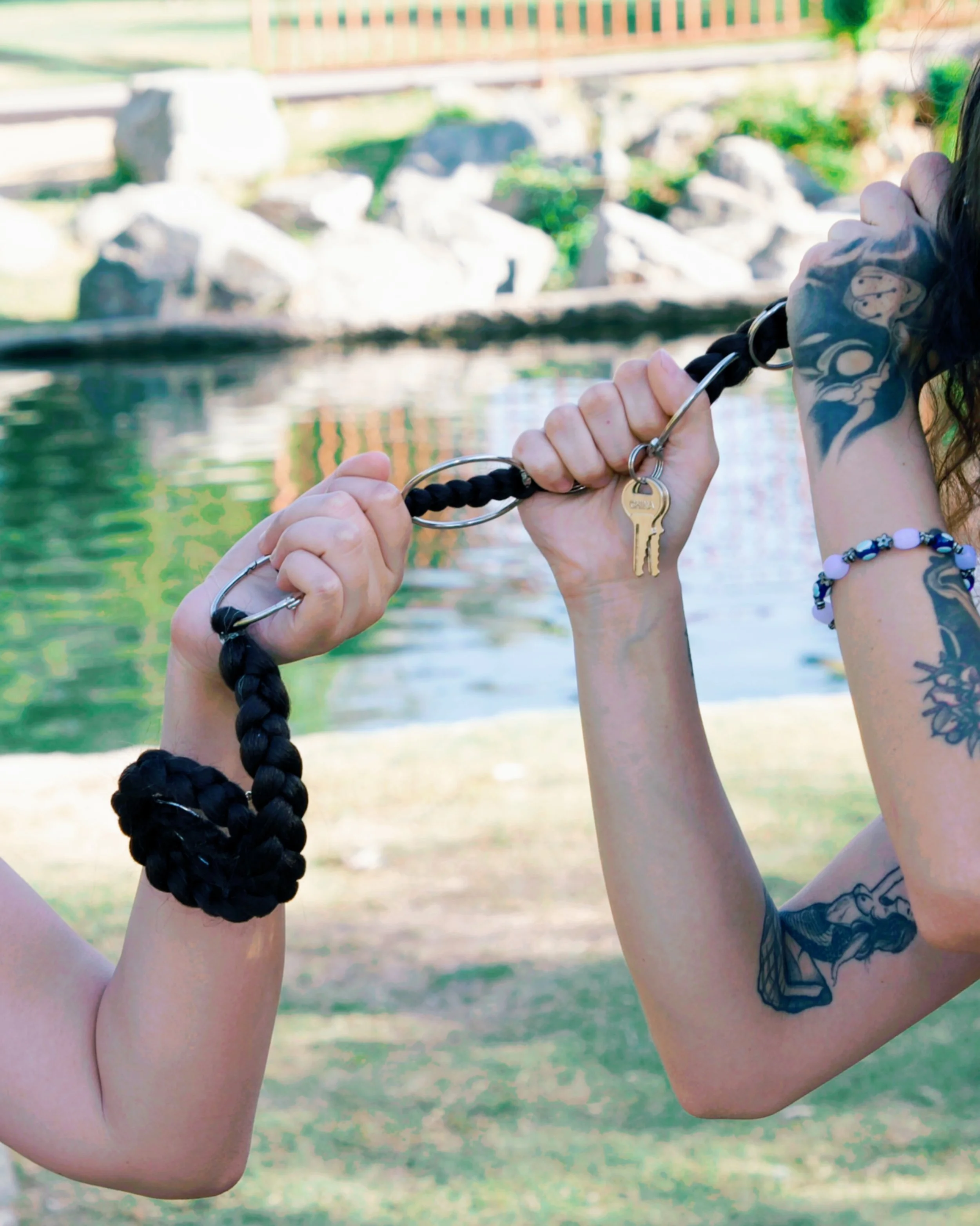
When we think of our mind, and implicitly, our cognition, we tend to think within the confines of the pinky mushy bundle of nerves sitting within our skull. Inner dialogues and thoughts start and end within us. Inspiration fosters creativity internally before displaying it for the external world.
But, what if thinking doesn’t stop at the body?
In 1998, Andy Clark and David Chalmers built a philosophical theory that external objects within our environment are actually extensions of the mind, expanding and aiding our cognitive processes. This is called the Extended Mind Thesis.
Examples that fit within the parameters of Clark and Chalmer’s EMT include diaries or notebooks, and personal computers; items functioning to some extent in the same purpose as our internal processes.
Hilton F Japyassú and Kevin N Laland actually studied similar notions within spiders.Their research on extended spider cognition suggests that a spider's web functions as more than a trap. It operates as part of the spider's cognitive system. The web stores information about prey, damage, and environmental conditions, allowing the spider to outsource aspects of perception and decision-making. The spider doesn't simply use the web. It thinks through it.
And although we don’t spin silk webs, we do archive our ephemera through photographs, journals, and dare I say, through clothing.
Perhaps garments function less like finished products and more like our tangible version of webs—physical manifestations of thought that continue long after they leave the designer's hands. Clothing stores information; information from the people we love, the environments we grew up in, and the way we choose to see the world.
The self extends beyond our physical manifestations.
We are self through other. Fashion shows us both, whether it means to or not.
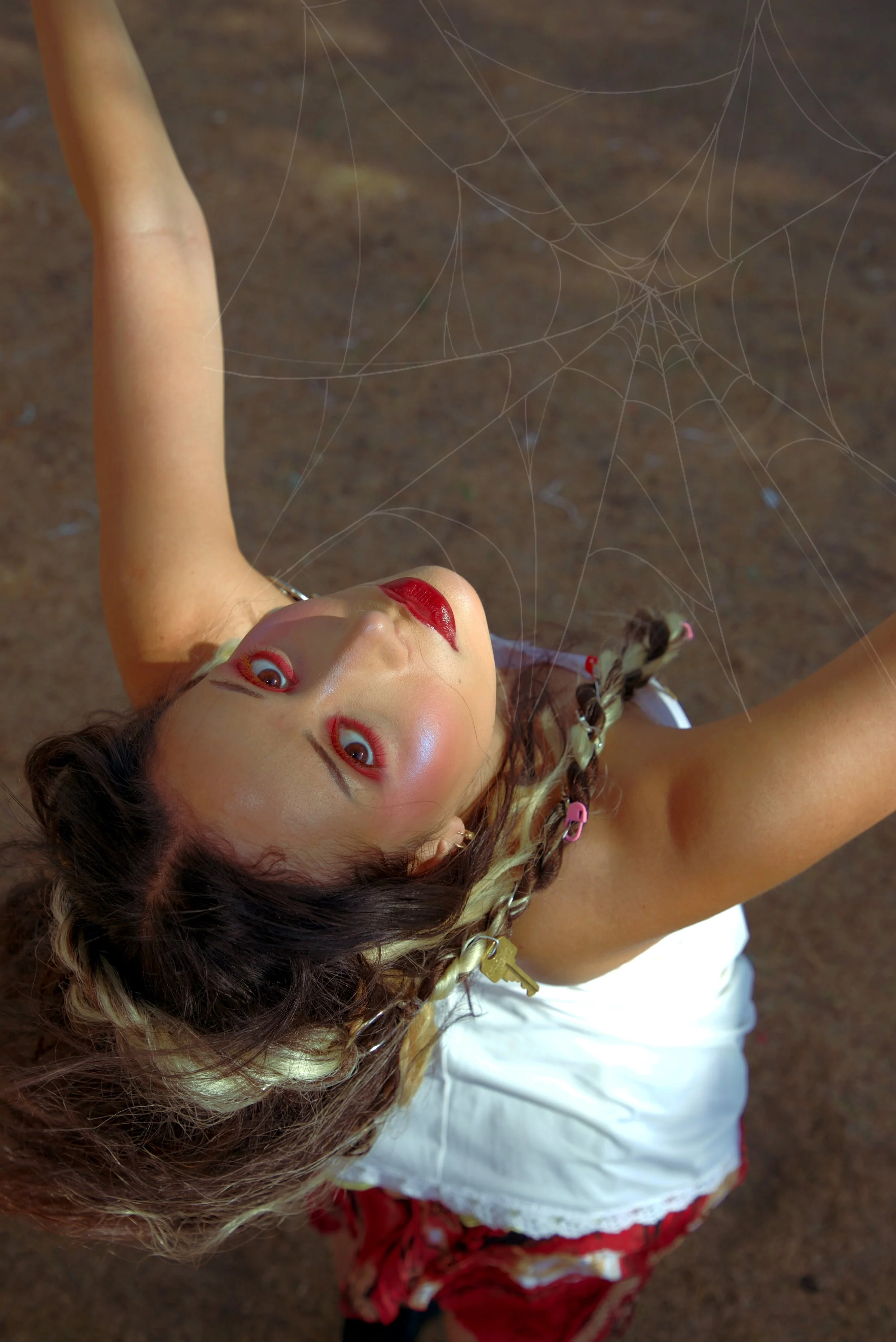
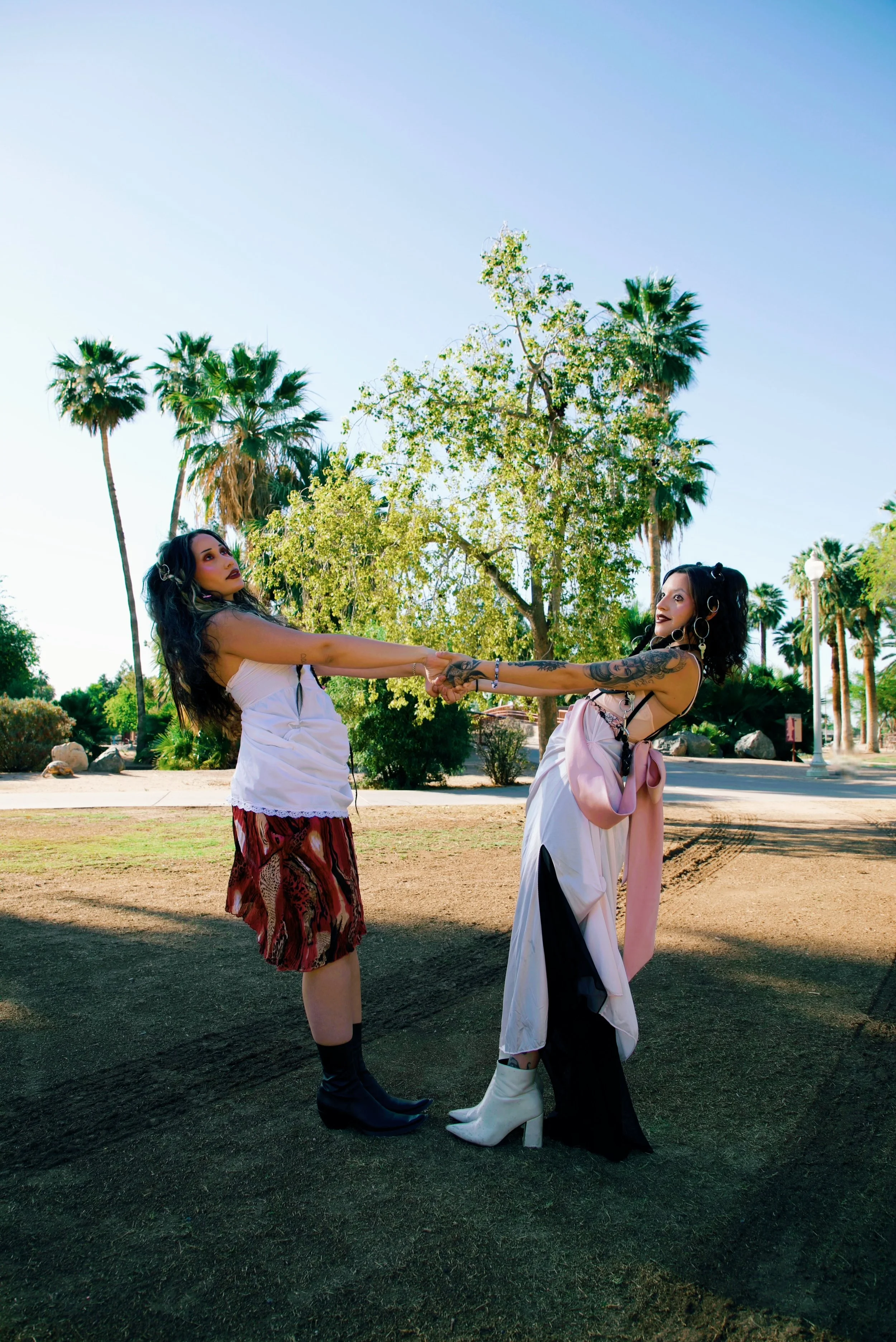
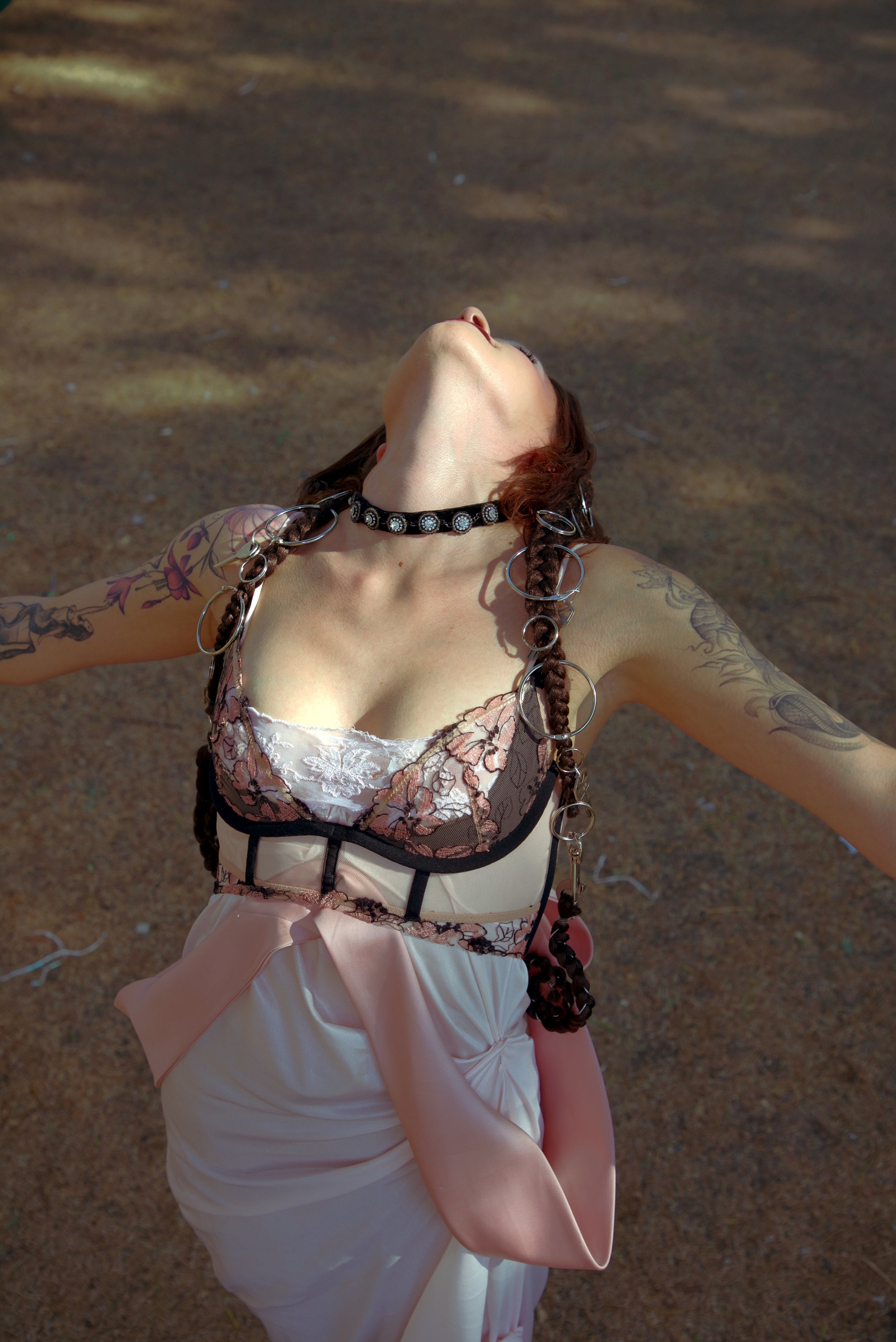
Ruby Garland Gold of Orchard NYC, has previously described her garments as “collage onto clothing” including sentimental poetry and symbolism such as spirals, bleeding hearts, and more. Essentially, it is textile acting as diary, acting as cognition for Gold, then impacting and rippling outward to consumers.
The way the brain splays out through textiles is fascinating. From Duran Lantik’s haute couture debut for Jean Paul Gaultier –– stemming from Marie Antoinette, Gaultier himself and his collaborative pieces with Régine Chopinot – to Robert Wun’s FW26 interpretation of childhood stories and experiences. Wun specifically shows us this profoundly; memories of his own personal childhood, fairytale characters and the feelings of adolescence are stored in his collection, taking on a life of its own.
Similarly, in a small poll conducted via social media, 100% of emerging designer respondents noted that their designs feel like an extension of themselves.
Iris Van Herpen –yes, the one who just used plasma and 30,000 glass tubes in her FW26 collection – describes her relationship to the design work, emphasizing the intermingling between object and mind, process and thought.
“It’s beautiful to see how materials can evolve, how they can transform and how you can shape an identity with those materials. The body is always my canvas and starting point but the real magic in couture is the process of creation. It’s beautiful how different people with different skills collaborate,” Herpen told Monocle Magazine. “It’s like a choreography of craft, a dance with the materials. Sometimes you’re controlling the material, sometimes it’s the other way around. The longer I do this, the more understanding I get from the materials and I want to share that knowledge with a wider audience.”
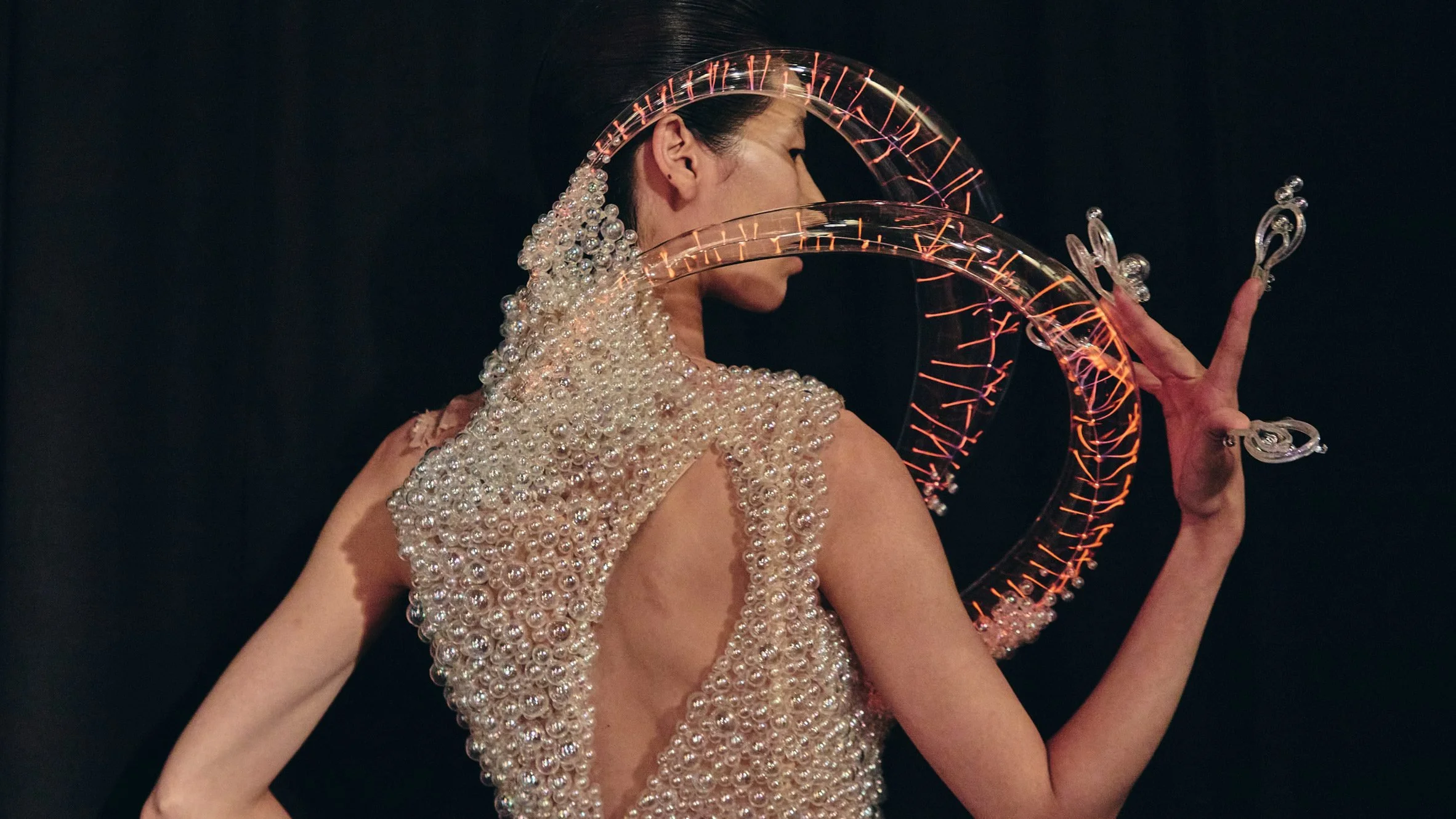
She was inspired by the materials used of course, but also by the fern-like patterns found in root systems, river deltas, and even the human circulatory system. Herpen’s explanation of the collection accentuates the notion that her work holds her thoughts and learnings outside of herself.
“The collection is really about all those forces that are influencing us in daily life, but that we don’t know so much about, and that we cannot influence,” she mused. “The more I explore through science, the more I realize how little we know. It’s humbling.”
The way the clothing interacts with the designer is one thing. But the story continues to unfold as it reaches the wearer.
Psychologists use the term ‘enclothed cognition’ to describe the way what someone wears (or the symbolism behind a garment) can influence how they think, feel, and behave.
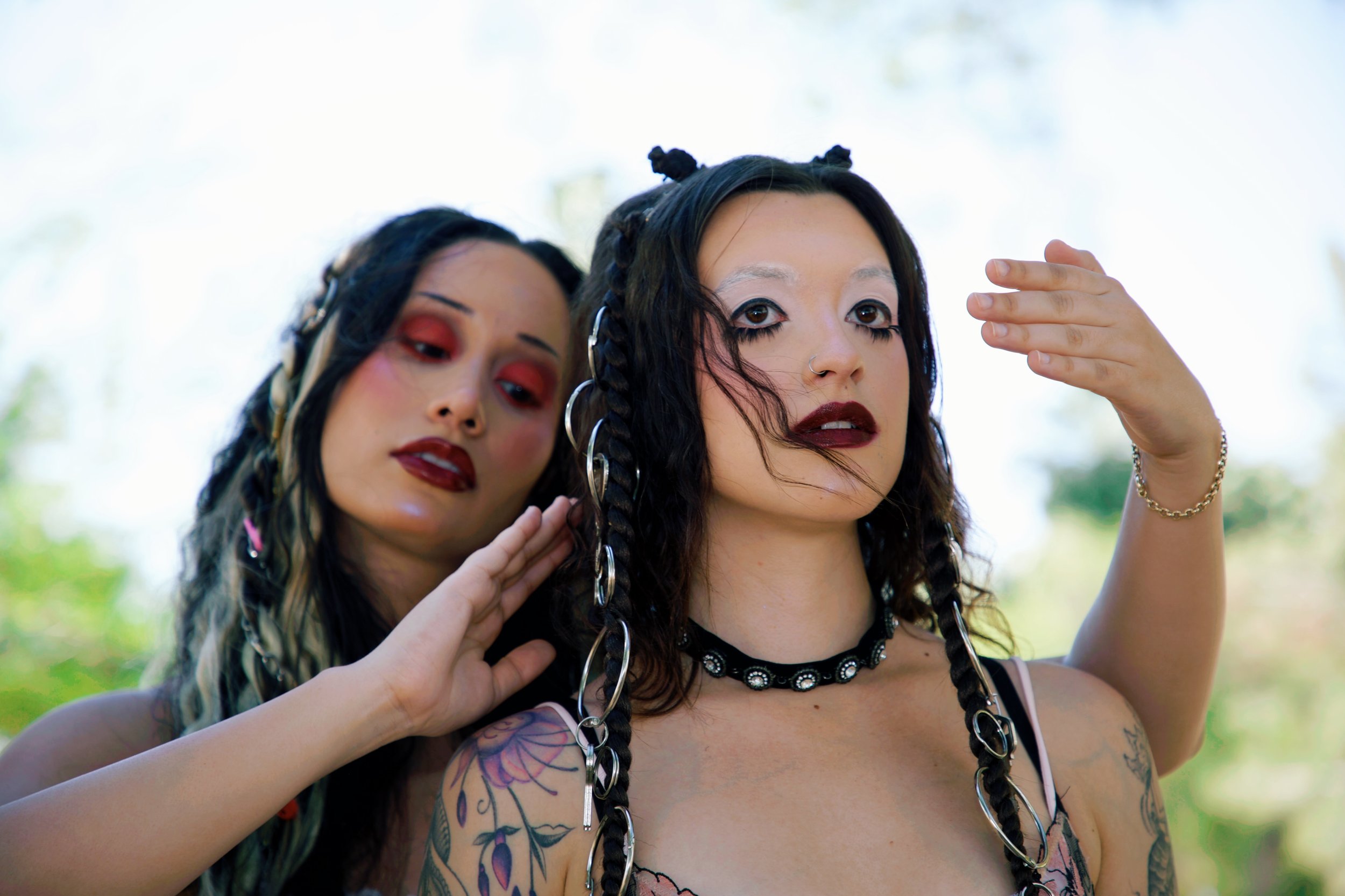
Fashion works in a never-ending cycle. No, not the fast–fashion, trends kind of cycle.
A designer absorbs the world around them, those experiences become a cognitive symptom in the form of clothing, someone wears that clothing, and the garments influence how they think, feel, and act. Which can then in turn, affect the environment, which affects the next creator’s work and cognition, so on and so forth.
As Paola D’Elia said for In Mind, “Fashion reflects both the intimate self (how we feel internally) and the public image (how we present ourselves to others).”
Viktor and Rolf’s Fall 2026 Couture collection, “Gilded Age 2.0” is a perfect example of all of this.
Models Nathalie Haerlemans and Elpida Voryas Georgiadi mirrored each other’s movements on a bedroom-like stage, viewers onlooking as they reached into drawers and closets to dress and undress.
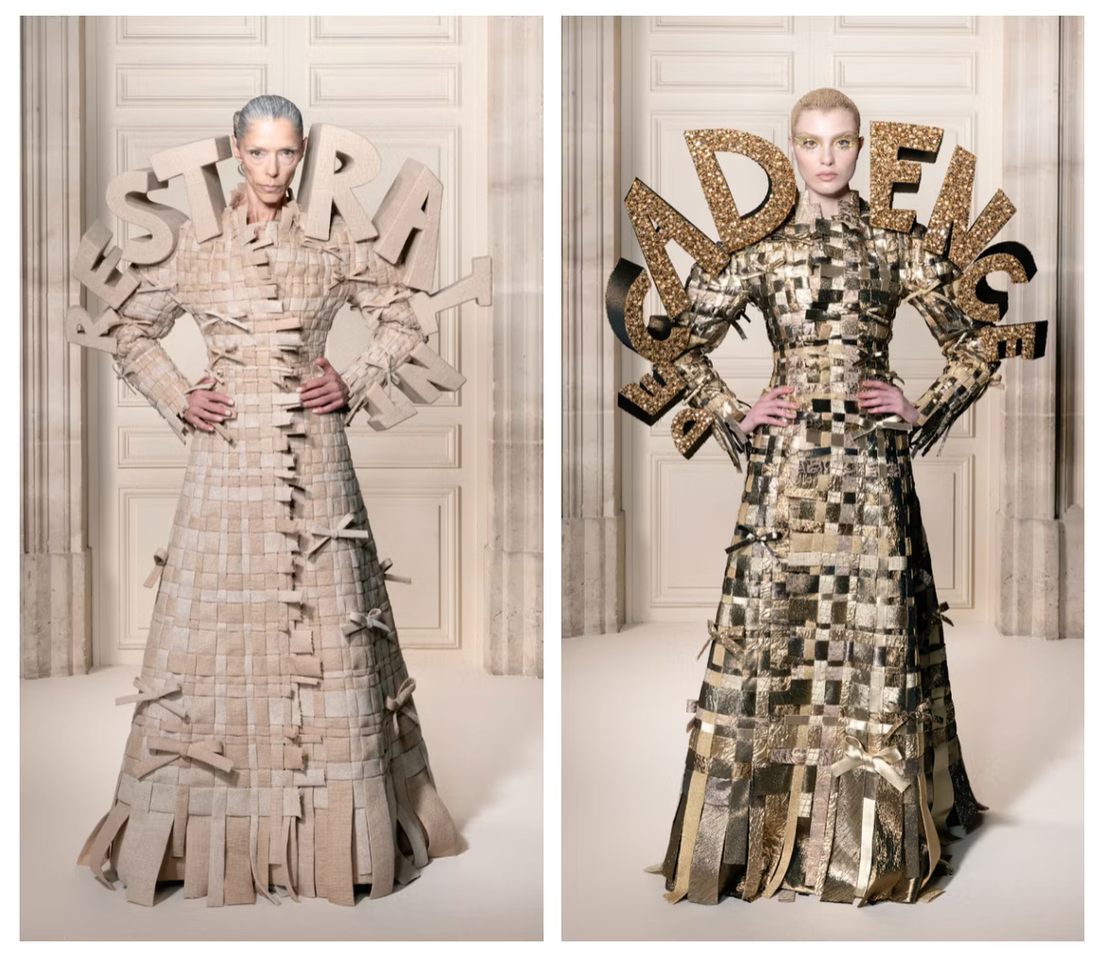
Each look was paralleled to its counterpart, except that Voryas Georgiadi’s looks were made of gold fabrics, sequins and lavish embellishments. Haerlemans’ ensembles were made from a pared-down burlap material, according to WWD. The final looks included synonymous technique and silhouettes, but with the words “Restraint” and “decadence” across the length of the arms. It was likely also intentional that the burlap-adorned model was older with graying hair, while the glittering subject was much younger.
The Dutch design duo took what they understand to be our current world of social media comparisons and ostentatious, dopamine-based decisions, and blatantly mirrored it back to us. Based on the world they’ve built, they show us their experience and perspective that the wearers are out of balance between restraint and decadence. The garments and performance symbolize class, social currency, and ageism.
The oxymoron of a cheap burlap material turned into couture elegance is that dressing for yourself seems dull in our modern era, whereas performance is peak, (albeit becomes an obvious beg for approval). Every outfit is a decision for both the wearer and the creator, and these garments are the designer’s thoughts that keep on giving.
In the end, this philosophy isn’t for everyone and is up to interpretation. If you’re the Artist’s Way type, perhaps you view your artform and physical manifestations as a vessel for some higher power’s work. It’s not an extension of your cognition because it’s not coming from your cognition at all.
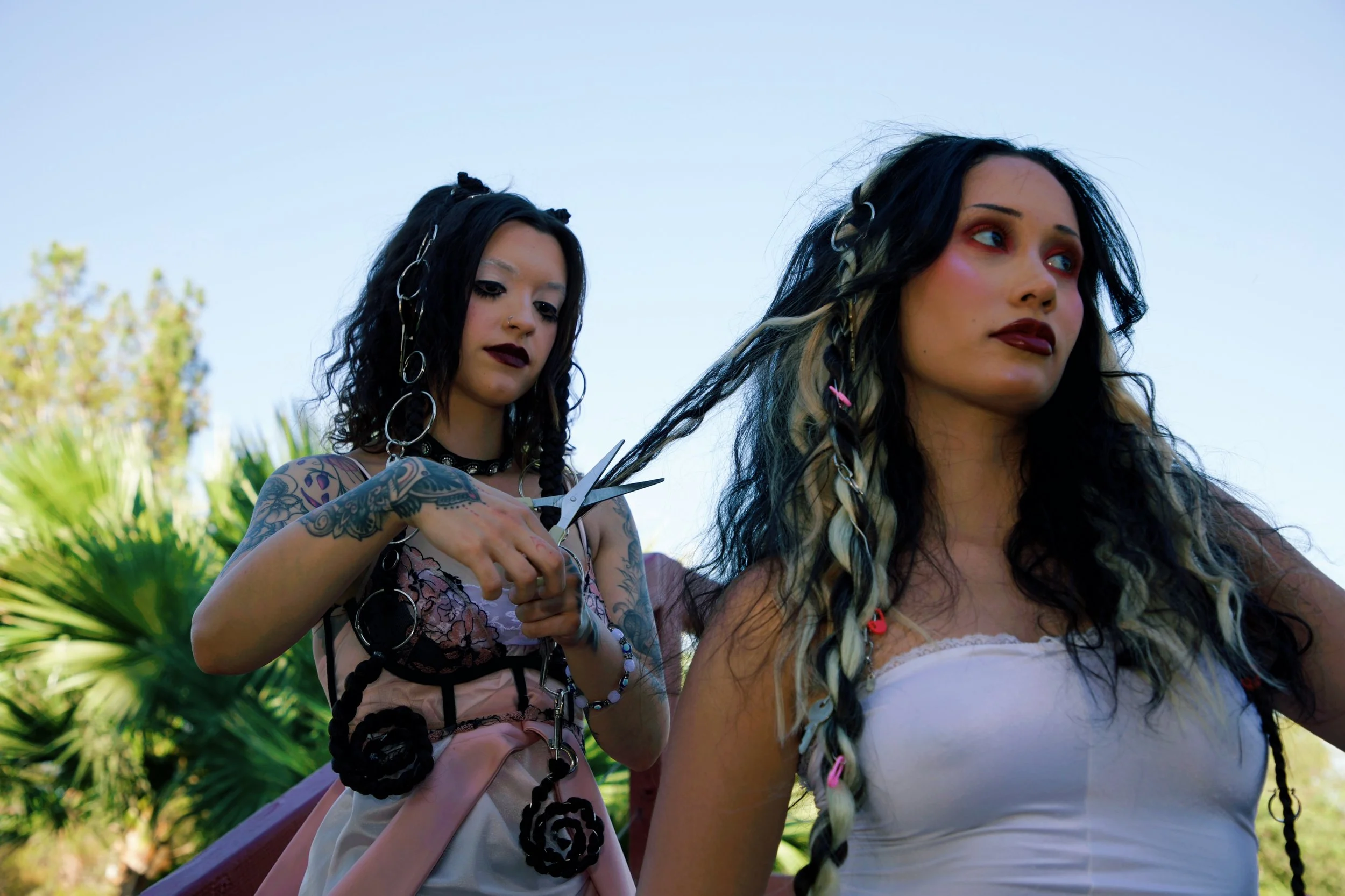
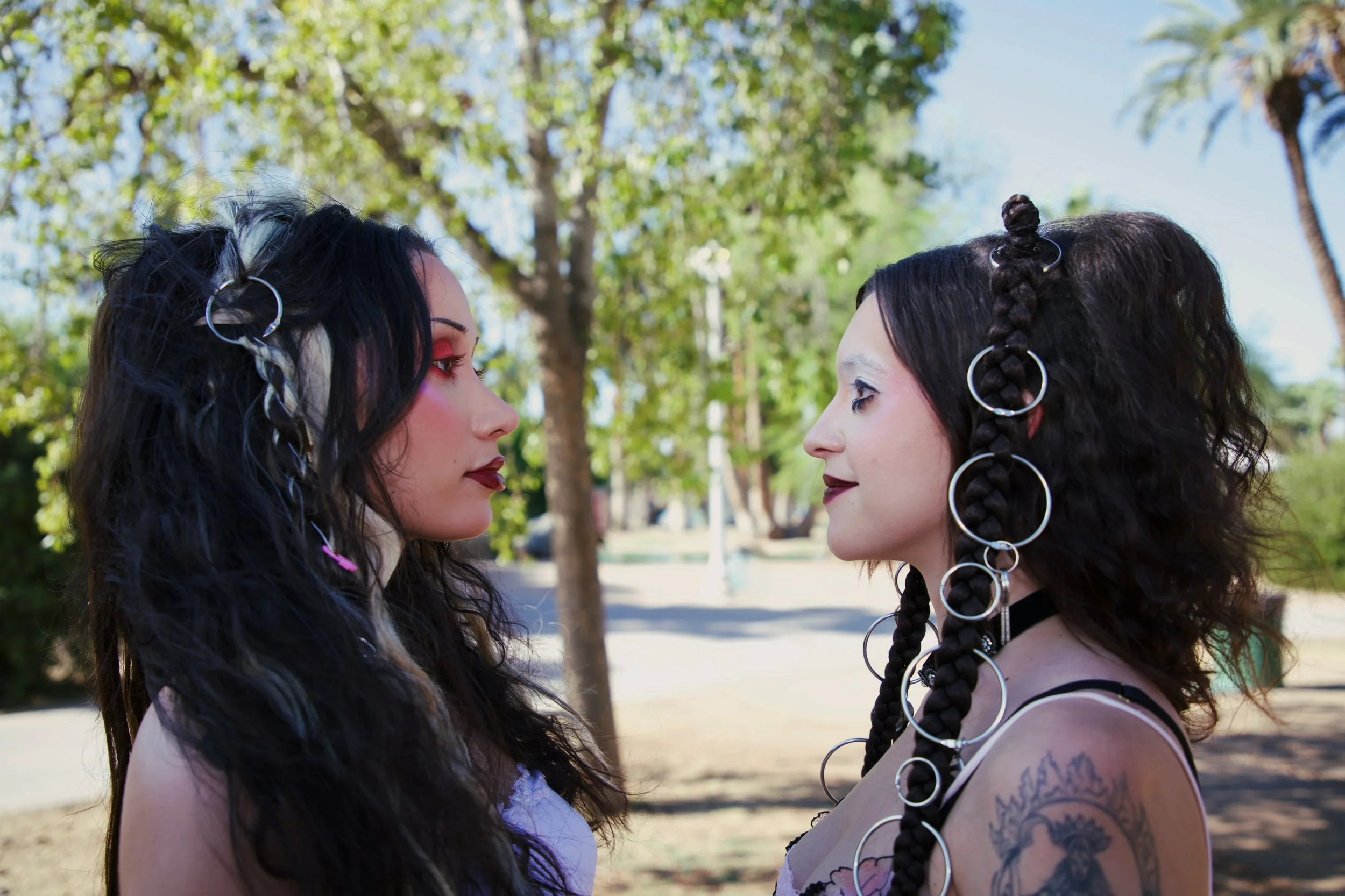

But, if you do choose to believe in the extended mind thesis, there is an endless amount of environmental object––digital and physical–– to be palatable, to paint (or taint) our minds' cognitive landscape. Our minds extend into photographs, phones, sketchbooks, conversations, neighborhoods, lovers, archives, and wardrobes.
If we are self through other, which I wholeheartedly believe, find people in your life that allow you to discover, play, experiment, poke, prod with more curiosity and connection, less critique. Dare I say, get more cognitive. Leave the fashion critiques to us.
Editorial Credits
Photography: Logan O’Neill
Production: Jam
Creative Direction/Photo Editor: Alexia Christe
Hair: Vincent Rodriguez
Makeup: Nikki
Styling: Olivia Madrid