
AI vs Humanity in Fashion — & the Way Forward
Fashion is a deeply personal experience and practice — it inherently relies on a uniquely human touch. However, due to the rapid rise of AI, fashion, like many creative industries, is finding it’s not immune to AI’s influence.
People are implementing AI into more areas of their lives — personal, romantic, sexual, creative, and more. In a 2025 Vogue article, writer Brianna Holt details multiple people’s experiences with using AI models like ChatGPT as romantic partners, therapists, friends, and more: “As AI becomes more sophisticated and accessible, the temptation to outsource emotional labor grows — but true healing and relational maturity still require the messiness of human interaction.”
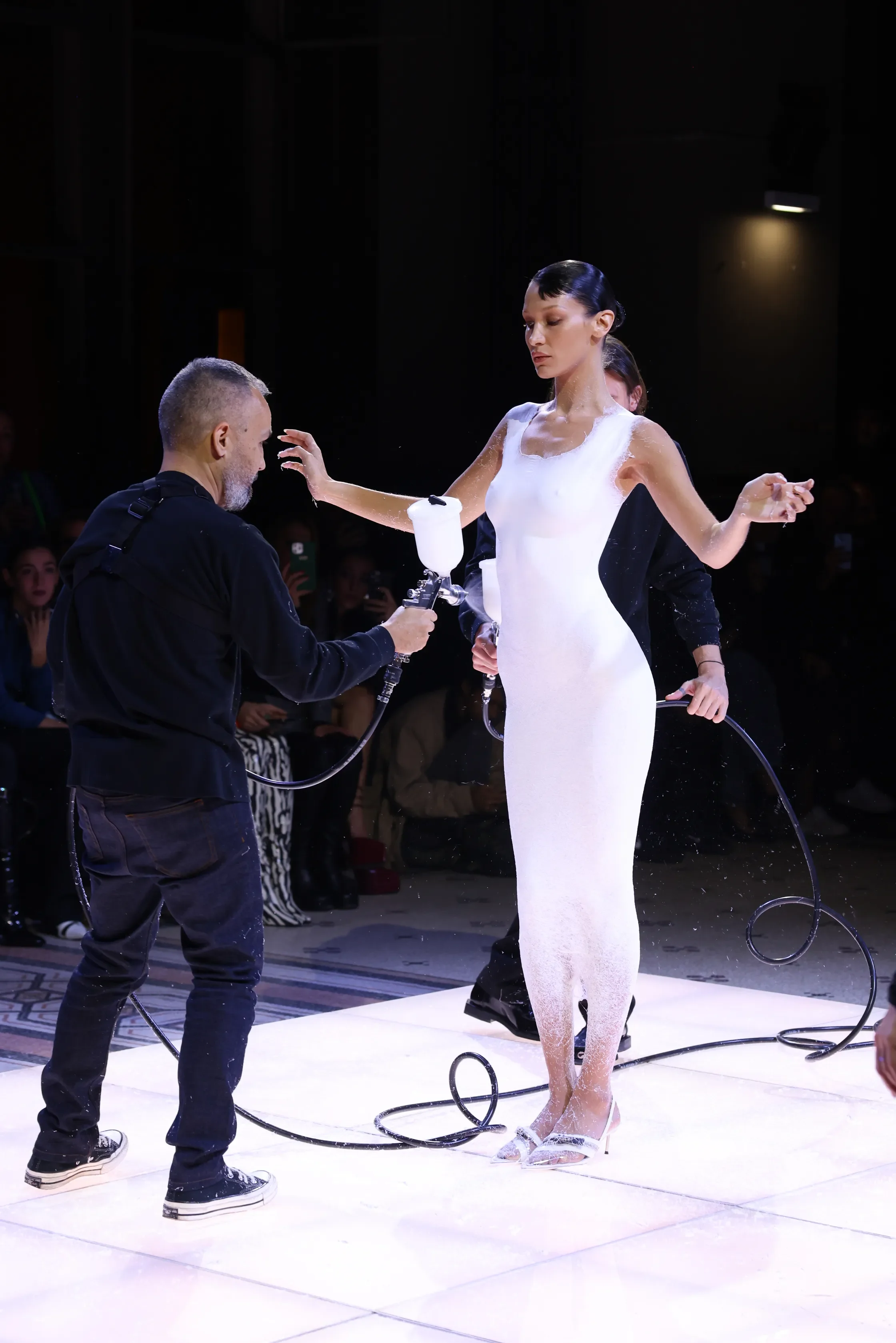
Bella Hadid for Coperni Spring 2023, photo by Pierre Suu, courtesy of Getty Images
In terms of creativity, supporters and users of AI in fashion and creative fields argue that AI expedites the creative process, helping them to generate new ideas.
But where does the desire to expedite the creative process come from? A capitalist system and culture values quantity over quality — the more you can create, the more revenue you can generate, rinse and repeat.
Similarly, productivity is viewed through a binary lens — resting and taking care of oneself is not productive, but burning the midnight oil and constantly having output is productive. With those standards ingrained into a culture, AI can seem like the next best thing.
The fashion industry as it stands today is another branch of an ultra-capitalist system, not a separate entity. It is notorious for fostering a culture of overworking and unsafe work environments and practices at every level — from prestigious creative directors and CEOs to sweatshop laborers and students, this industry promotes a toxic and unhealthy attitude towards work. When audiences and investors are demanding consistent and constant output, a quick AI rendering can seem inconsequential, even the next best thing.
But is it really the next best thing for the fashion industry? Part of what makes fashion so intoxicatingly wonderful is its human touch — and the same can be said for any artistic practice. Humanity brings nuance, experience, interest, and yes, imperfections. But those imperfections should be embraced, not traded in for AI-generated mistakes.
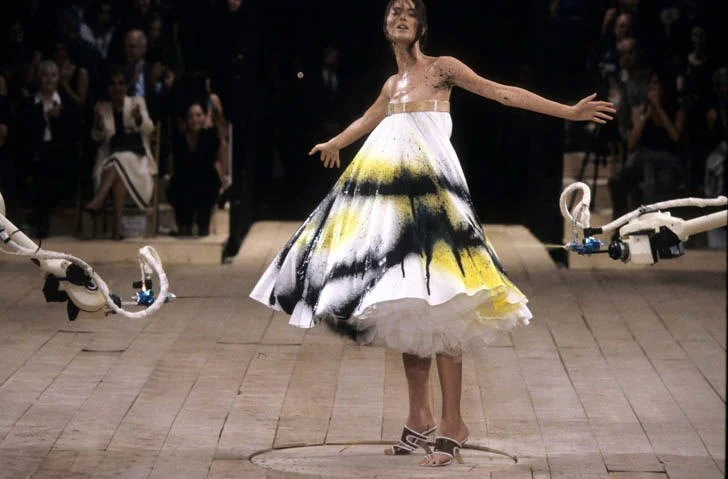
Shalom Harlow for Alexander McQueen Spring 1999, photo courtesy of Alexander McQueen
And sloppy mistakes are just the tip of the iceberg for the chaos and destruction AI causes. Both users and supporters of AI are quick to declare that it is “Revolutionizing the fashion industry” in terms of productivity, creativity, sustainability, and overall output. But in reality, those claims are more subjective than objective.
Take sustainability, for example. The fashion industry has a notorious impact on climate change, with the U.N. predicting that “emissions from textile manufacturing alone are projected to skyrocket by 60% by 2030.” Anything that can stop or significantly slow down fashion’s carbon footprint would be a net positive, but AI’s sustainability efforts are simply unhelpful.
A Vogue article by Iman Zahid Hafeez states that “AI’s involvement can greatly accelerate progress in helping fashion retailers reduce unnecessary waste, water usage in production, pollution, and carbon emissions by measuring key environmental metrics during garment production.” While this is true, the strategic use of AI can provide helpful insights, the data centers required to make AI function significantly outweigh the benefits.
An AI data center is a facility designed to house and operate the training required for generating AI output. According to a Smithsonian by Amber X. Chen, “On average, hyperscale data centers are 30,000 square feet, although the largest of these data centers can reach sizes of well over one million square feet. As of 2024, more than half of the world’s hyperscale data centers were owned by tech giants Amazon, Microsoft and Google.”
Miguel Yañez-Barnuevo writes for the Environmental and Energy Study Institute, “A medium-sized data center can consume up to roughly 110 million gallons of water per year for cooling purposes, equivalent to the annual water usage of approximately 1,000 households.” Just as using AI is not an inconsequential act, fashion is not a trivial industry. These two forces cannot continue as they are, or they will harm the environment and people’s lives exponentially more.
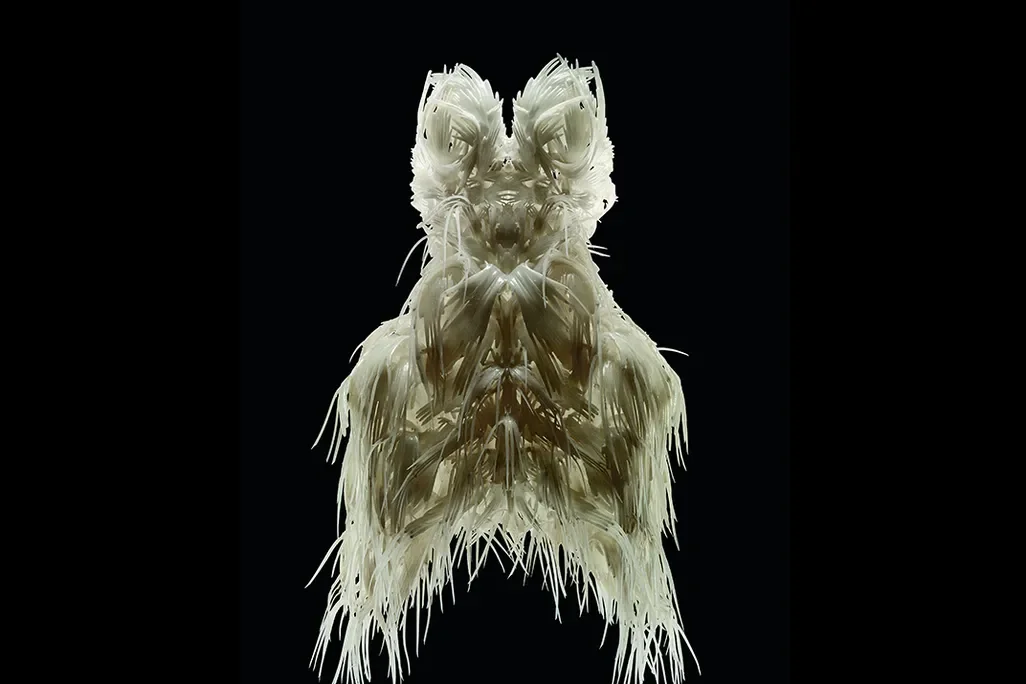
“Kinetic Dress” by Iris Van Herpen, photo by Bart Oomes, courtesy of Iris Van Herpen
Fashion, as a force, practice, and industry, has responsibilities to both the Earth and humanity. It is time for everyone to reject AI and its detrimental effects, including the fashion world. Fashion relies on human connection and human connection includes mess and imperfections. Rather than run away from human faults, the industry needs to embrace them and work with them, not against. AI is not the future of fashion, people are.