Why Bridal Fashion Week?
Superstition is something we all succumb to in some form. I pick up pennies every time they’re ‘heads up’ for good luck. I’ve even layered on to the superstition by flipping a penny to ‘heads’ for someone else if I see one on the ‘tails’ side. We all need a little luck sometimes.
For others, the “Something old, something new, something borrowed, and something blue” saying is as important to the wedding day as the marriage certificate. A rhyme that started as far back as 1871 in English folklore, also once included the ending line of, “a silver sixpence in her shoe” referencing a common good luck ritual of putting a coin in the bride's left shoe.
From superstitions, to the white wedding dress phenomenon, brides have a lot to consider to make their big day as memorable as possible. And that’s just the ensemble.
On top of picking the traditions and dress, comes, of course, decision paralysis in the form of good ole’ capitalism; thousands of dress designers to pick from, venues to tour, wedding planners to hire, caterers to taste test, color schemes and decor to scrounge around for, the list goes on.
Even just writing all of it out makes my chest tighten. My own wedding situation was unorthodox, but perfect. My lovely husband made my white wedding coat and his black blazer, screen printed with our brand logos and I styled my own look with blue tights–coincidentally, before even knowing the rhyme. We had a swift Vegas wedding ceremony in a run-down mall plaza, inevitably with a drunk man named Robert giving us $50 and paying for rounds of drinks to congratulate us. It was silly and a whirlwind of a day (driving back 4 hours through the night to my parent’s home in Arizona that very same night), but it was stress-free, completely focused on each other, and still fulfilling tradition in our own right.
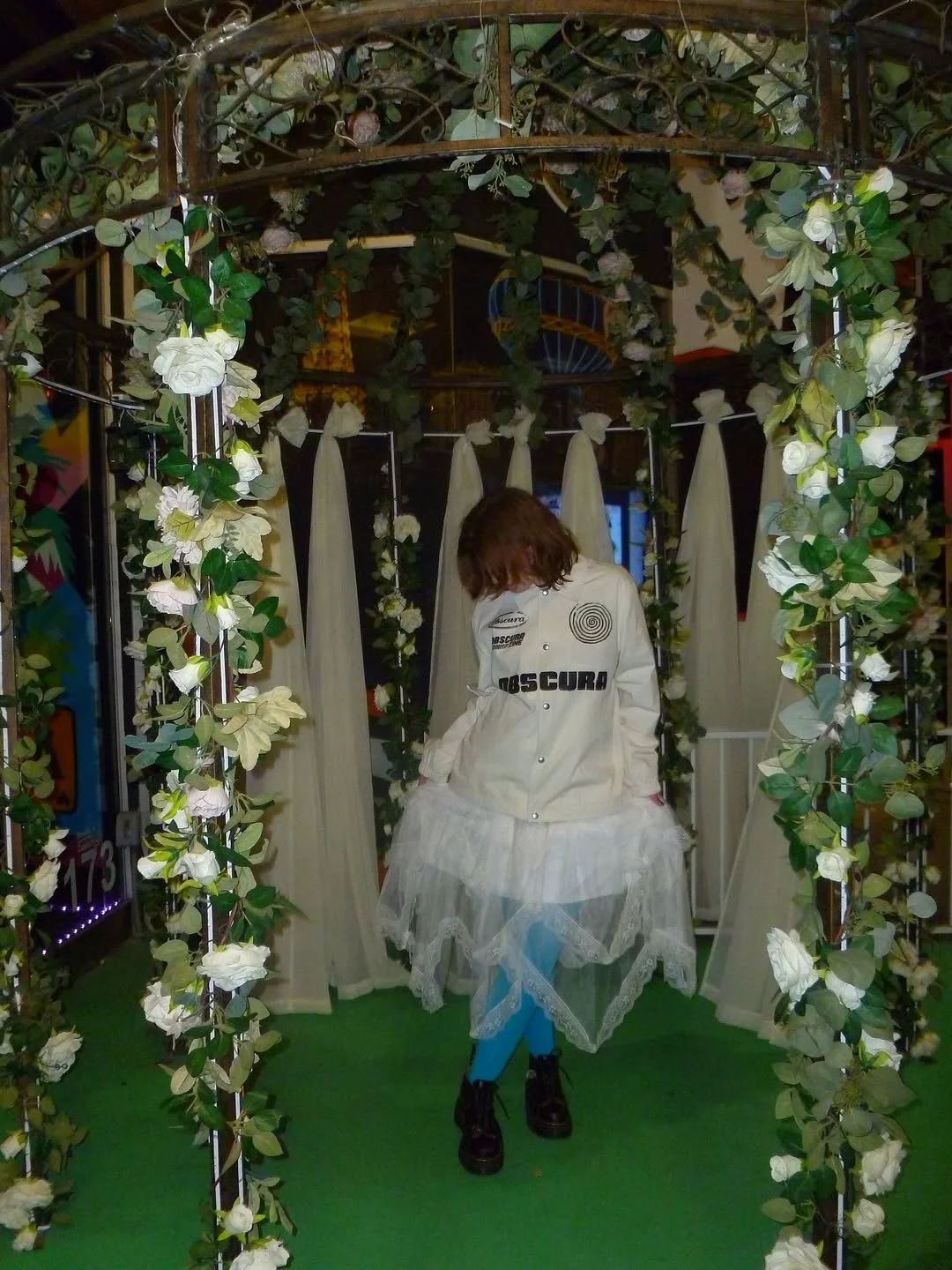
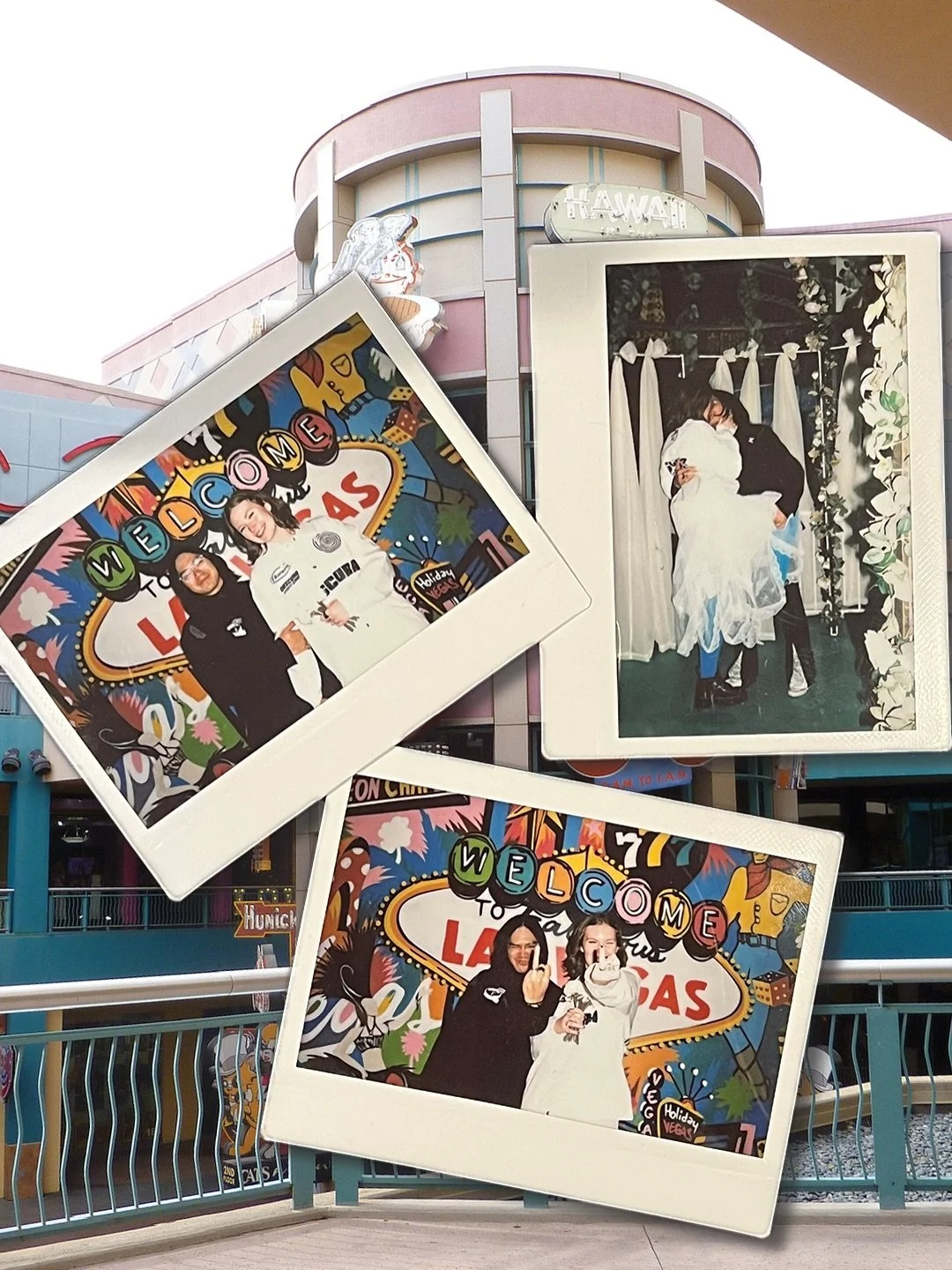
Now, when I work bridal appointments, style and assist brides, or attend New York Bridal Fashion Week events, I feel like all my heads-up pennies truly made me lucky. I get to experience the performance and whimsical nature of playing dress-up, gushing with other women about dresses, and seeing the detailed beading and intricacies up-close on each garment, without feeling the stress of a deadline or financial burden.
This bridal season, I felt compelled to delve into the history and logistics behind Bridal Fashion Week (BFW). Why do we have a separate bridal fashion week? How has the event itself evolved over time?
Starting with the original runways, New York Fashion Week originally dates back to the 1940s, formally known as “Press Week,” a true industry event, like a trade conference or convention. To appeal to both a couture audience and the everyday woman, many runway shows began the tradition of concluding with an expertly-crafted iteration of a bridal gown. Refinery29 describes how this was yet another money-making spotlight for designers, as many women’s wedding gowns are the “most expensive garment they’ve ever purchased.”
“It's about money, mainly, but the whole cliché of ending a fashion show with a bride is not unlike the ridiculous lie of Hollywood romantic comedies that predictably end with a wedding,” says fashion critic and author of Fear and Clothing, Cintra Wilson.
Much like these original runway salons, BFW originated in the 1970s partaking in trade events during ‘Market weeks” where manufacturers met with retail buyers directly to sell their upcoming lines. There was no optics, no glitz and glamour except for the sequins and diamond embellishments on the gowns. Designers showing to buyers at the time were names that continue to reign today, like Dior, Yves Saint Laurent, and Chanel.
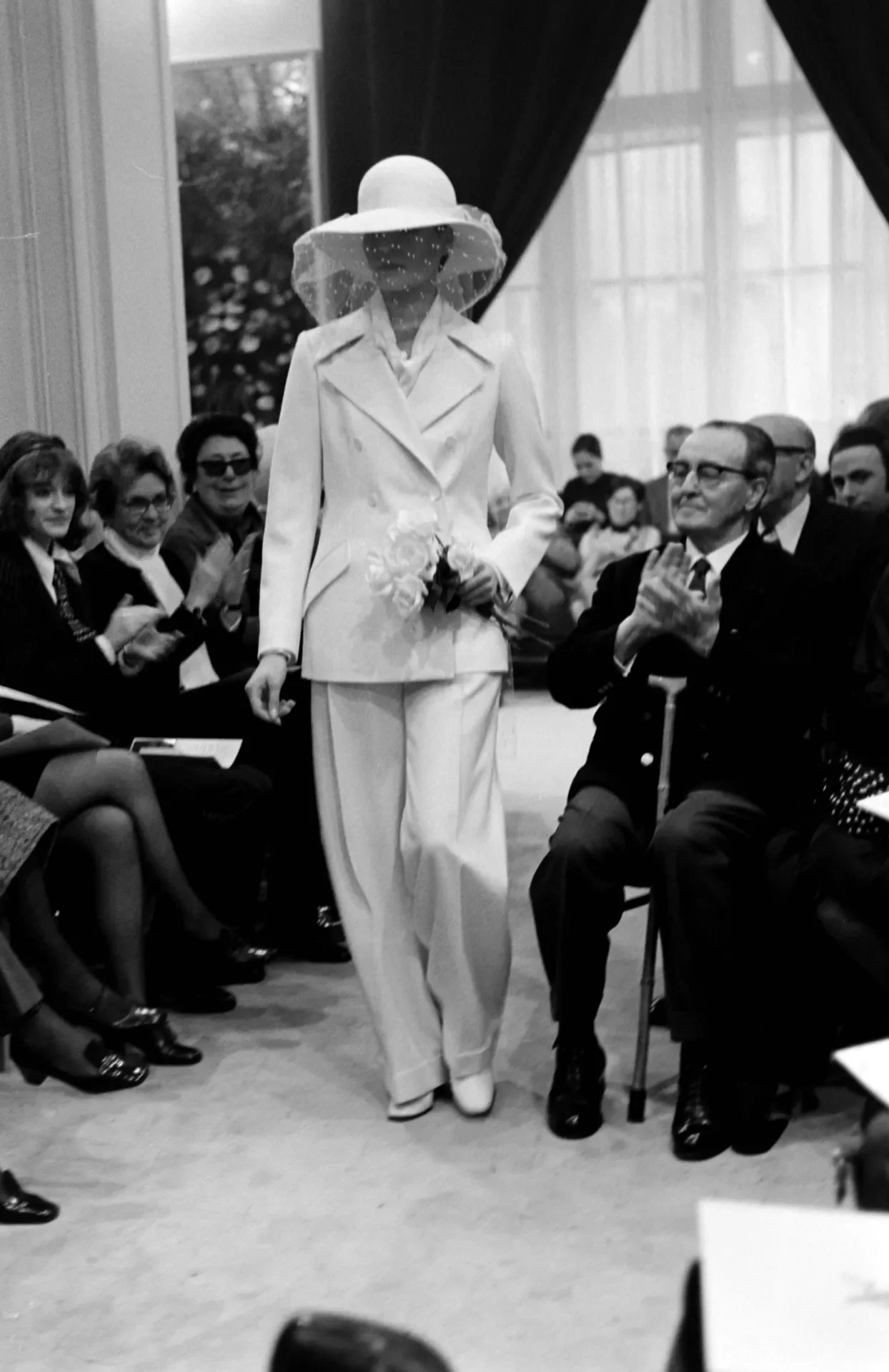
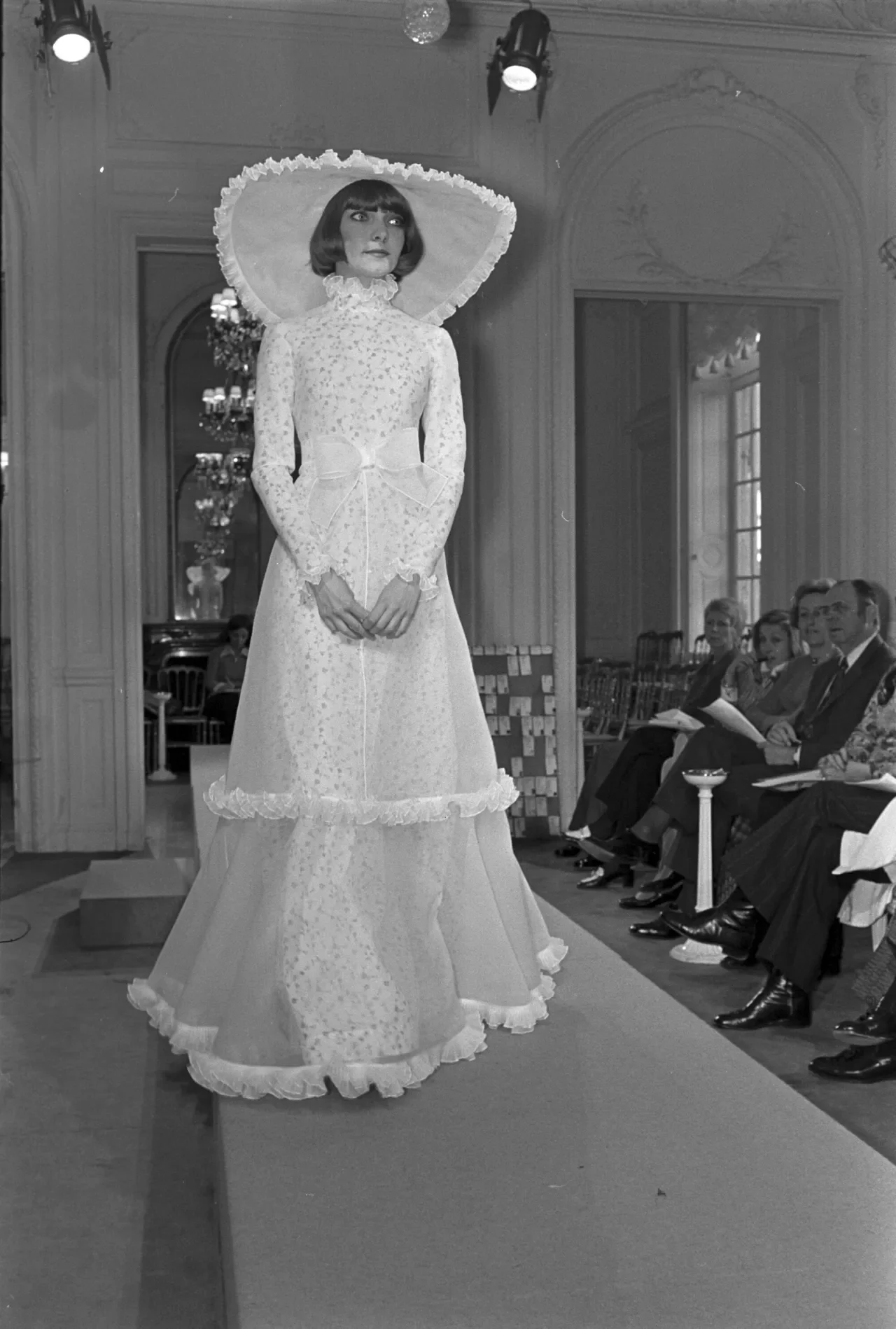
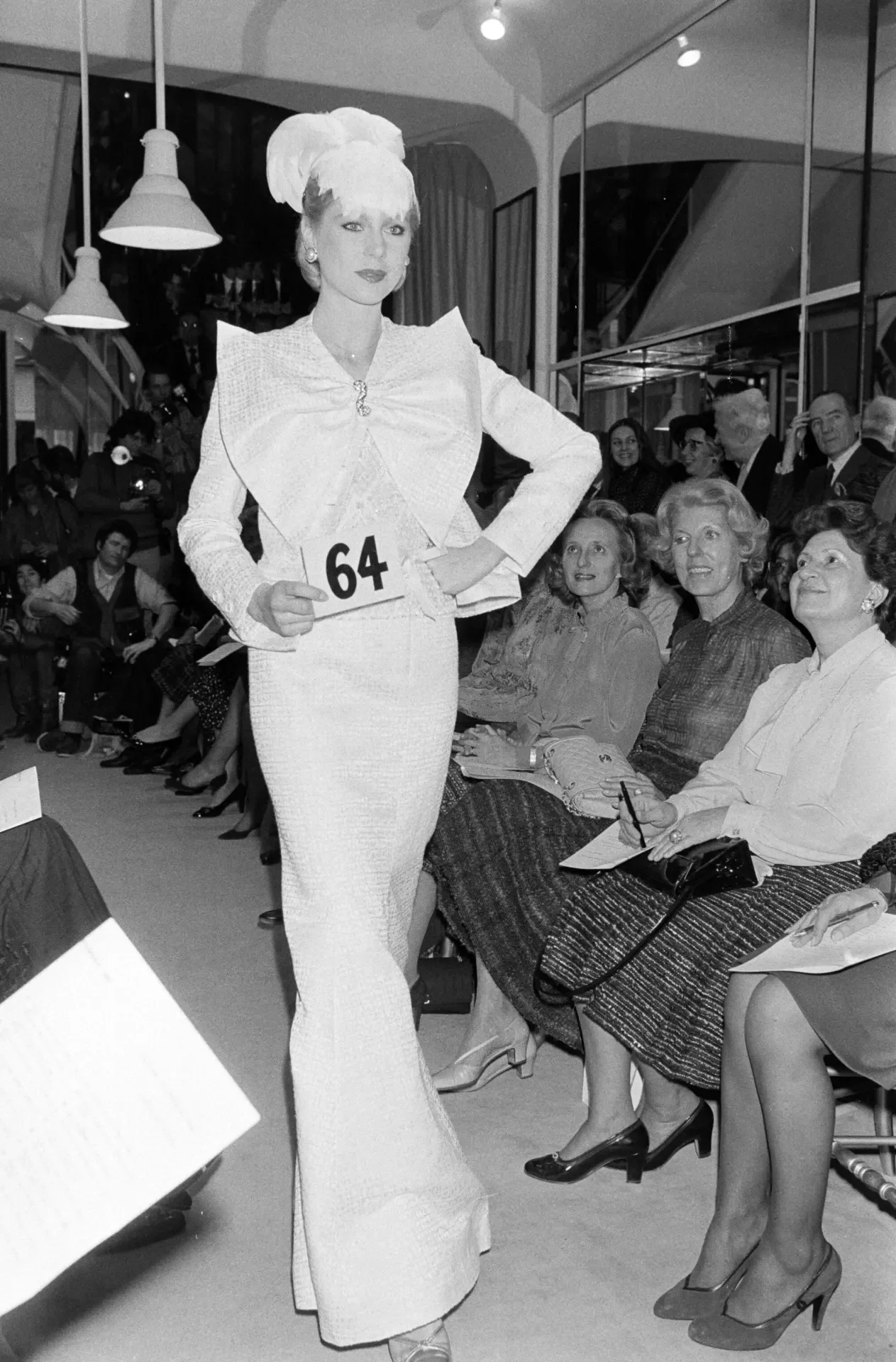
From left to right: Yves Saint Laurent SS 1970 Haute Couture, Miss Dior by Philippe Guibourge SS 1973 RTW, and Chanel SS 1980 Haute Couture. Photos sourced from WWD.
In 1993, the CFDA centralized New York Fashion Week into the iconic Bryant Park tents, which helped create the latter blueprint of a more clarified bridal fashion week. Designers like Vera Wang and Oscar de la Renta were hosting their own intimate gatherings, opening showrooms, and building up the spectacle of bridal fashion.
Although BFW has evolved into traditional runways much like its sister productions of NYFW and its global counterparts, bridal is a unique sector to the fashion world. There’s a much smaller audience and demographic, and for garments that usually have a one-time wear.
Last year, I attended Francesca Miranda’s intimate, standing-room only, SS26 runway presentation, “Pearla.” This was a fusion between both spectacle and intimacy, with models emerging from behind a lit white curtain where we could preview their shadowy silhouettes. The runway was small with candlelight lining the area. But don’t be fooled –– it was packed shoulder to shoulder, phones and cameras at the ready.
The production started with a bride and groom dancing in the center of the room, an air of romance hanging off of the drop waist gown. There was a beautiful array of dresses, some made of silks, satins, lace, floral appliques and chiffon, all used in elegant yet unconventional ways. A stand out from this collection was, “Ordelia” a hand painted Italian silk organza gown with a nylon finish.
But, beauty comes at a cost.
Productions like this are expensive to host in hopes of turning profit. So, for the SS27 season, Francesca Miranda instead released a fashion film showcasing the gowns directed by Andrés Oyuela. Entitled, “Retratos” meaning ‘portrait’, the video explored the intimacy of a woman in the moments before she says “I do.” Clips showcase fabrics flowing through the wind, signature floral motifs, chantilly laces, and the concept of a woman as living portraits.
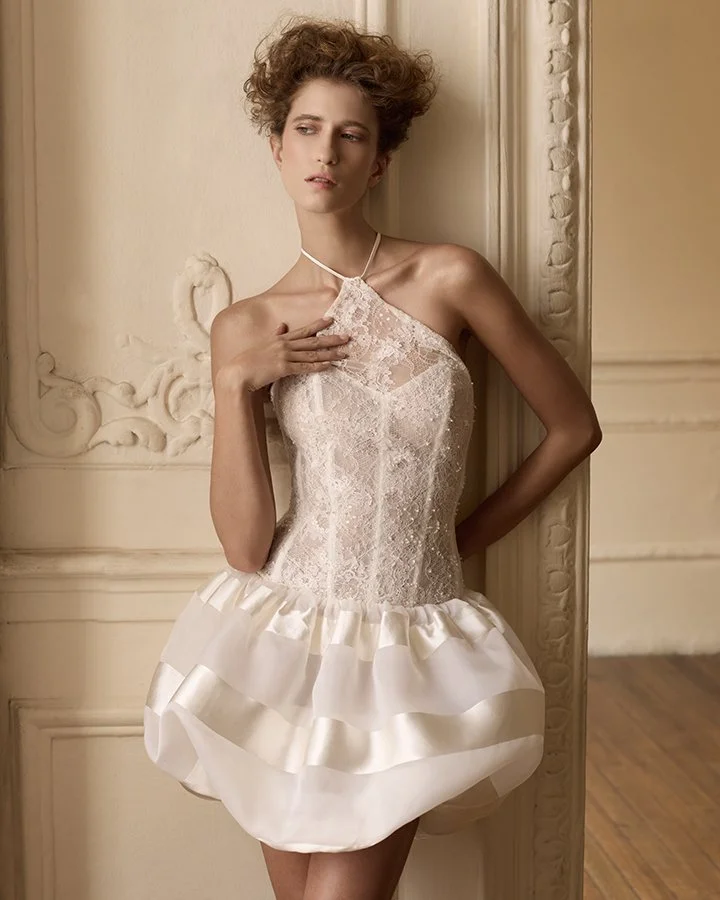
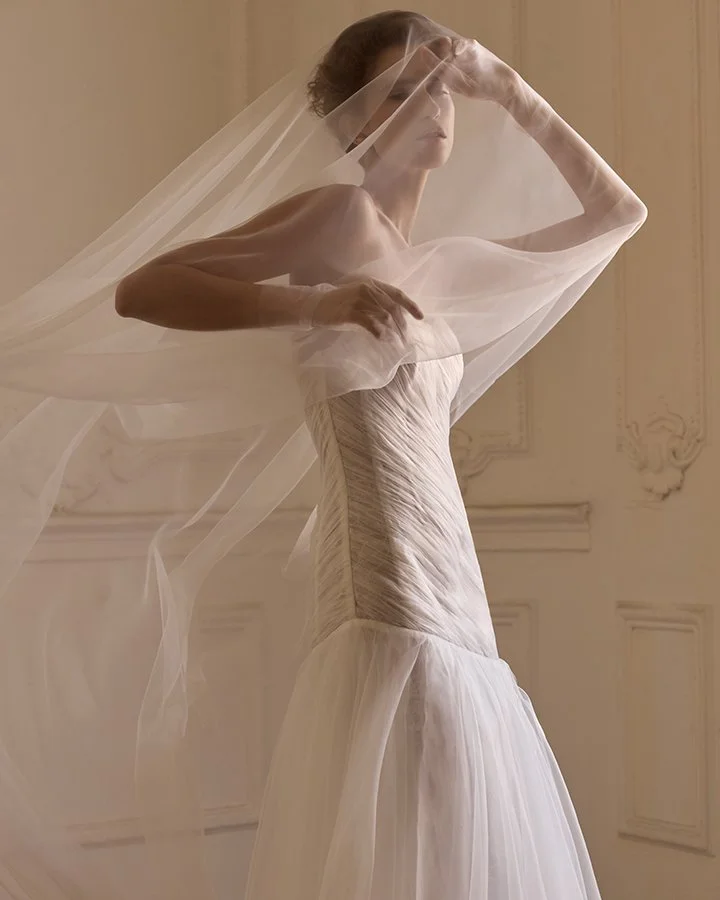
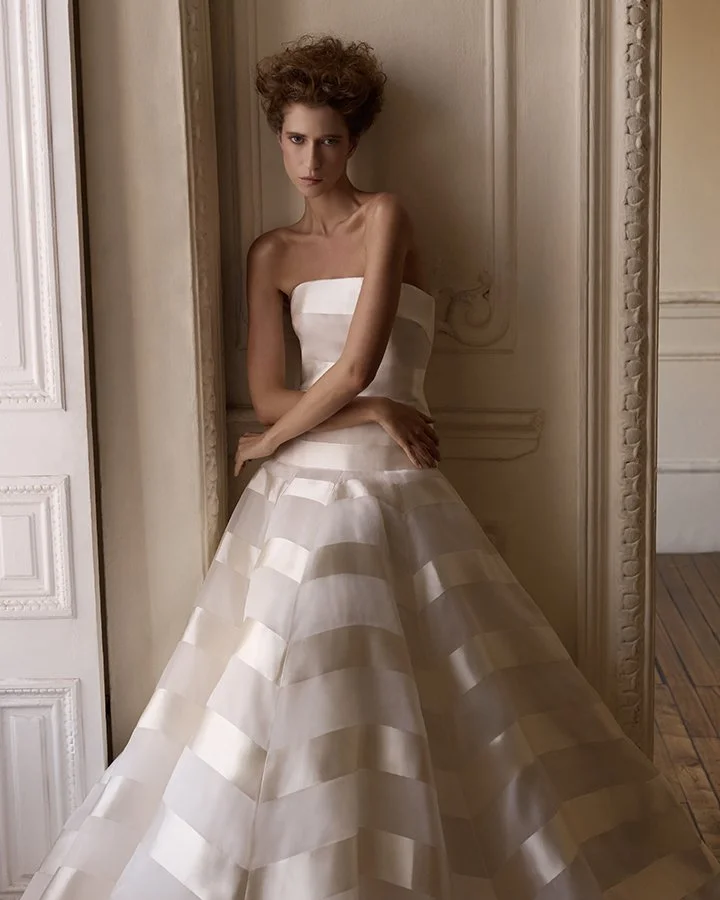
Photos courtesy of Francesca Miranda.
The film debuted at Spina New York in April with a close-up preview of the gowns. This marked a shift from purely spectacle to intentional; there is still a notion and desire for social awareness, but with a more strategic audience engagement and approach to the unveiling of the collection (pun intended, sorry).
This year, when attending the intimate preview for Renhue’s SS27 collection, it also felt like a step away from the runway spectacle. With real brides (albeit, ‘bride influencers’) observing the dresses, the two Co-Founders jumping in to adjust dresses and show their modularity, it felt like a real salon nestled in a room at the iconic Hotel Chelsea.
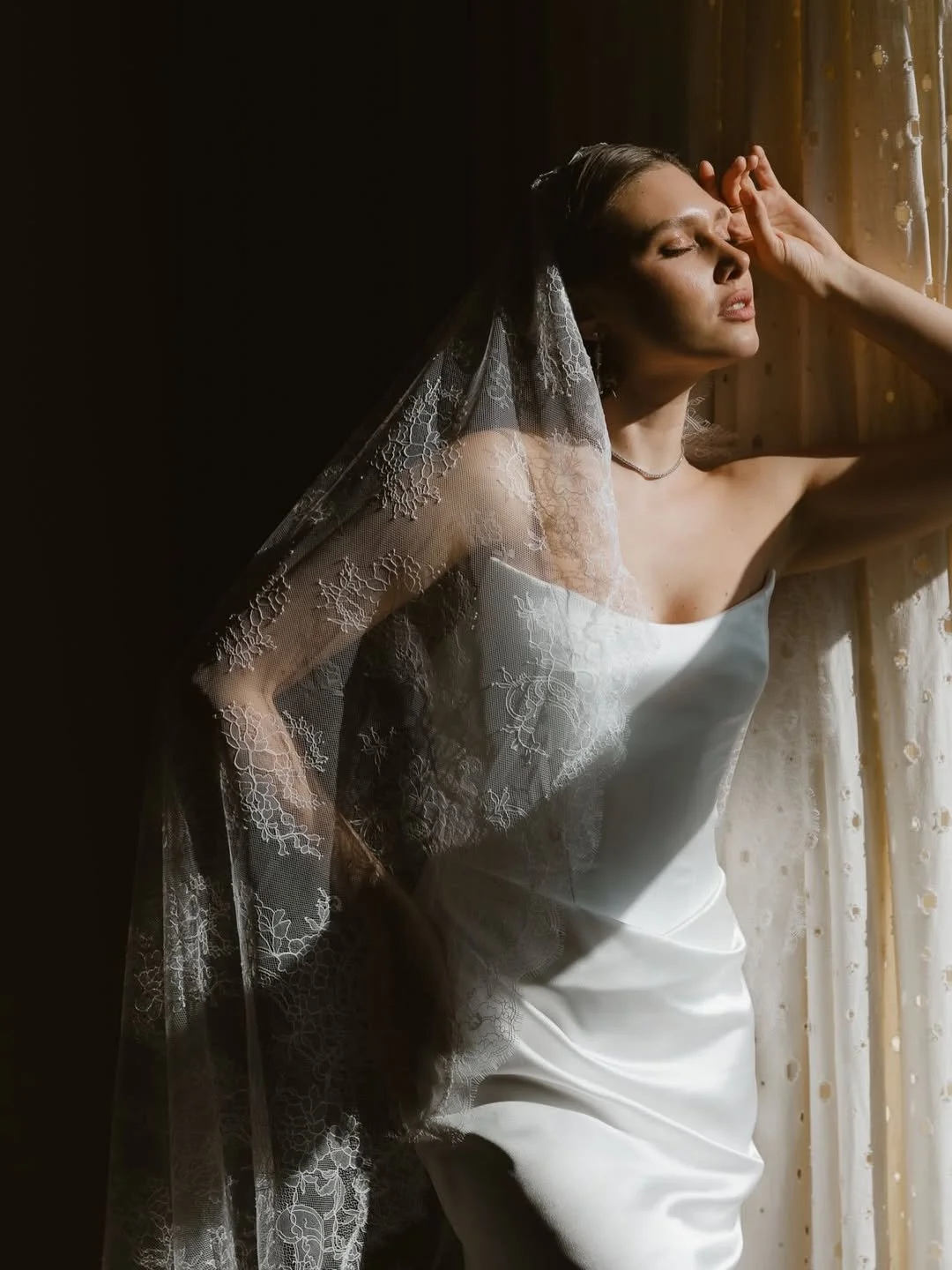
Photo courtesy of Renhue and Sofia Bib PR.
Renhue Co-Founder Maggie Wilson explained that throughout her time attending and working at NYBFW over the last 12 years for her own company and other major brands, the runway layouts don’t always give the best ROI.
“Runway shows are wildly expensive and not very intimate. So when we started this brand, I just didn’t think the cost was worth it,” Wilson said. “We would rather have a 1950s parlor experience. So we do this every time now. We spend a lot of time with our retailers and they know about us, we know about them, it’s a real relationship.”
Wilson also explained that before Renhue had a large enough customer base for people to be enticed and interested to come to them directly, they had previously participated in One Fine Day, which is essentially the modern day version of ‘Press Week.’
“It’s a big showroom and you can buy a booth, with 75 brands or something, and people walk through,” Wilson said. “But it’s just hard to get people’s attention. Those experiences are grinding. You’re brand new so nobody knows your brand, and you have to be really salesy.”
There are so many facets to bridal fashion week that continue to emerge. Vintage bridal shops like Farmer’s Daughter, Allegra Vintij Bridal, and Vionette Vintage all have begun to grow hype around their brands, participating in bridal previews for NYBFW and simultaneously spotlighting the way sustainability and vintage markets are exploding across markets.
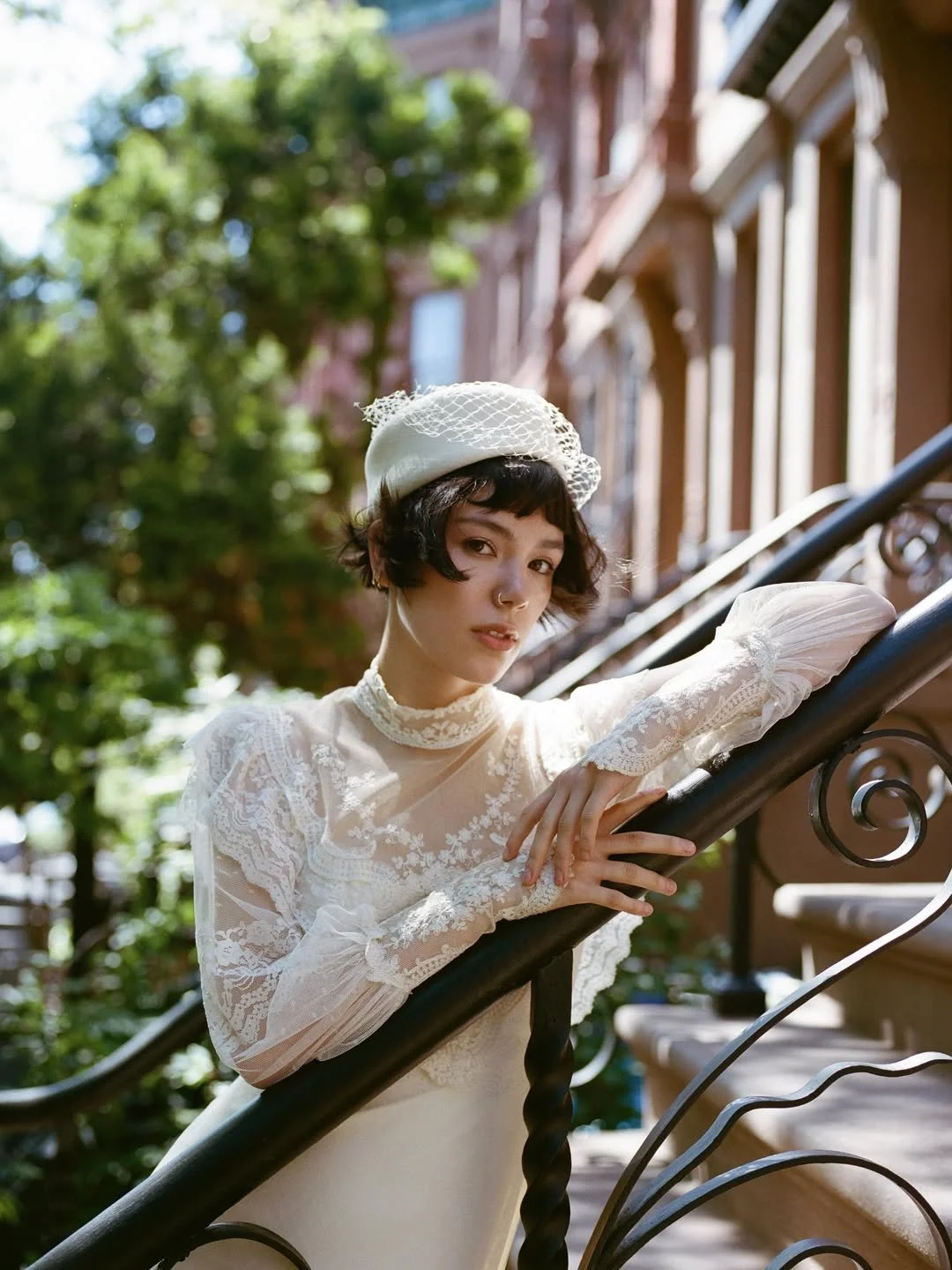
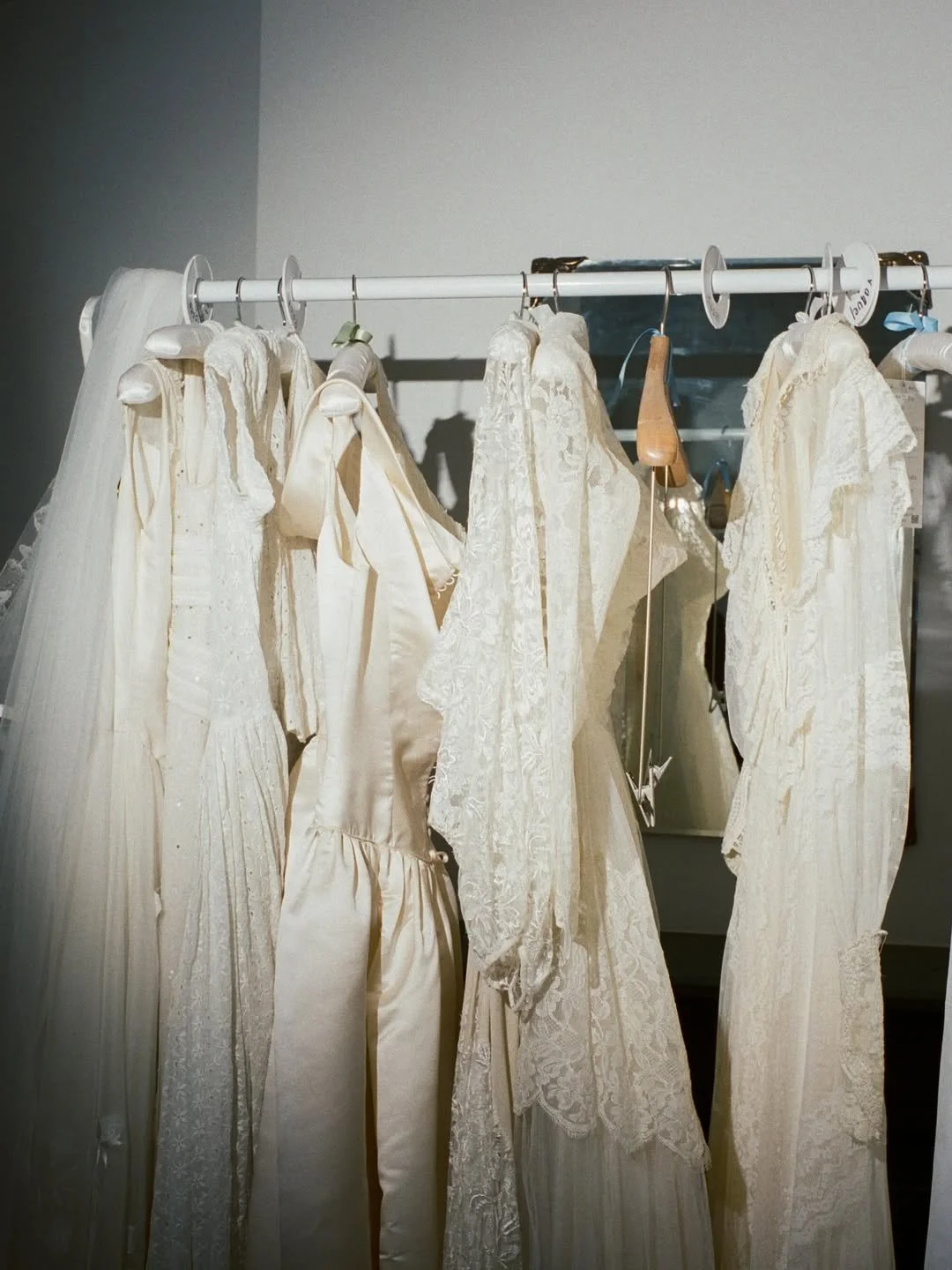
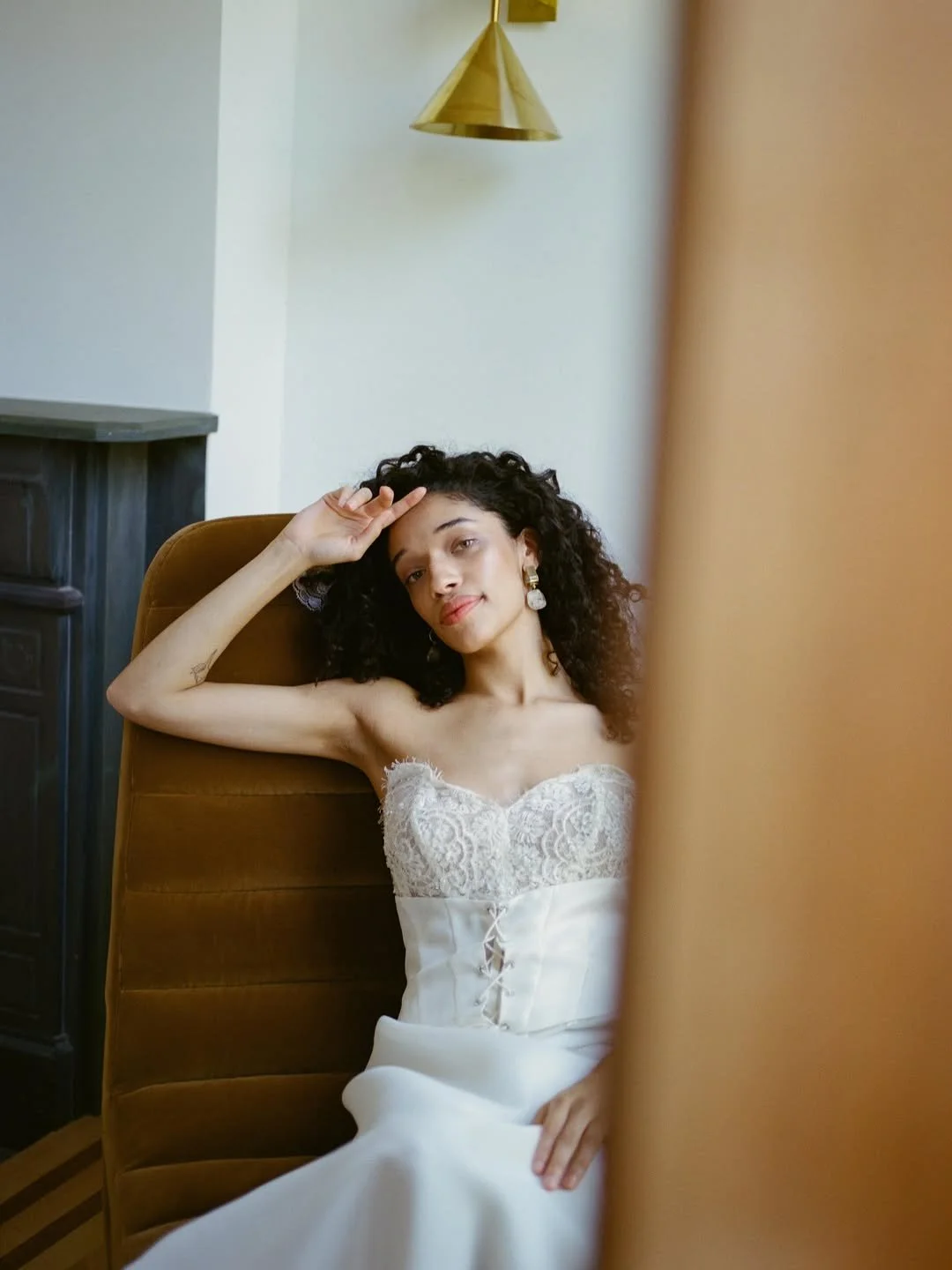
Photos by Emma Melin for Allegra Vintij Bridal.
We all know brides want to feel special in their gown, so what’s better than a one-of-one dress (typically at a lower price point than custom-made gowns) with a little history and sentiment already behind it?
So, why does bridal have its own fashion week?
Money, ultimately. Shocker!
Catering to a more niche audience, one of women that are willing and ready to spend on their manufactured ‘biggest day of their lives’ means more sales. Weddings remain one of the most profitable emotional industries in the world at roughly $66 billion dollars in 2025, and bridal fashion week exists to sell the fantasy alongside the dress.
However on a more optimistic note, bridal fashion week is one that evolves organically with its customers and builds community, ritual and tradition.
Whether it’s a grandeur runway in Manhattan, a showroom appointment in a hotel room, or a rushed Las Vegas ceremony in blue tights and screen printed jackets, weddings remain one of the few occasions where people openly indulge in symbolism, superstition, and spectacle all at once. It’s both incredibly personal and vulnerable, yet performative.
Like flipping a penny to heads-up for the next stranger, bridal rituals (and NYBFW) will endure because they offer something comforting in uncertainty — the hope that beauty, love, and luck might always be carefully stitched together.