
Is it Fashionable to be Chronically Online?
I went to my favorite museum and all I got was this lousy internet meme t-shirt.
Well, maybe not quite me, but my MoMa PS1-loving friend. Earlier this summer, she embarked on the odyssey to MoMa PS1’s Greater New York exhibit, catching sail on the ferry to survey the haps of all that is modern and all that is art at her favorite museum. I–who was meant to go with her but bailed at the last minute–asked her to send me a picture of her favorite piece. Expecting an ornately detailed oiled-paint portrait or maybe even a luminescently Chihuly-inspired sculpture, after receiving this photo, it’s safe to say that I was, well, surprised!
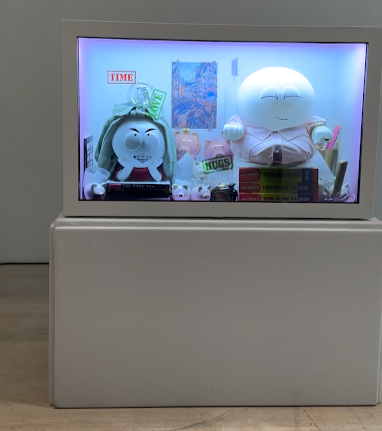
Photo Of Marc Kokopeli’s Now we are on Easy Street exhibit at MoMa PS1’s Greater New York 2026
The fixture is a part of Marc Kokopeli’s Now we are on Easy Street exhibit. The collection pairs South Park-esq characters with early 20th century technologies, cluttering them in a whirlwind of monetary trinkets and techno-cultural paraphernalia. According to MoMa PS1’s Facebook, Kokopeli uses the cut-out, comedy animations to remind us of a “pre-internet moment of media euphoria.” A time when kids were not inundated with AI slop and brain-rot culture, and preferred burning their corneas the old-fashioned way: spending hours in front of their living-room-tvs watching cartoons, peeling back the layers of mozzarella cheese sticks and slurping Go-GURTsuntil they were bone-dry, all the while SpongeBob boomed his voracious giggle through their sound systems (the snacks, admittedly, my own personal addendum).
Though eyes grew red and weary from blue-light vaudevilles, Kokopeli looks back on this 2-D time with nostalgia; a lust for the time before the giant spill of the digital, when cartoons were drawn by humans, confined to the single-screen of a TV, and enjoyed within their run-time of 20 to 25 minutes, rather than the 20 to 25 seconds of an un-finished vertical video. A time when the online was incubated, and not the perennial masthead hanging like a heavy balloon over the daily.
Though I, too, pine for the pre-AI internet era, I still couldn’t shake the disappointment I felt that this was the collection that my friend, an avid museum frequenter and artist in her own right, was drawn to. Call me a small-minded traditional nelly, but I couldn’t quite situate the Comedy Central inspired sculptures as works of methodical craftsmanship, let alone a ferry-trekking, MoMa PS1 worthy exhibit.
But, after sleuthing the Substack pages and Instagram round-ups of the installations, artists, and media populating the current zeitgeist, I found that Kokopeli’s collection is not the chronically-online exception, but moreover, the rule of the prevailing reign. Actually, the fact that Kokopeli references a TV show and not a meme from the Youtube, Twitter, and Tumblr pandemonium places him on the conservative side of the pixelated spectrum. Whether it be Sophie Jackson’s Trisha Paytas trilogy, Jon Rafman’s Mainstream Media exhibition that displays his works since 2008–an immersive viewing of pieces that comment on, and use, video game engines, AI tools, and social media platforms to dissect the the ever-changing signifiers of online identities–or even the Aphex Redditor’s BedRot 24 hour algorithmic exposé, the art-world has been siphoned into a cacophony of references to all that is chronically online.
And, as the oracle with the fuck-ass bob decreed in May as this year’s Met Gala dress code–Fashion is Art–fashion, too, is subject to the art-world’s memeified dynasty. The garments stitched by upcoming designers, get-ready-with-me outfits of Gen Z content creators, and emerging online clothing brands, are saturated in South Park, Minecraft, SpongeBob references, video-game pixelated silhouettes, and even AI slop-ified pastiches.
From an iphone notes-app list woven into a fashion school student’s graduating collection, to graphic tees dotted in IP-franchise maximalist galore and serif fonts, the gallery of your favorite Instagram meme-page is more likely to influence the fashionable trend-o-sphere than the world of the analog and the tangible. The question is no longer what to wear, but which chronically-online digital to reference.
Take Rohran Mirza, the Parisian designer behind MarieRohana, for example. Mirza’s big-zipper hoodie is a viral staple for Gen Z-fashion-heads, establishing the designer as the voice, or, one of the voices, behind Gen Z’s obsession with pixelated haute-couture. His muse? Not quite the Mona Lisa, but all that was programmed in the internet cultures and gaming universes of his childhood. In an interview with Dazed, Mirza cites the inspiration behind his “big-zipper” hoodie as “‘King Mickey’s outfit in Kingdom Hearts – the goth Mickey who wears a hoodie with a huge zip. There’s also Sackboy from LittleBigPlanet, who has a big zip too.’”
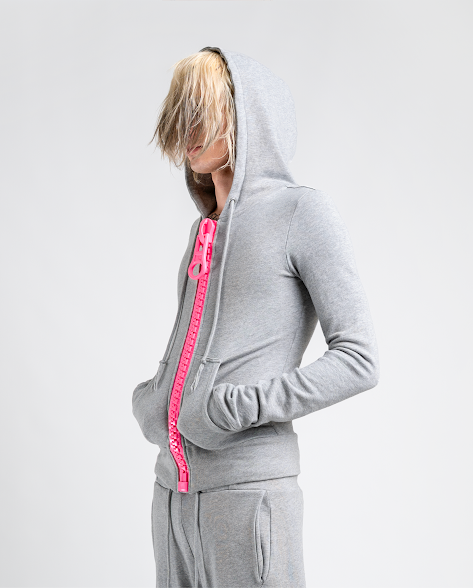
Photo of MarieRohana’s big zipper hoodie, courtesy of MarieRohana’s website.
Each one of Mirza’s collections, actually, are inspired by one of the video games or internet deep-dives he explored as a kid, a facet he noted distinguished him from his peers at Duperré, who instead sourced the canons of art history as their crafts’ reference.
“At fashion school, you have to have ‘good references,’” said Mirza in an interview with Welcome.JPEG. “My references were video games and internet culture.”
Whether it be the impetus behind his 3D printed rifle belts or his Call of Duty-inspired collections, the hours Mirza spent as a child, video-game controller in one hand and mozzarella cheese stick in the other, were far more influential to Gen Z style than any art-history textbook or archival runway piece could be.
And, Mirza is by no means a single-player. Both staple and emerging online clothing brands, are, like Mirza’s Marierohana, sifting through their early-internet motherboards to inspire the garments they produce. Roy is a Mess uses their 3D printer to style comically large ipod nanos with irony-laden-emoji graphic tees and sound-system-speaker wedges, synthesizing their look with, you guessed it, a fidget spinner bracelet. OGBFF’s site is awash in neon hues and baby-tees and bangles fashioning internet-humor texts.
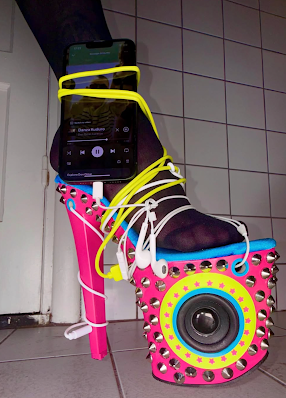
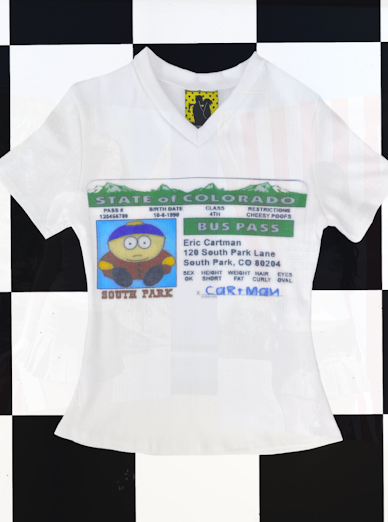
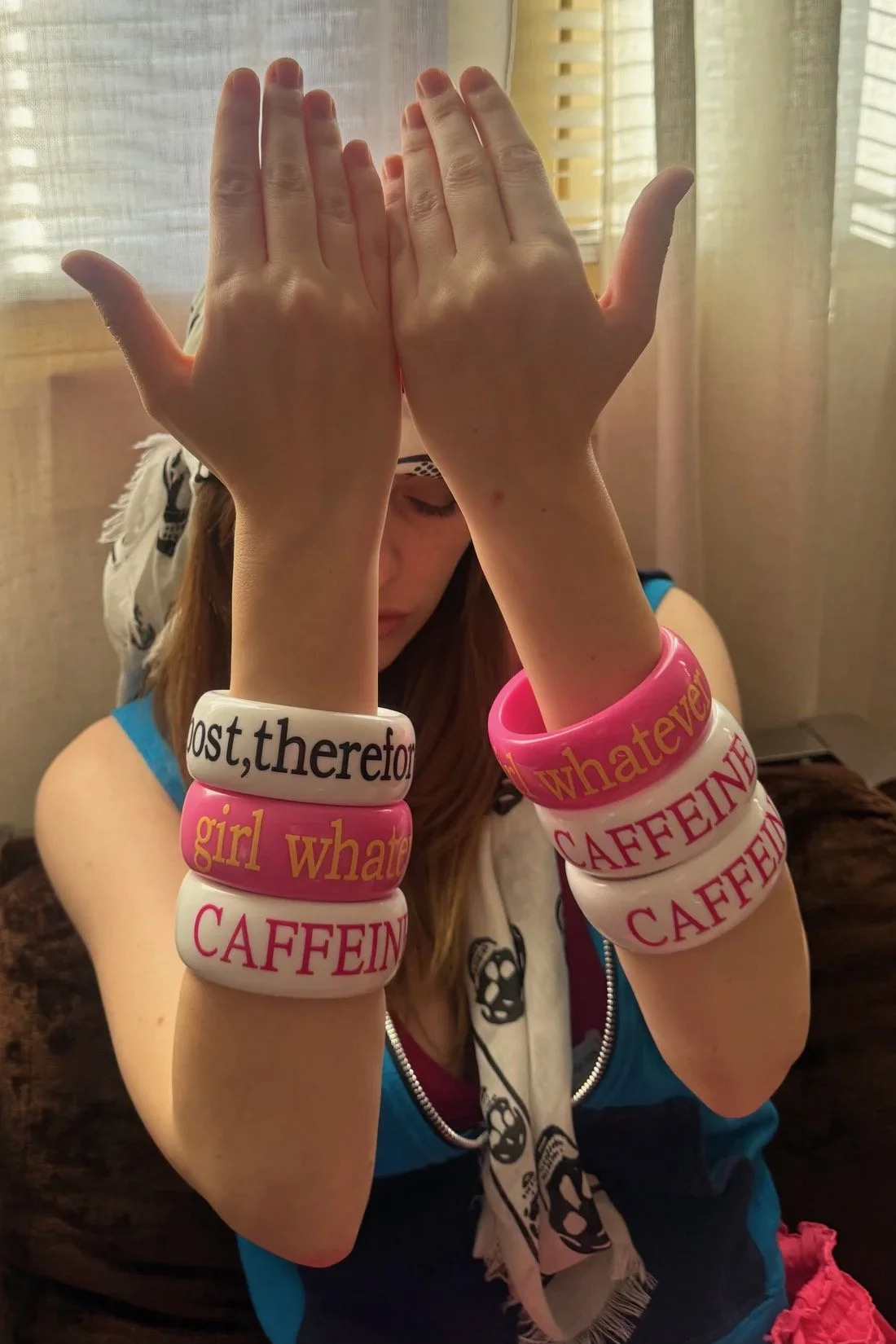
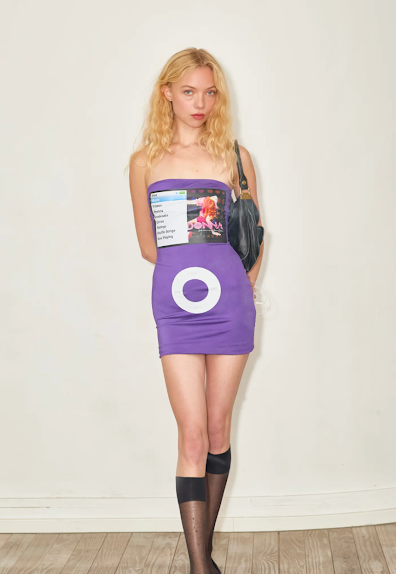
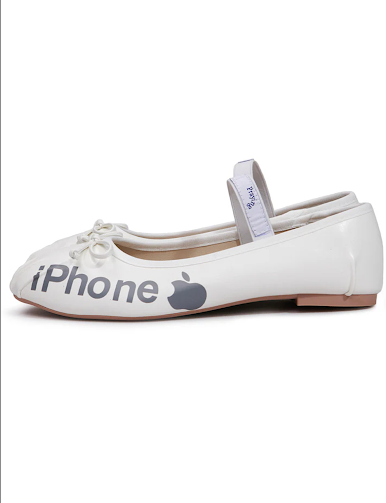
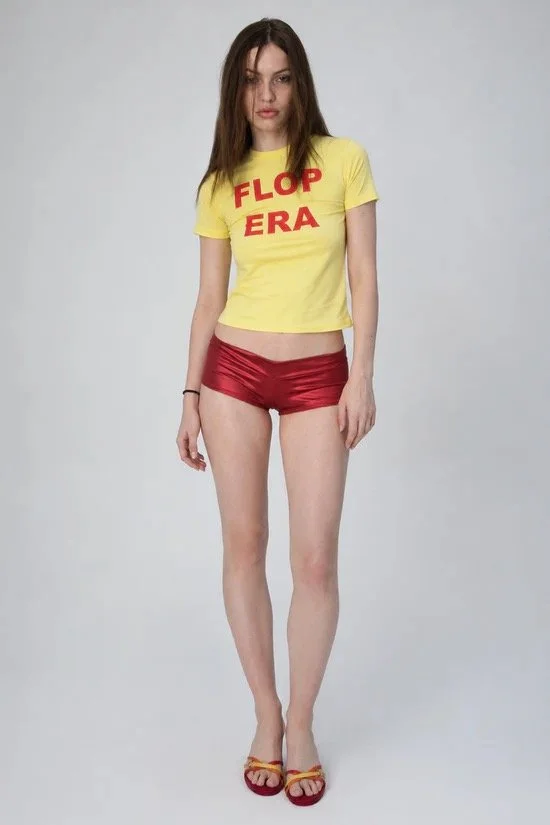
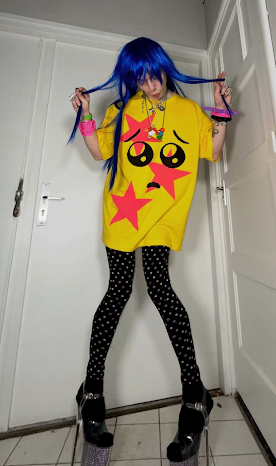
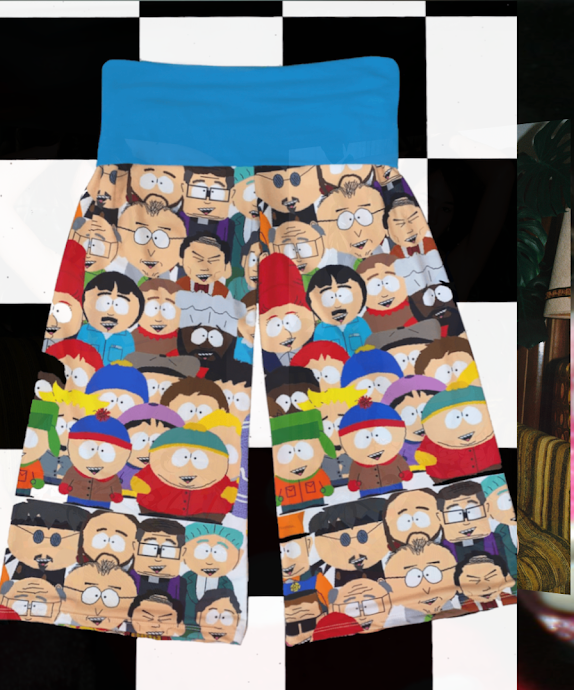
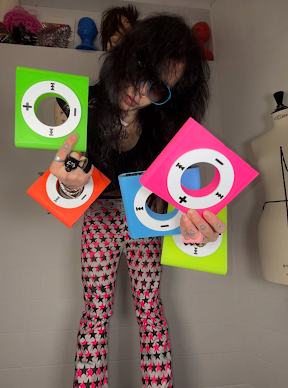
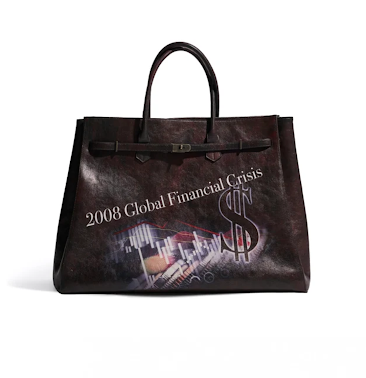
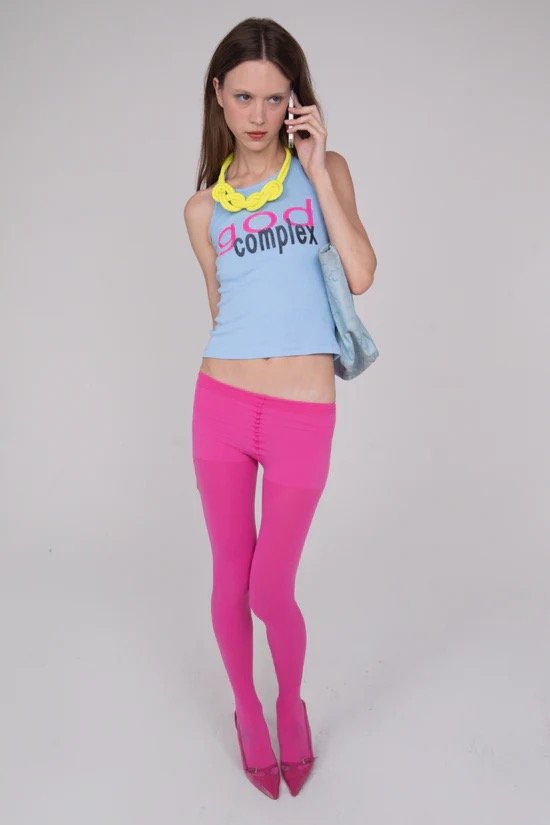
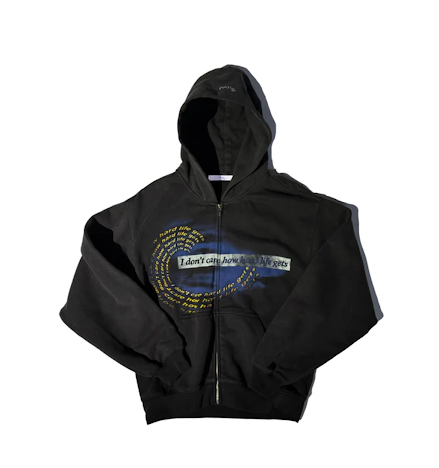
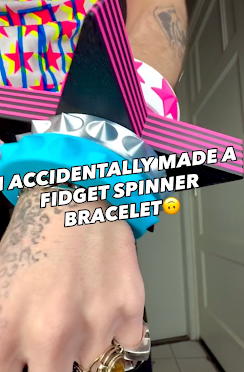
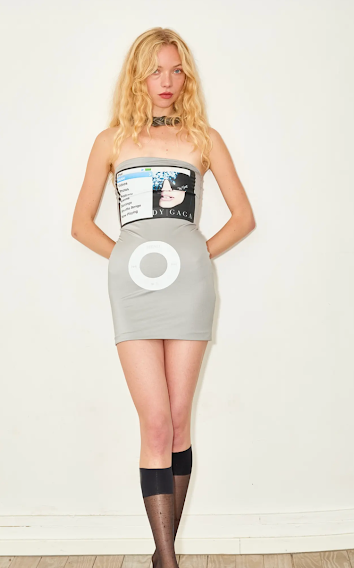
Photos: OGBFF’s Flop Era Baby Tee, and statement bangles; Praying’s Phone Ballet Flats, I Don’t Care How Hard Life Gets Hoodie, and Financial Crisis bag; Marie Taylor’s iPod Dress; Mighty’s South Park Guacho and Cartoon Bus Pass tee; Roy is a Mess’ Pleaser Speaker Heels, Spinner bracelet, Emoji Tee, and iPod bangles. All photos courtesy of its respective brands’ websites.
Omighty Weekend went Kokopeli-style and dropped a South Park themed collection; marietaylor.paris styled Zara Larson in their IPod tube dress; itgirl5727 is selling all the IP-laden, cartoon maximalist designs from vintage runways, Eiidothelabel is creating air-brushed graphic-tees of Peter Griffin animes, Praying has been a long-time staple of anachronistic jokes and memes, Windows XP graphics, and 90s/early 2000s iconography…the list goes on and on. The web-cams, mousepads, and chunky electronics of the early internet are being put in sewing kits and crocheting needles steads.
The evidence is damning: fashion is, now, more than ever, online. So what's the rhyme behind fashion’s nostalgically–and chronically–online reason?
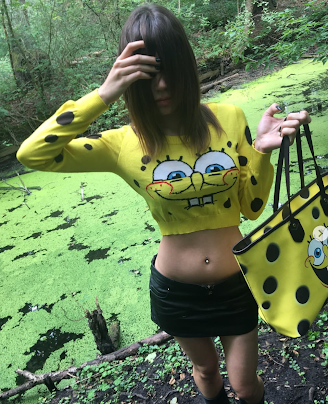
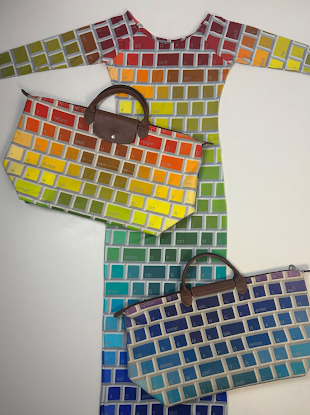
Photos of FW 2012 Jeremy Scott x Longchamp Keyboard bags & dress (left) and FW 2014 Moschino x Spongebob Crop Top by Jeremy Scott (right) courtesy of itgirl5727.
It could be a mode of escapism. Today, fleeing from the unsealed Pandora Box of the present world is, unsurprisingly, trendy.
According to an NBC News Decision Desk Poll, “nearly half (47%) of adults ages 18-29 said if they had the option, they’d choose to live in the past,” and “62% of Gen Z respondents said they expect life will be worse for them compared to previous generations.” The morose present–and even worse–potential future fosters a nihilistic compulsion to escape to a haven of a recent past.
In a New York Times article analyzing a shift in Gen Z merchandise branding from the bleak, muted tones of “millenial blanding” to “hyper goo: a style of glitchy, gloppy maximalism,” Callie Holtermann links the tendency for Gen Z’s loud, gaudy vibrancies as, partly, intrinsic to their wistful reminiscence of online, childhood momentos: “their nostalgia has taken the form of spinning GIFs, novelty cursors and Windows XP graphics,” noted Holtermann. In conversation with Gael Aitor, the creative director of Grownkid (a social club for 18-24 year olds), she writes, “‘this is how you remember the internet looking before everything was polished, and 3-D and incredibly smooth,’ Aitor, 23, said.”
Our modes of nostalgic reverence aren’t green-grass fields, the good ol’days when you’d walk to school, nor phones bound to rotary dials, but the kitschy, bright, technologically-campy artifacts of our childhoods: the digital, before everything became digital, and coded to appear “human” *cough cough AI slop.*
And so, it comes as no shock that the flamboyantly pre-internet brands like Praying and Roy is a Mess, childhood-videogame-inspired designers like Mirza, and even artists like Kokopeli, are taking creative fields by storm.
Yet, even mainstream fashion houses are dipping their toes in similar escapist fantasies. According to Kristen Bateman’s, “The Video Game-ification of Fashion,” Kiko Kostanidov, Duran Lantnik’s Jean Paul Gautier, Courreges, Thom Browne, and a slew of staple designers debuted spring/summer 2026 collections imbued in all that is sci-fi, CGI-graphic-y, and faux-apocalyptic-battley of early 20th century cyber games, films, and technologies.
Though not the Reddit spectacles of the early 2010s, these designers are nevertheless investing in the extra-terrestrial and retro-science-fictional in order to escape into alternative worlds of digitized nostalgias: “the world is burning, so why not dress for an alternative universe, especially one that’s pure fantasy and looks like it’s straight out of a video game?” wrote Bateman. Kostanidov’s mysticized The Legend of Zelda and Star Trek head-pieces and Browne’s campy alien heads that shielded models faces as they glided down the runway, escape not into a technological future, but like Praying and Roy is a Mess, into a technologically imperfect, glitchy past.
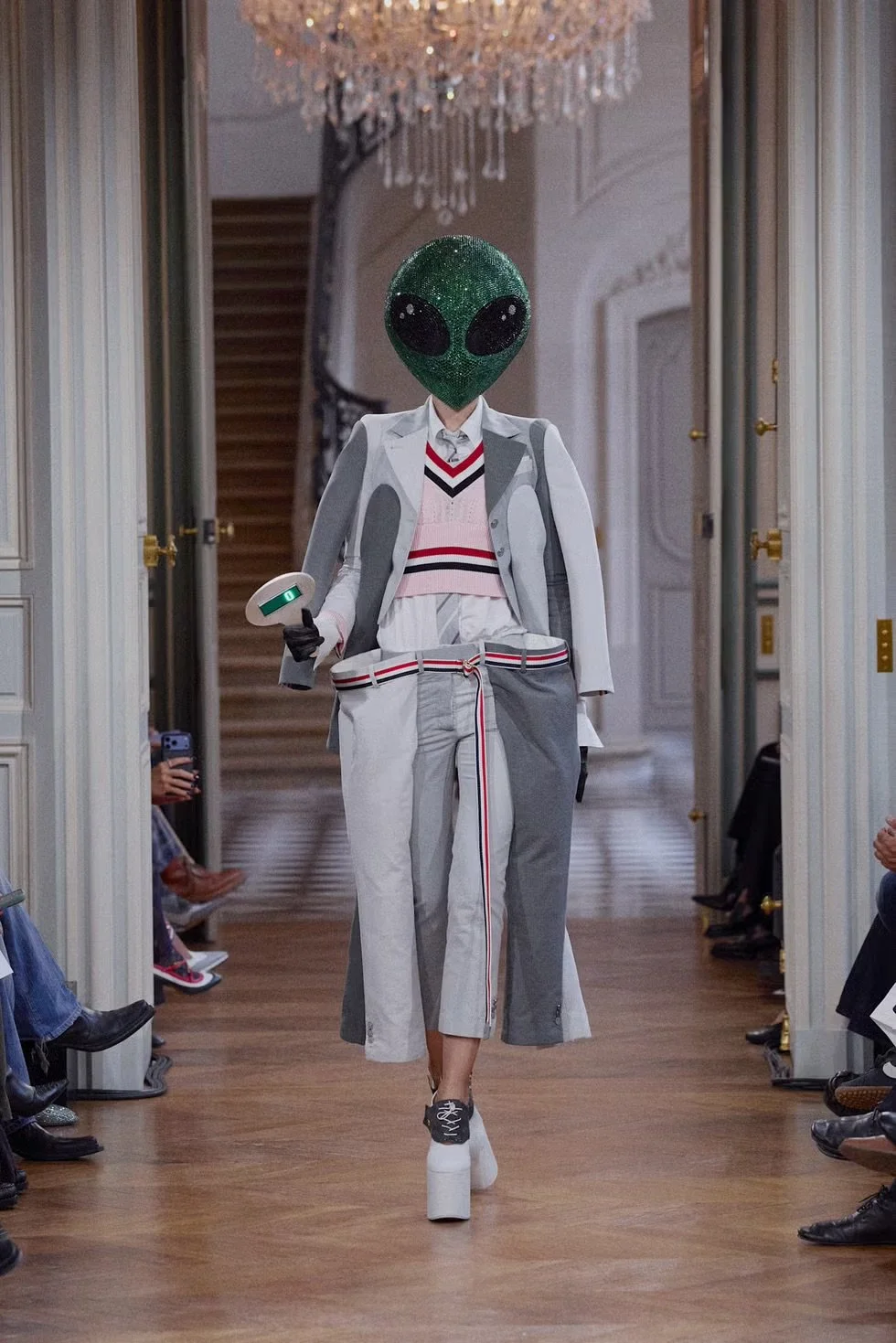
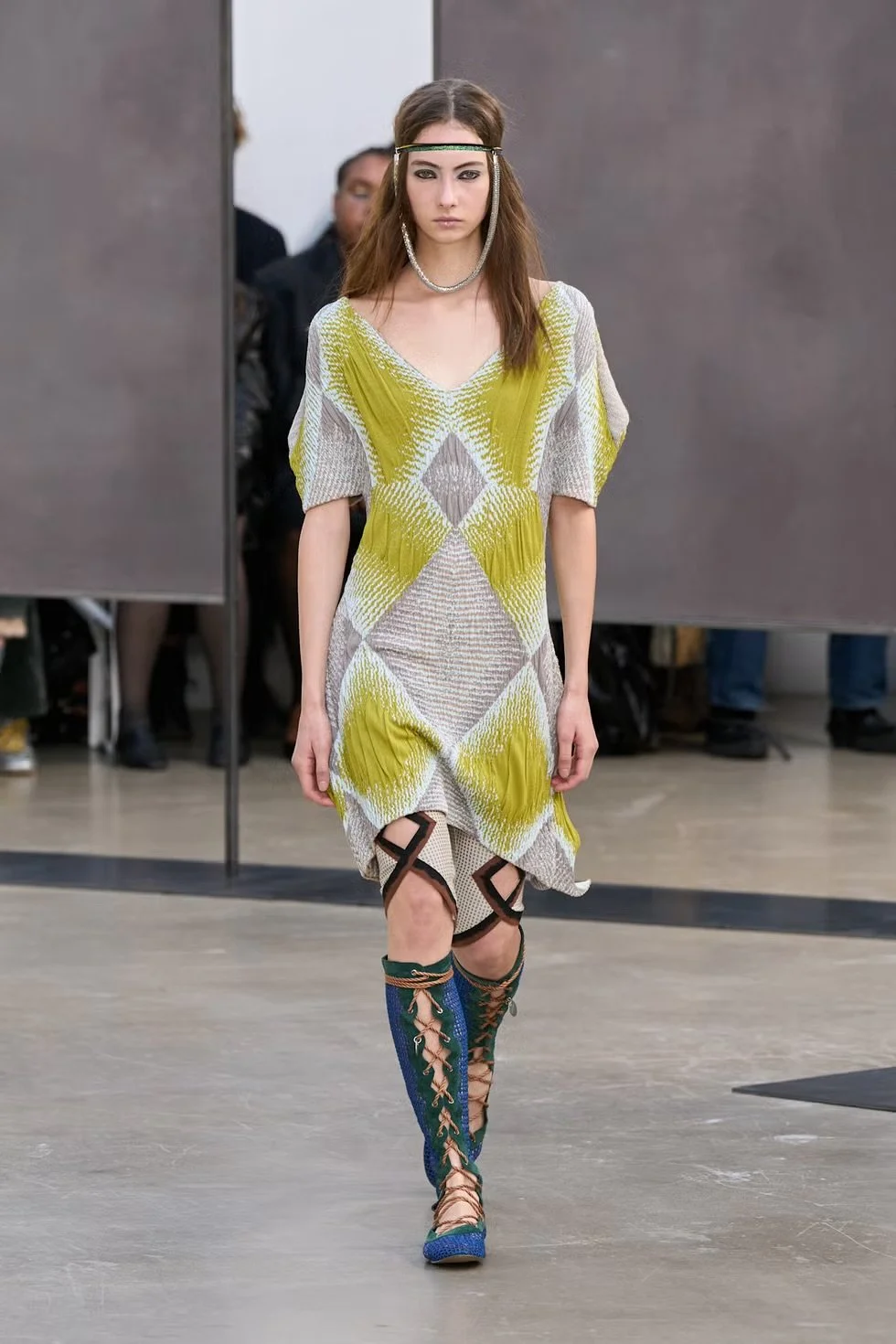
Thom Browne Spring/Summer 2026, Kiko Kostadinov Spring/Summer 2026, courtesy of Elle.
Through the icons of early technologies and online references, our wardrobes act as our solace, allowing us to decorate ourselves in the accessories and garb of our youth’s cyberhoods.
Still, there is a glitch in the one-fold, nostalgically escapist argument. The dress of the current times may not just be a saccharine daydream of the early-technological era, but, in their calling to a techy time before the strike of the chat bot, actually may be a way of suiting up, strapping on 3D printed AFX rifle belts, and rebelling against the AI-slop Godzilla of the now.
In the same New York Times article assessing the rise of the digitized “hyper goo,” Holtermann noted that creative-director of Teen Vogue, Mi-Ann Chan, assessed that “the rise of A.I. imagery has viewers seeking evidence of human creation.” Referencing the internet memes of the 2012 era on a t-shirt is a means of speaking in a technological language that the artificially intelligent is not yet intelligent enough to understand: “the technology has not quite captured the sense of humor of an extremely online 25-year-old,” wrote Holtermann.
And, the fashion creators of our Pinterest boards and Instagram feeds are gearing up on the front-lines of this anti-AI internet-humor battle. Nymphet Alumni, one of my favorite Substack podcasts on fashion and culture, noted that Gen Z creators are fashioning Disney and Universal IPs, viral content that ranges from Fred the youtuber to The Annoying Orange, and desktop videogames like Minecraft and Roblox, synthesizing the trend with the term “#SWAG Dadaism.”
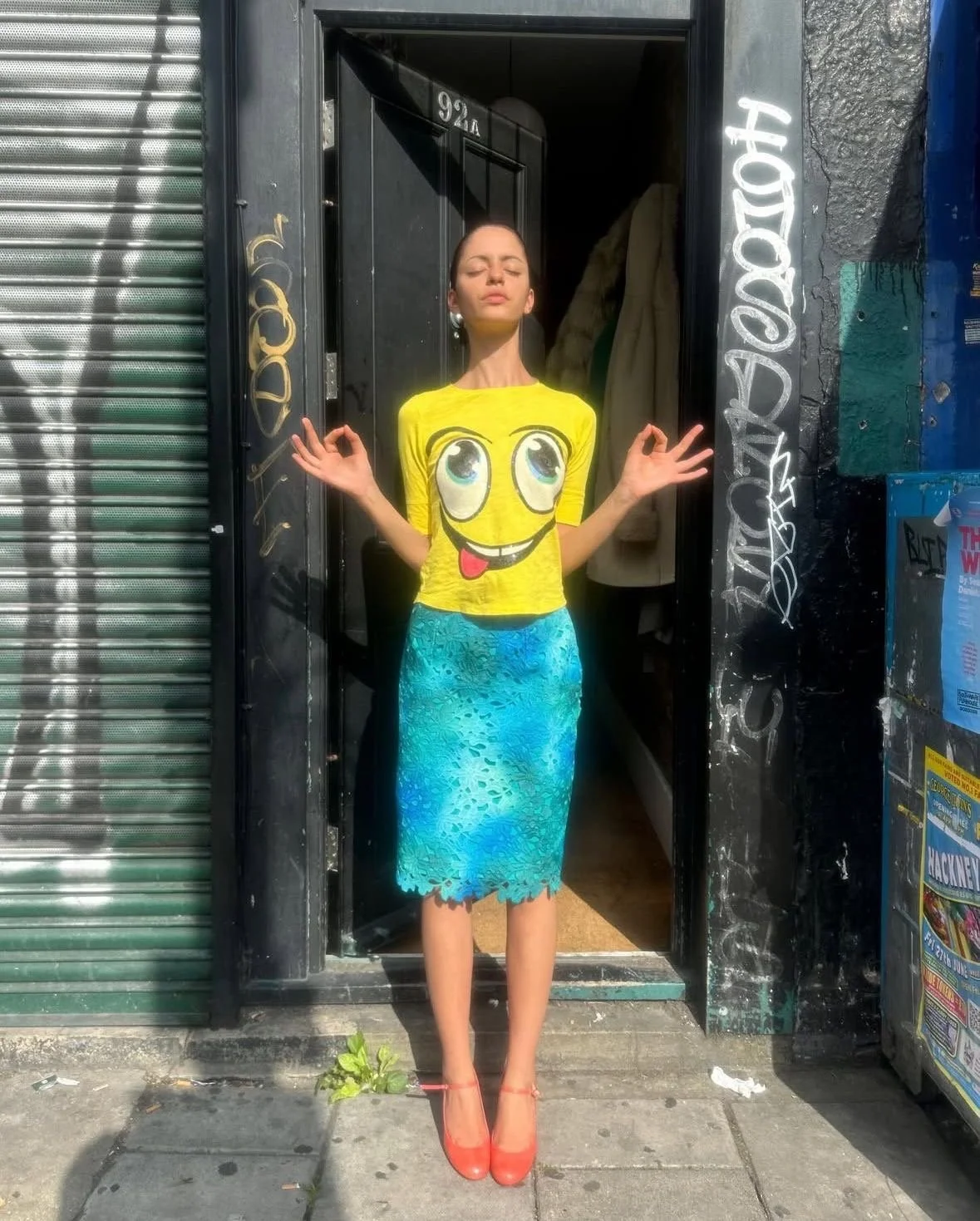
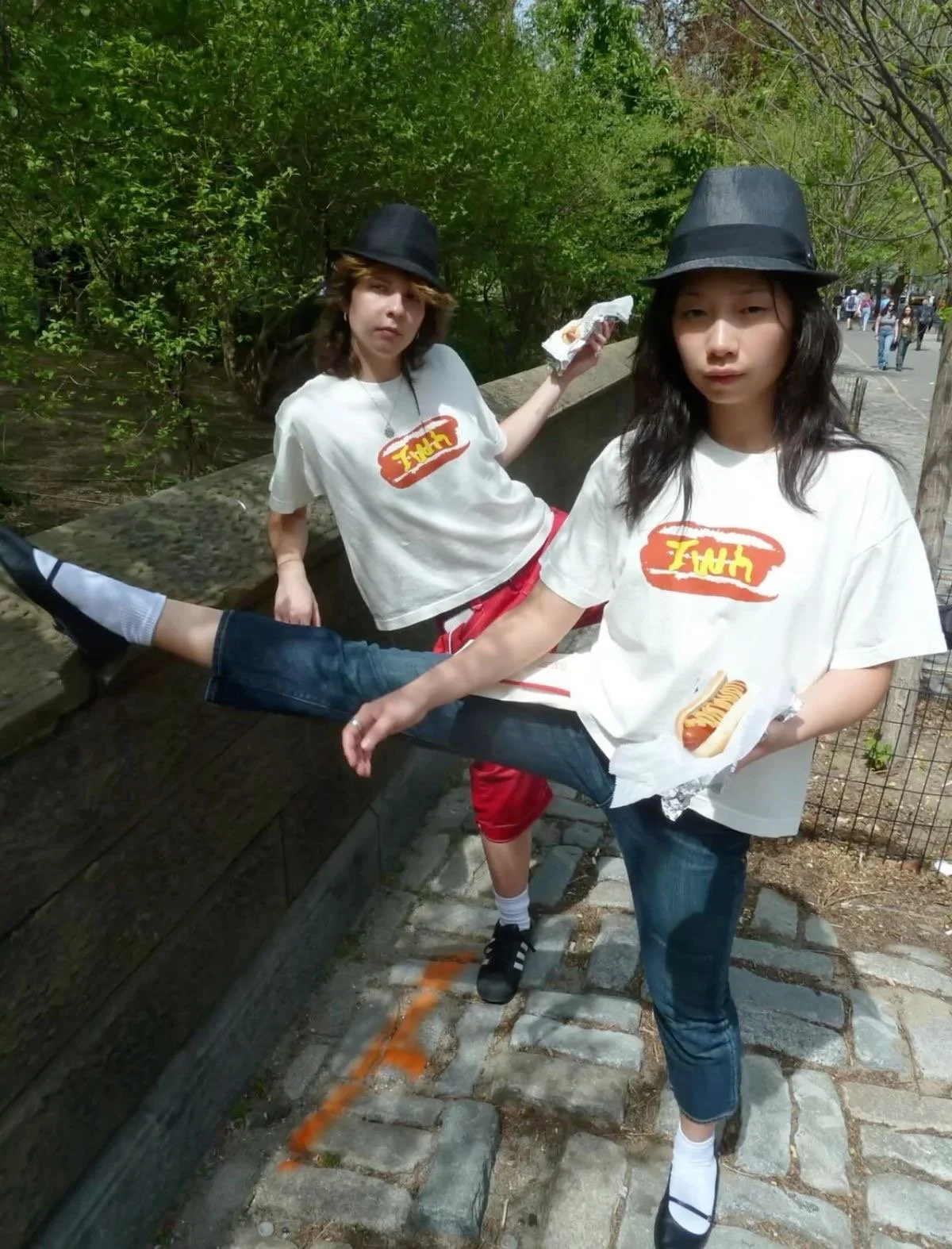
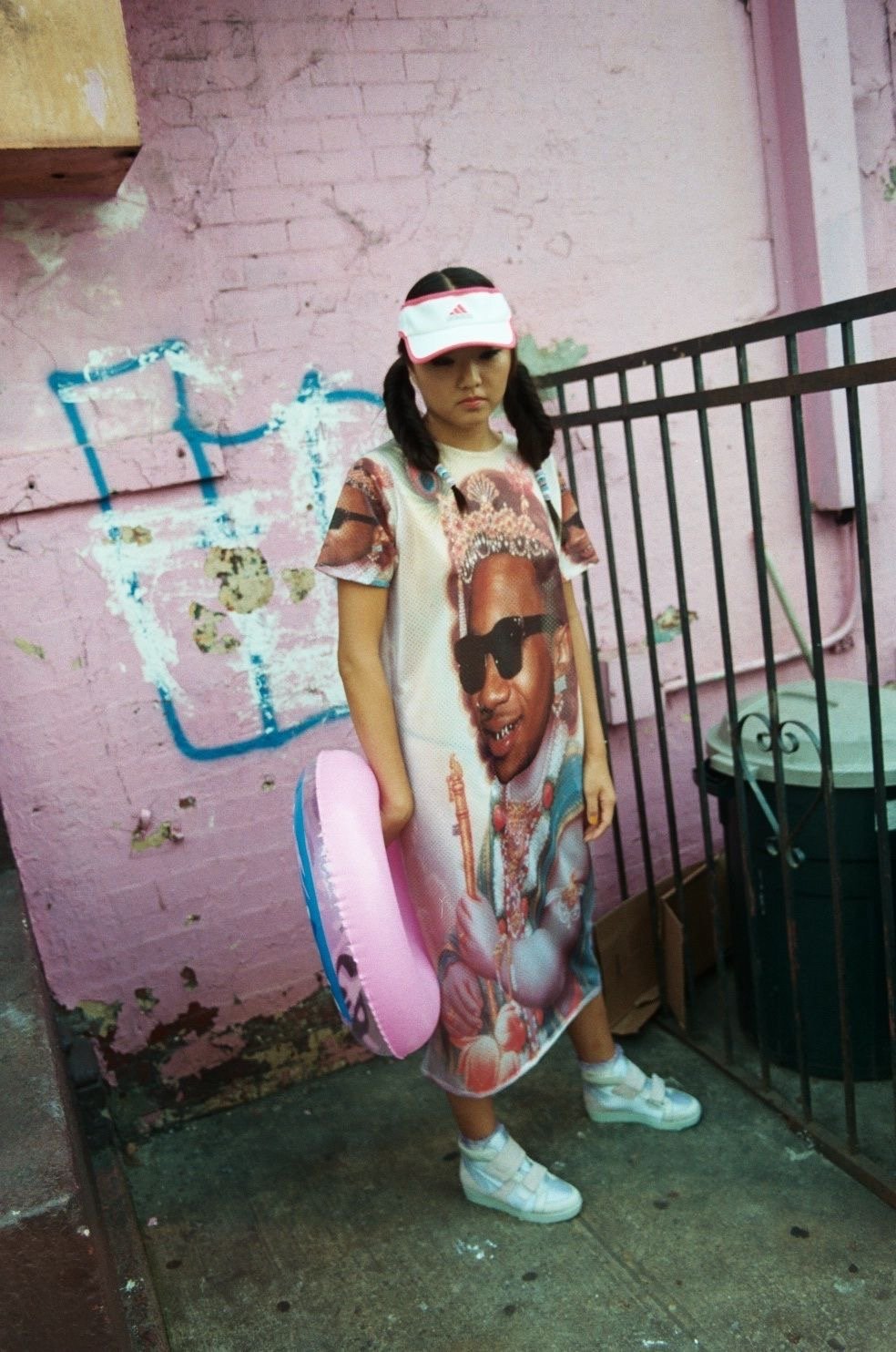
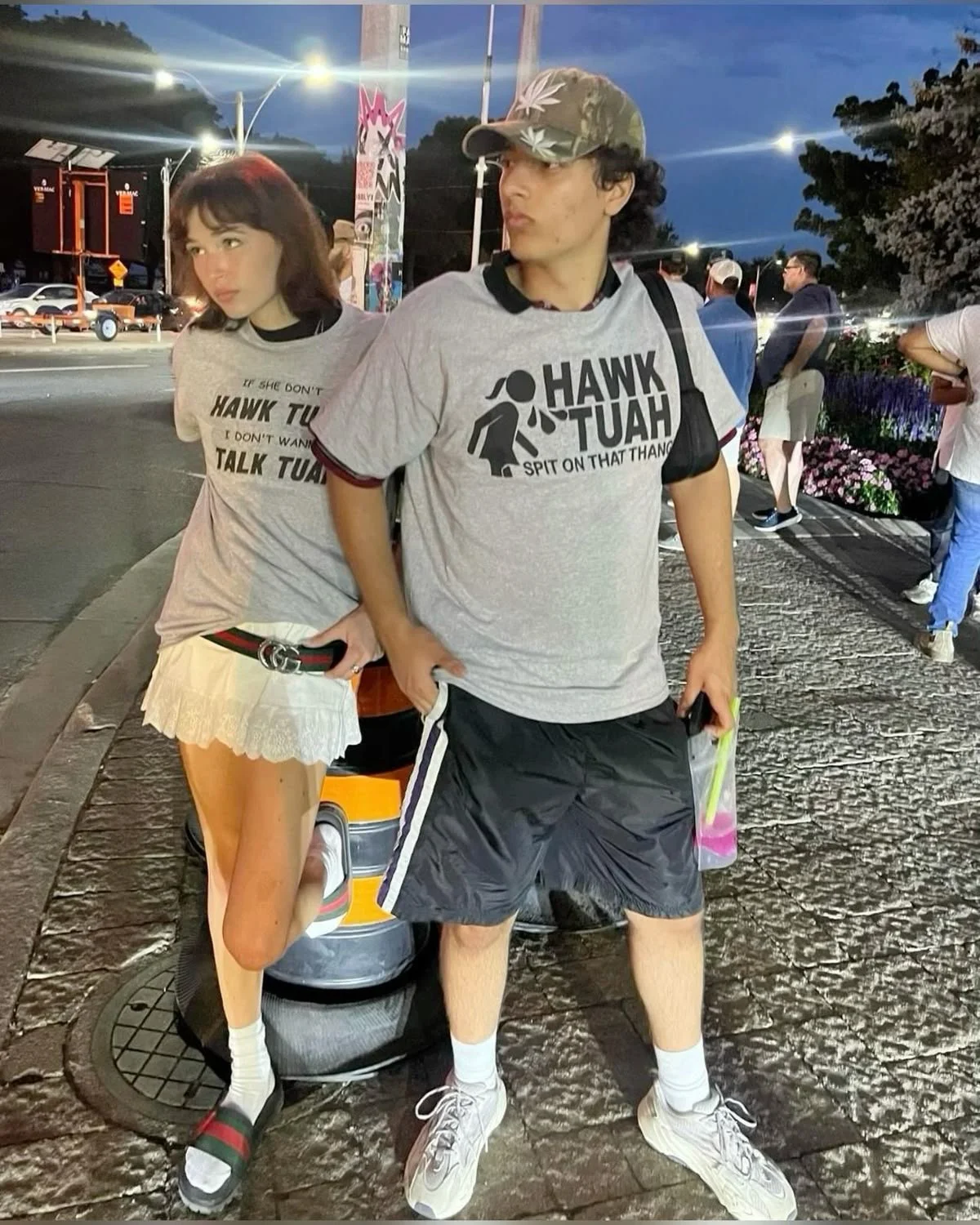
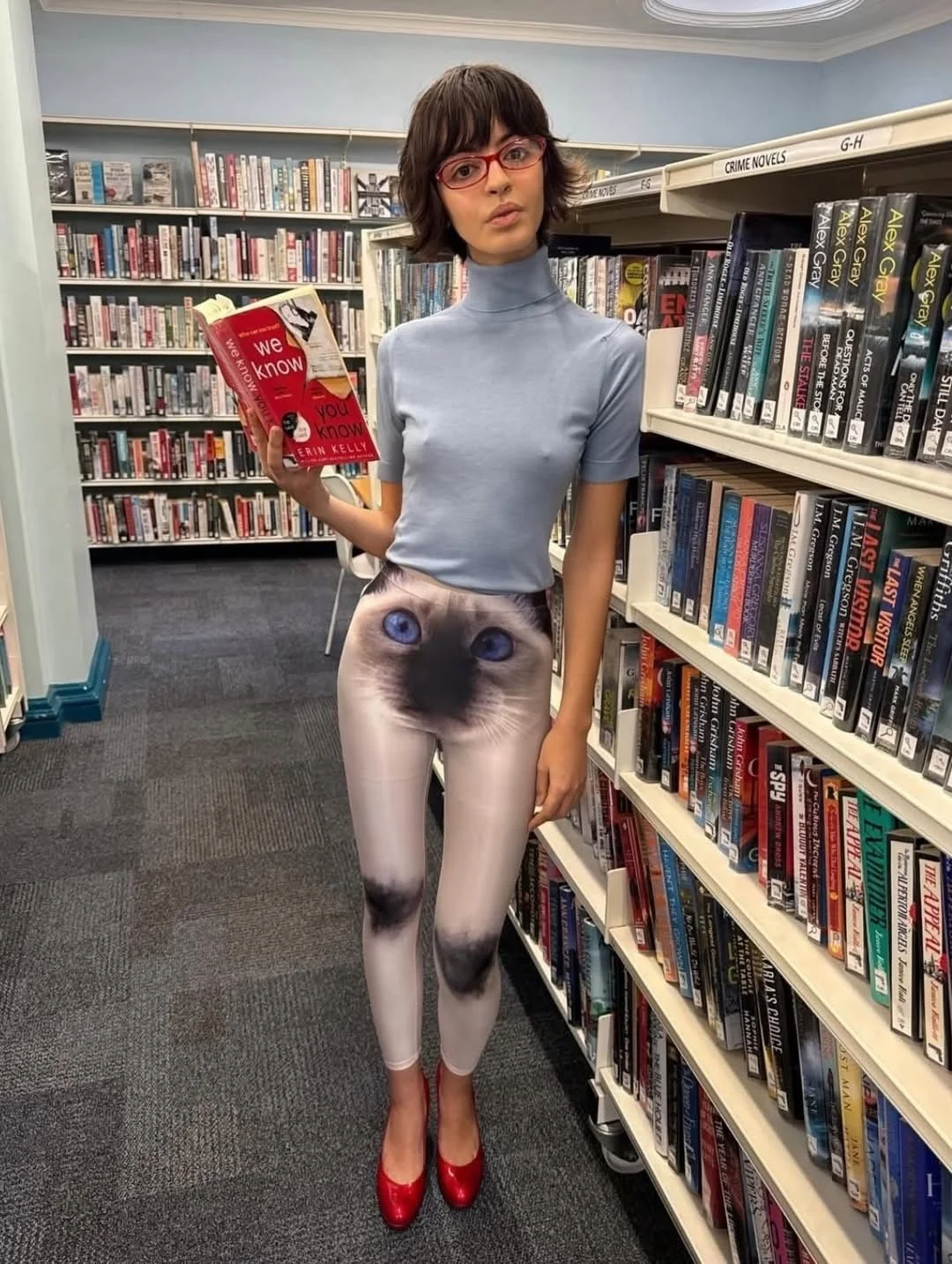
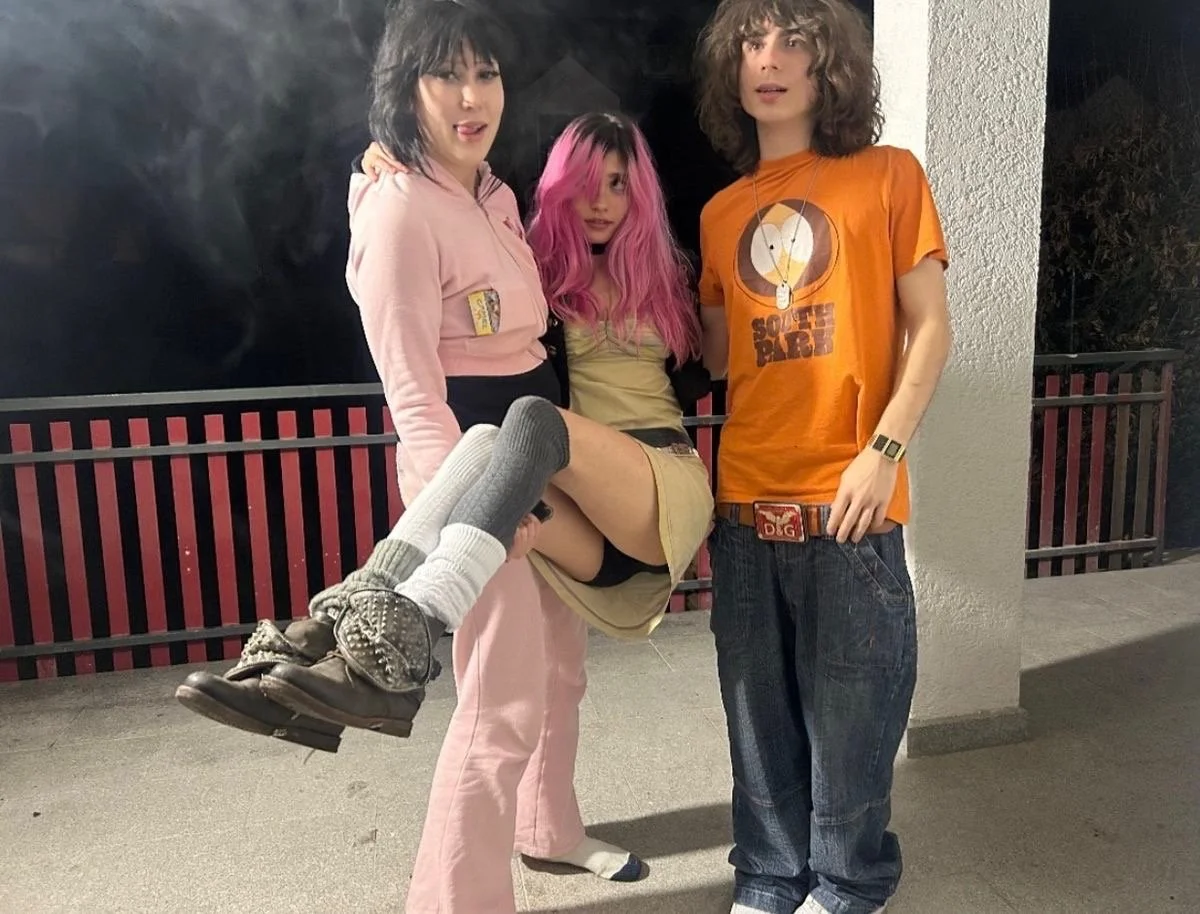
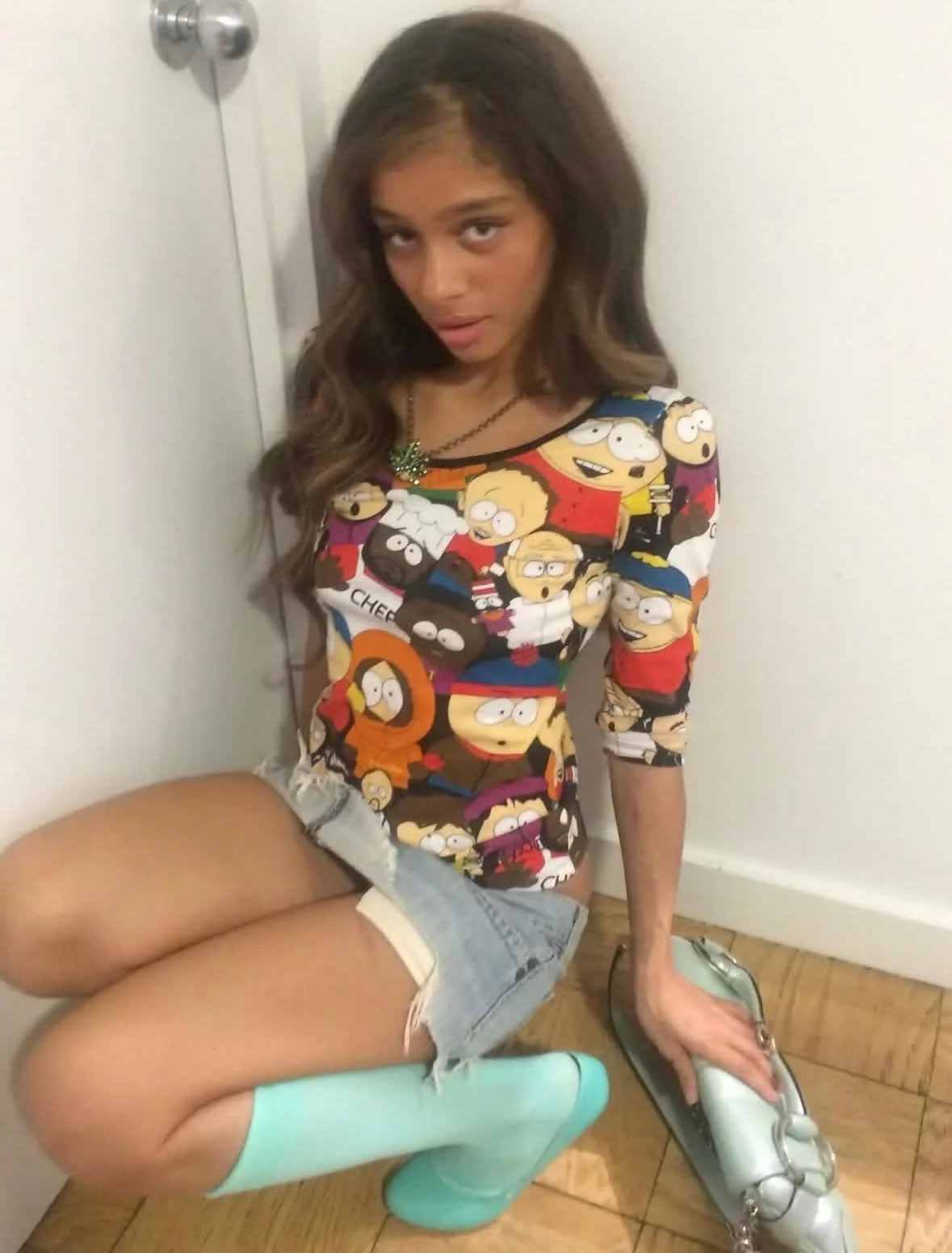
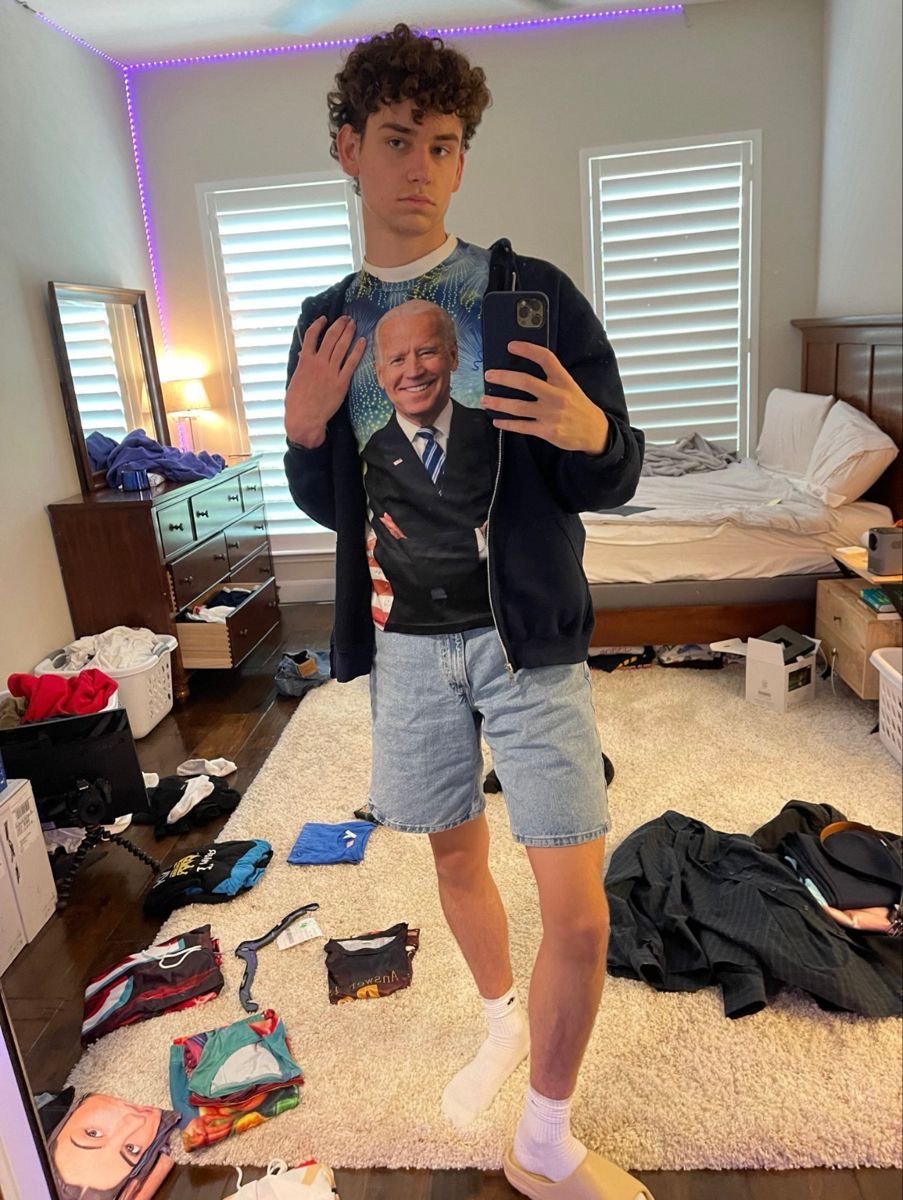
Photos from the Pinterest Board Nymphet Alumni created as an attachment to the podcast episode, courtesy of their Substack.
Doom-scrolling on TikTok or Instagram to find inspiration for an outfit, rather than a sleek dress-pant or vintage floral blouse, Gen Z’s fashion icons and e-girls are reaching for gaggles of clunkily ironic and internet-drenched silhouettes; nonsensical pairings of their closets’ finest #SWAG.
Fashion creators like The Tiny Jewish Girl, Katyabraithwaite, and even content creators like Turtlewiththehat and SlushyNoobz, are styling Galaxy Cat leggings, Disney-adult-logoed hats, and even jelly cartoon firkins to inspire current fashion trends, equipping Gen Z fashion in an early-internet language that is audaciously and anachronistically, human. It is quite clear that the Minions-tee styled with the South Park capri and Supreme-logoed backwards hat, could not have been, even in their wildest hallucinogens, sourced from the language of a Claude.ai nor Google Gemini.
Garment by garment, Gen Z’s fashion is rebuilding a digital utopia of memes, technologies, animated media, and internet humor that we do not have to question if made by the brain of a human or the algorithm of an intelligent agent.
And so, this morning, I wore what used to be my sleeping-shirt (a neon orange graphic t-shirt with Kenny from South Park in its centerfold), to work. Styled with a flowy skirt and camo-printed ballet-flat, all I was missing was my ipod-nano-pin and fidget-spinner bangle to complete the look. Though I may not be, my clothes, now, are most definitely online. As I was standing on the 1 as it stalled in the middle of the tracks, I was proud to be poised underneath the awning of a Genspark AI ad, speaking a fashionable vernacular that I knew it could not translate.