
While walking the streets of any major United States city, it is clear that politics have become a visible feature of everyday life. Political alignments being distinguishable through civically-minded clothing has allowed for the nonverbal signaling of one’s beliefs before even engaging with them.
Some of these signals can be loud, direct, and flagrantly displayed, like the large, white, MAGA (“Make America Great Again”) lettering, which has been printed across various clothing items and accessories. This, in turn, aids in the display of one’s contentness with President Donald Trump and his direction for our country.
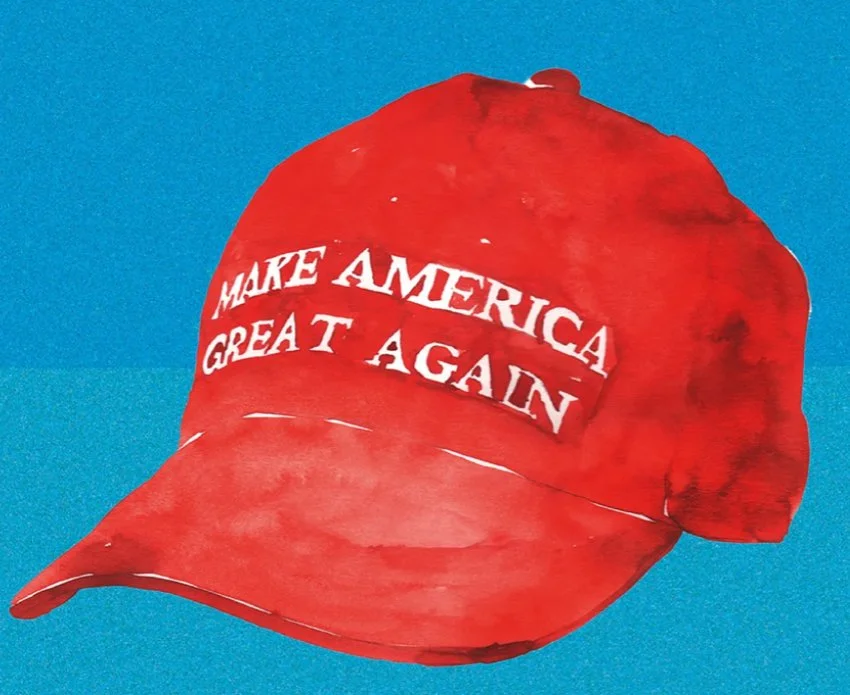
Courtesy of GQ Magazine - Image created by Kasiq Jungwoo
Whereas other political symbols are more of an understated whisper, almost hidden in plain sight, like the Palestinian Keffiyeh, a traditional Palestinian checkered scarf. The Keffiyeh has become a way to exhibit an individual’s solidarity with the Palestinian people’s plight, which can only be spotted by a politically conscious eye.
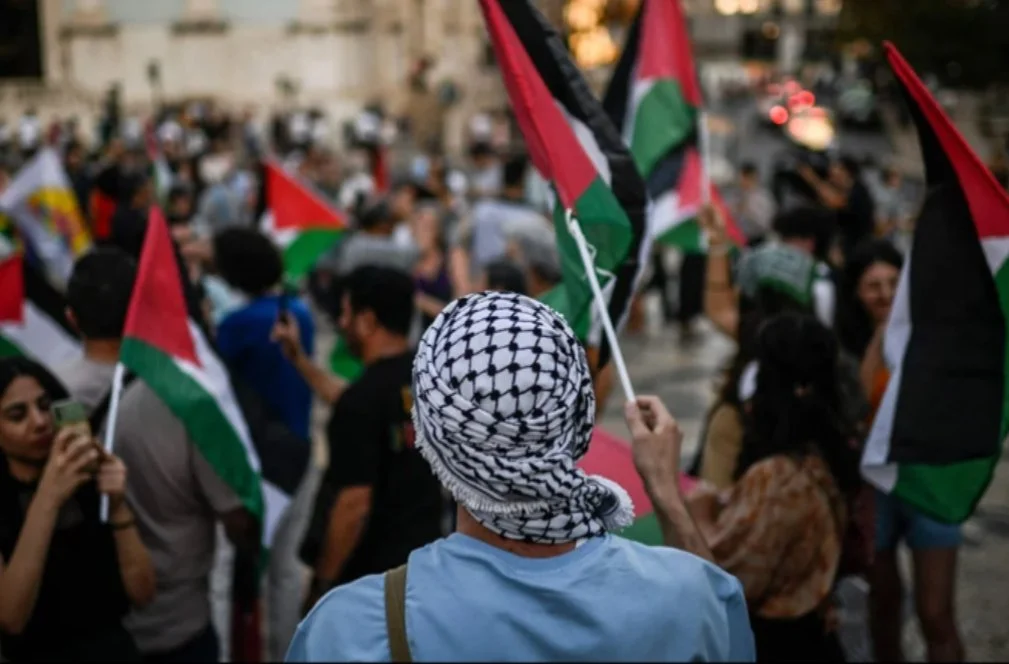
Courtesy of NPR - Photograph by Patricia De Melo Moreira/AFP via Getty Images
Affirming one’s beliefs through clothing can also extend beyond political party association to a multitude of sociopolitical issues like climate change and religious freedom. This can be demonstrated through the boycotting of fast fashion companies with the consumer instead, choosing to shop predominantly at secondhand stores or at eco-conscious small businesses.
The reclamation of the hijab, an article of religious clothing that has become a hotly debated topic, is empowering women to make their own decisions, in regards to how they want to express their relationship to their faith. Both of these instances allow for the individual to have their beliefs and fashion mainstreamed.
Although aligning yourself through fashion may seem like a nouveau way of expressing one's voice, it is a trend that has predicated American politics and descended across all political lines.
Colonial Fashion - The Conscious Creation of Clothing Sparking a Revolution
Before the United States of America was fully formed and self-declared its independence, another event triggered the start of politically motivated clothing: The Seven Years' War. The war was fought from 1756 to 1763 with global powers, France and England fighting over territorial gains, both attempting to stretch their imperialist reach throughout North America and beyond.
The resolution of said war was a British victory and a large amount of debt being placed on the Original Thirteen British Colonies, due to the conflict occurring mostly in their settlements. This debt was collected through an increase of taxes on everyday items, or taxation. A multitude of acts were passed by the British government dictating which goods were subject to increased taxation, one of which was called the Townshend Act.
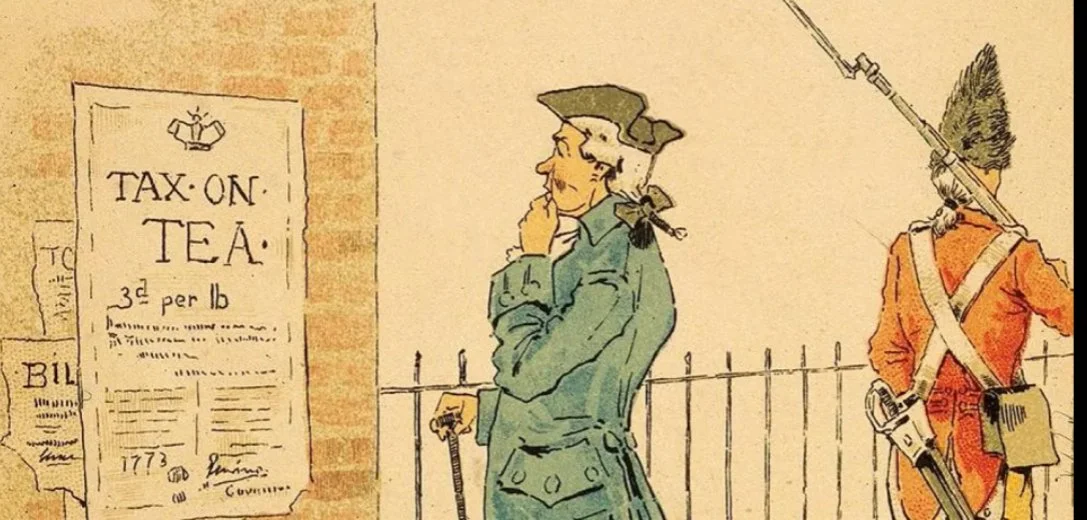
Courtesy of Hulton Archive/Getty Images
Under the parameters of this act: glass, lead, paper, tea, and paint were subject to the exorbitant duties. This decision was made with no colonial delegation, or say, making it extremely unpopular with the Colonies. Settlers began expressing their discontentment of the acts through organized boycotts of British goods.
Even though popular clothing fabrics: silk, velvet, linen, and lace were not subject to the tax surge, they quickly became politicalized due to their British importation. Wearing such fabrics translated as the visual embodiment of overindulgence and ongoing British subjugation. Wanting to distance themselves from the oppressive powers that ruled, American Revolutionaries began producing their own clothing.
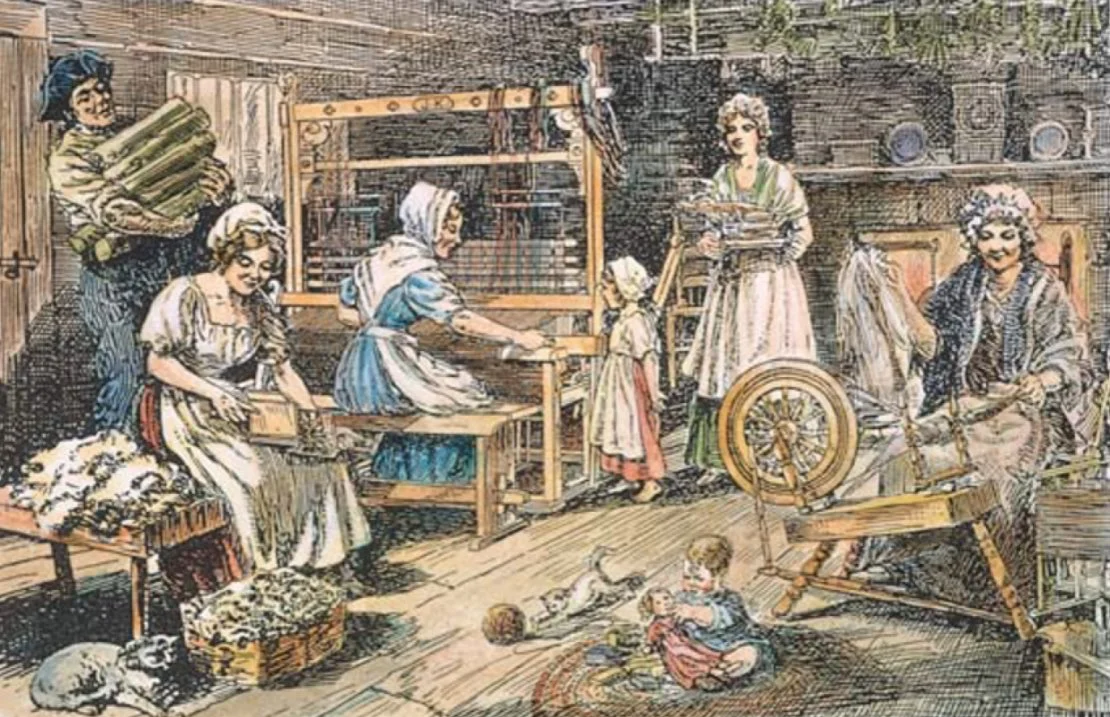
Accomplished through the use of a spinning wheel which could create various types of utilitarian materials like yarn, linen, and wool, the finalized self-produced product was named homespun. Spinning, or the act of using the spinning wheel, could be done alone or within a group. The group gatherings were titled Spinning Bees, and were frequented by women of all ages and social backgrounds. Some women attended due to their political nature or to assist those most affected by the restrictions, whereas others merely sought to be able to continue clothing their family during the strife.
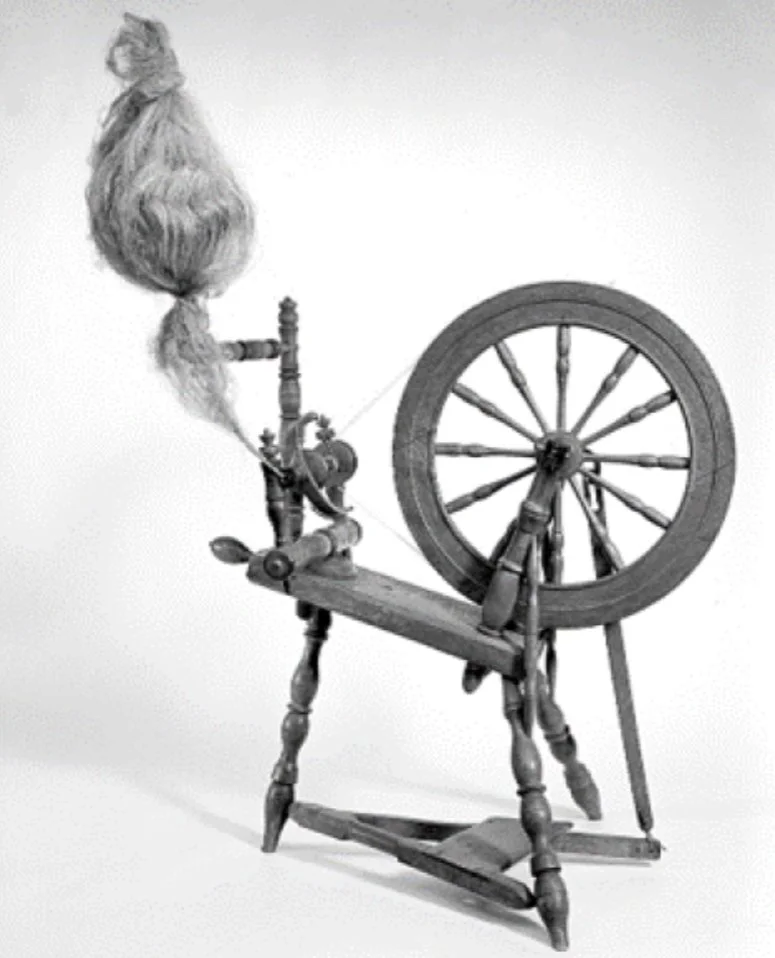
Courtesy of Fashion Archives and Museum of Shippensburg University
These events would range from being casual meetings to full blown competitions determining who amongst them could spin the most fabric within a given time frame. Some spinning contests were even held in public spaces with many frequenters being captivated by the women’s abilities. The popularity of Spinning Bees continued growing as the boycotts persisted, and received much media attention. All singing praises for the women involved, their patriotism, and commitment to the cause.
Courtesy of Fraunces Tavern Museum
The colonial boycotts through the joint efforts of women self-producing fabrics and clothing assisted in the overturning of The Townshend Acts in 1770. The only duty that remained was on tea, eventually leading to the colonial upheaval of the Boston Tea Party in 1773. These actions ultimately culminated in the Revolutionary War, and the United States of America’s founding.
Women were at the forefront of the fight for American independence, albeit not on the battlefield. They chose to employ a targeted use of the dollar, and fashion as their weapons to weaken British control. This led to one of the first women-aided political movements in American history, aptly named the Homespun Movement.
Suffragist Fashion - Dressing to Dismantle Public Perception
Far beyond the Declaration’s assertion that “all men are created equal,” a new political movement was taking shape and proving these truths to be wholly self-evident. Its mission was to create freedom and representation for American women, who, despite playing critical roles in the nation’s political struggles, remained excluded from the electoral process.
Upset with the inequality and unfair biases, the National American Woman Suffrage Association (NAWSA) was established in 1890. Their purpose was simple: granting women the same voting rights men have been afforded–also known as women’s suffrage.
Although NAWSA was fighting for women, their definition of women was at times, limiting as Black women were often not granted access to meetings, and assemblies discussing course of actions. This led to the founding of The National Association of Colored Women (NACW) in 1896, an organization that fought for intersectionality, seeing both civil rights and women’s suffrage as symptoms of a government intent on the systematic refusal of equality for all races and genders.
Courtesy of Library of Congress
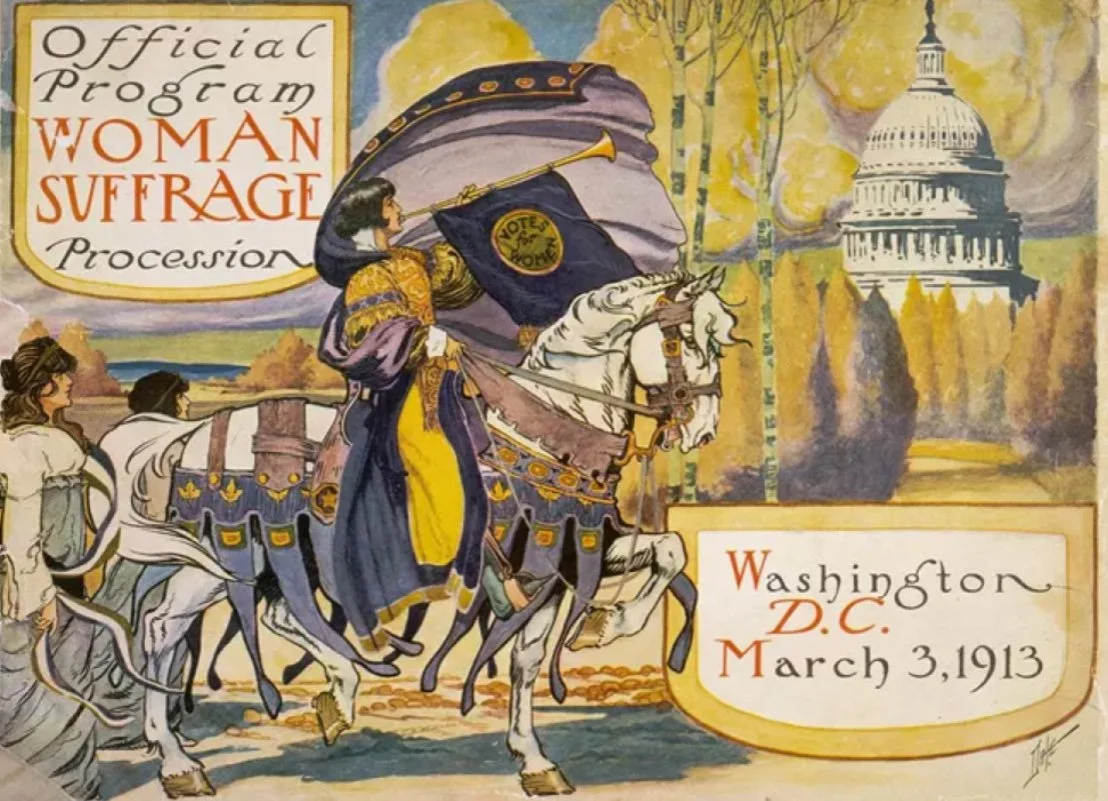
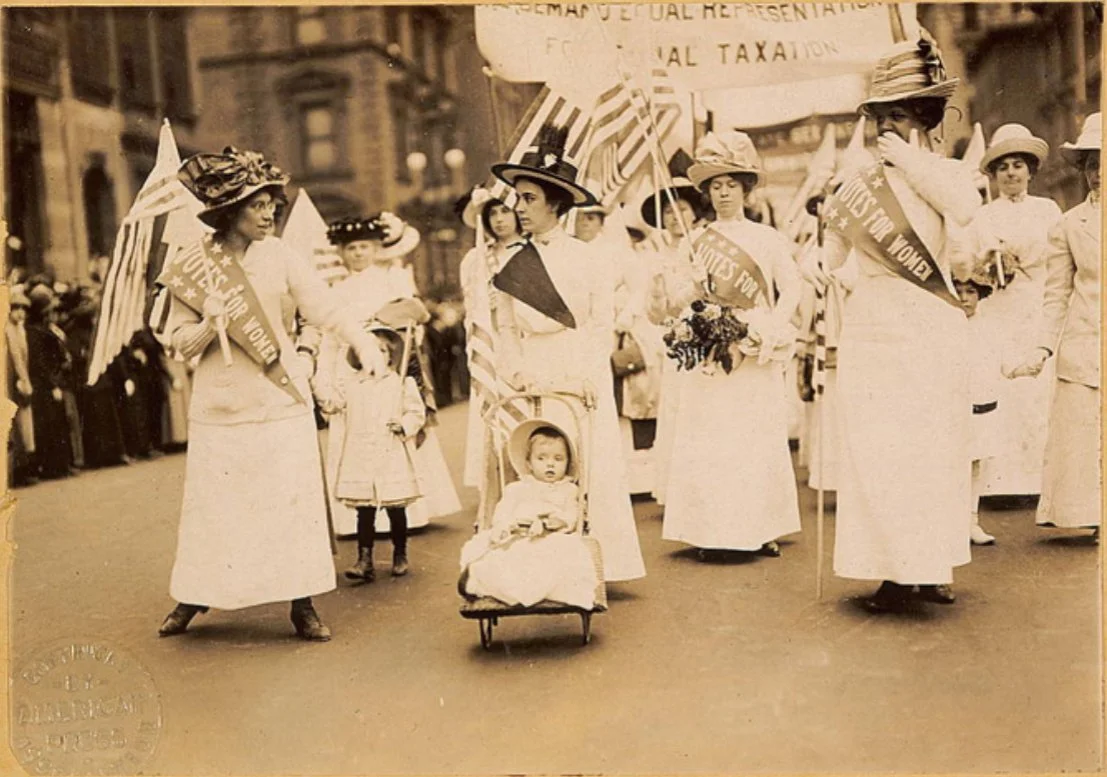
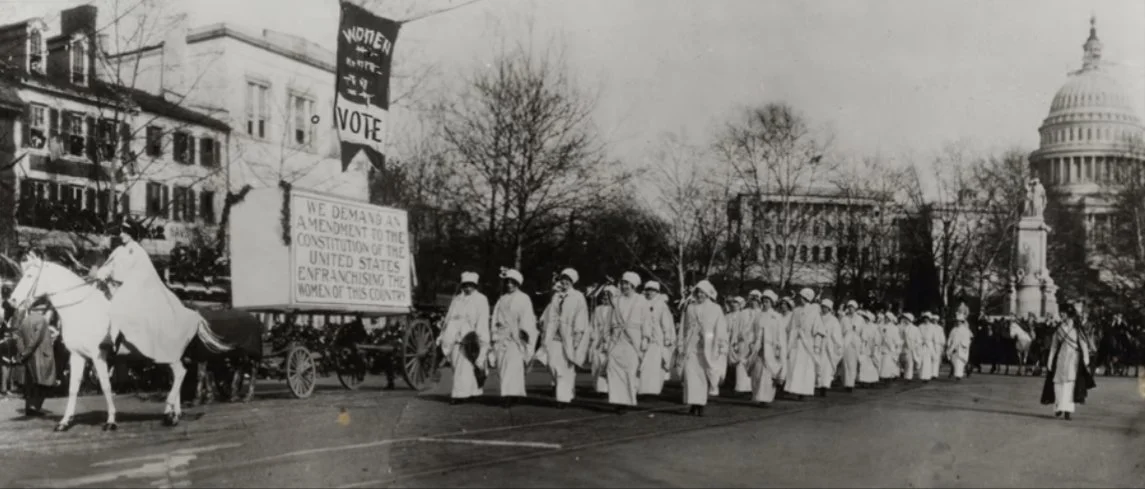
Discontent with the incremental gains and slow progression of the decades-long movement, both associations banned together on March 3, 1913 for the Woman Suffrage Procession. All the women involved were dressed in unison, adorned in modest white ankle-length dresses paired with gold or purple sashes. The march descended along Pennsylvania Avenue in Washington D.C., gaining an audience of over 250,000 people.
Courtesy of Winston Historical Society
The long ivory gown was chosen to project an image of innocence, purity, and close proximity to upper-class women. It was a two-pronged strategy meant to counteract the public’s perception of the typical Suffragist.
First, it aimed to disprove the media’s portrayal of a Suffragist being an immoral, masculine woman in pants. Which was an image regarded as very scandalous and subversive for the time.
Second, it was a tool to garner public sympathy, due to the unfortunate danger of engaging in the march amounting to many women being arrested or harassed. Through the assistance of onlookers, photographers, and journalists, the entire country would know of the violence being committed to innocent women by the men in power.
The sash colors were also chosen with specificity. Purple was used to showcase their loyalty to the cause as well as to American Democracy. Hoping to dismantle the idea that Suffragistswere against their country, a common thought among critics. This was due to their disruption of social norms and criticism of the government. Gold aimed to evoke hope, amongst not only themselves and the cause, but for an overall better, more equal society.
Courtesy of National Archives Catalog
It was not until seven years later, in 1920 with the ratification of the 19th Amendment were certain women granted the right to vote. Many women of color were still barred for another forty five years, until the passage of the Voting Rights Act of 1965.
Through the media coverage surrounding the Woman Suffrage Procession, the movement gained more visibility than ever before, allowing for their message to be heard all across the country. Unlike in other instances, where the Suffragists were unable to dictate their public personas, their clothing allowed for an analytical and tactical portrayal of their message. In turn, Suffragists were able to use the public’s long standing views of women and their attire for their own benefit, mobilizing a nationwide call to action.
Black Panther Fashion – The Creation of Community through the Redefining of Beauty & Uniformative Dressing
Through President Lyndon B. Johnson’s signage of the Voting Rights Act in 1965, Black citizens were finally able to vote without prejudice practices preventing them from fully utilizing their rights as Americans. Although Black Americans could now participate electorally, various barriers still precluded many from the voting booth.
Plaguing potential voters’ minds was an inability to designate a candidate that would sympathize and fight for their concerns. The Student Nonviolent Coordinating Committee (SNCC), a Civil Rights organization, and their chairman, Stokely Carmichael, sought to address these apprehensions. Traveling door to door, they spoke to the community of Lowndes County, Alabama about the benefits of registering to vote, and their right to political representation.
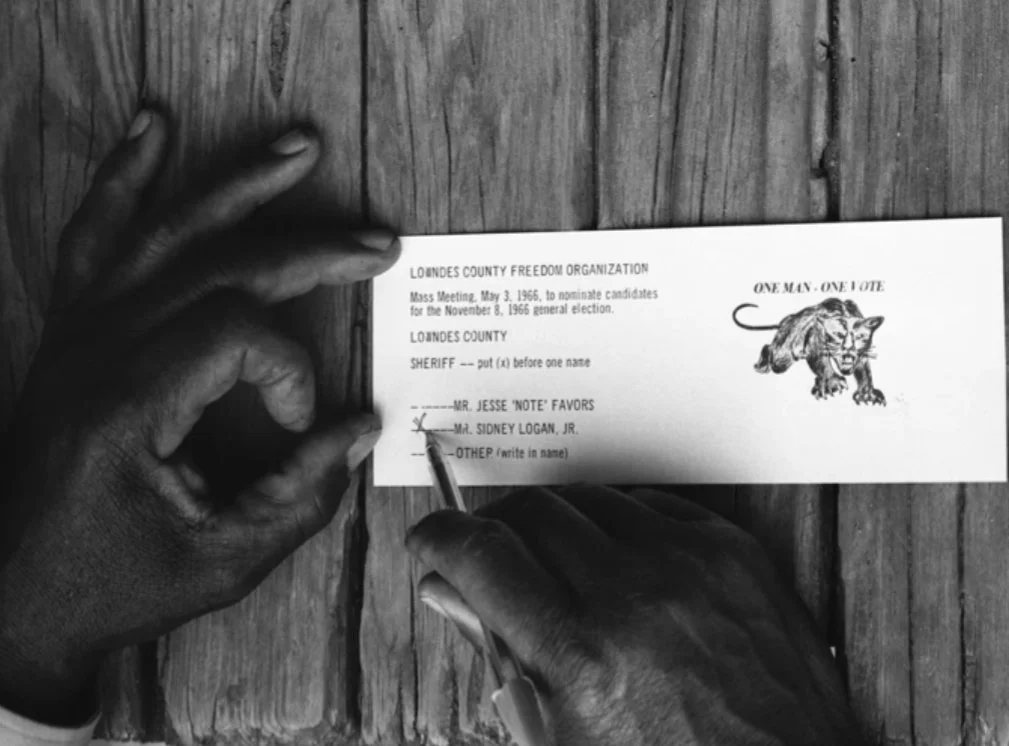
Courtesy of NPR from Flip Schulke Archives/Corbis via Getty Images/Simon & Schuster
This initiative aided in registering ~2,000 new voters, and brought about a new political party, Lowndes County Freedom Organization (LCFO), aimed to specifically meet the needs of Black Americans. LCFO chose a Black Panther as their party distinction due to the animal rarely attacking preemptively, but when challenged will viciously retaliate.
Word of these accomplishments spread all over the United States, reaching two Black activists in Oakland, California, Huey P. Newton and Bobby Seale. Newton and Seale sought to end the over-policing of Black communities and police sanctioned violence, founding the Black Panther Party for Self-Defense (BPP) in October of 1966.
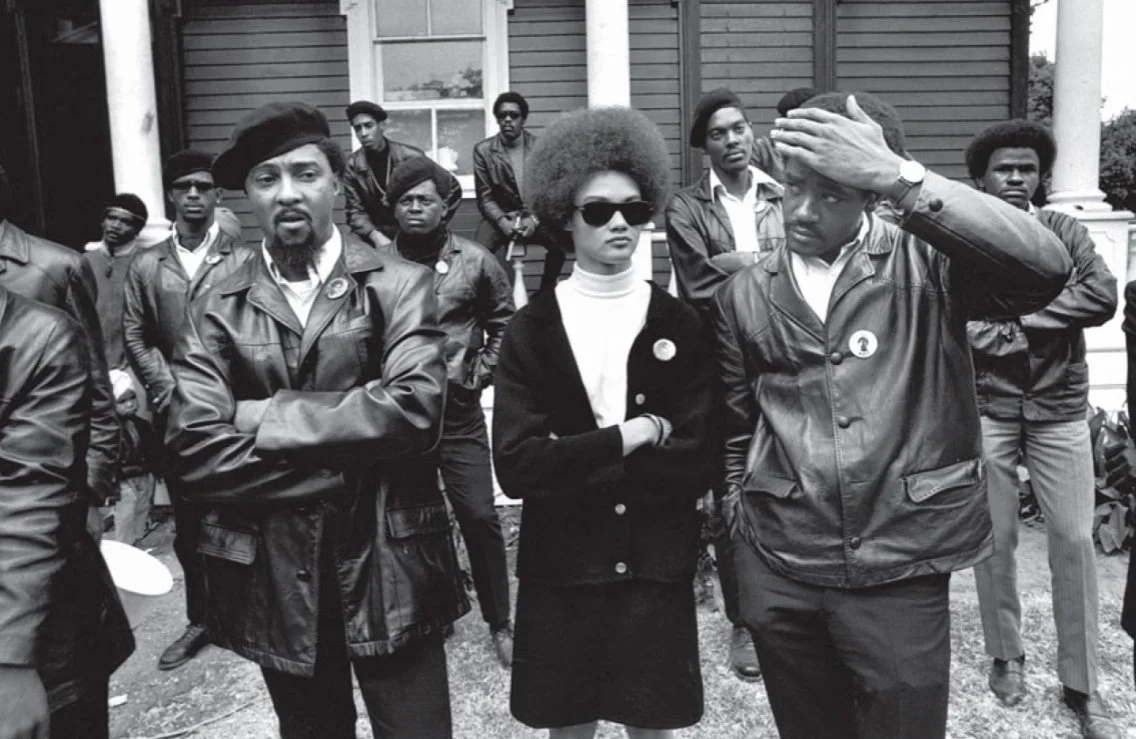
Courtesy of thestrugglefortheworld.wordpress
The group is most known for their work patrolling the streets of Oakland, and other neighboring cities, assuring no harm came to Black citizens. But, that was only a small part of the organization, the Panthers also uplifted residents through their organization of free food programs, clothing distributions, sponsorship of legal aid offices, and the creation of thirteen free health clinics.
BPP had a distinctive, easily recognizable way of dressing that included an afro worn with or without a beret, a leather jacket, sunglasses, and a firearm fashioned around the wearer’s chest. Their uniform was a stark difference from the leaders of the Civil Rights movement, who had exclusively worn formal clothing. Pieces selected by the Panthers were symbolic, meant to challenge respectability politics, and were synonymous with their goals.
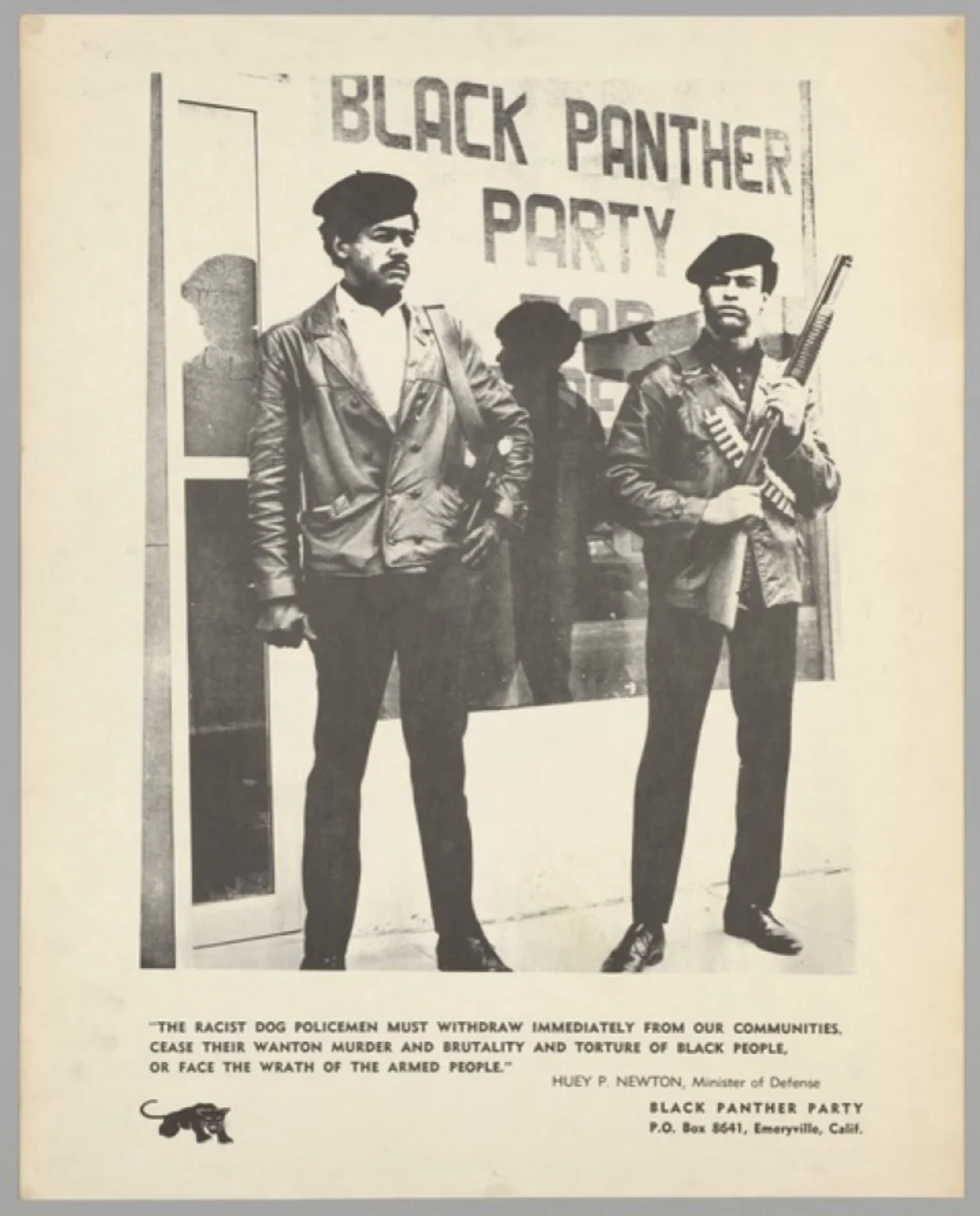
Courtesy of the Smithsonian National Museum of African American History and Culture
Afros were reclaimed by the movement, after decades of Black men and women having to straighten their naturally curly hair to adhere to the eurocentric beauty standards. BPP believed in having pride in their natural features, co-opting the slogan, “Black is beautiful”, wanting members to be truly accepting and appreciative of themselves.
Berets could be worn as is, or with buttons that featured political messaging. It was chosen by Newton and Seale after seeing the hat worn by French Resistance Fighters, a collective that fought Nazi oppression during World War II. Pins were used to display the individual’s political alignments, allowing them to connect with like-minded members.
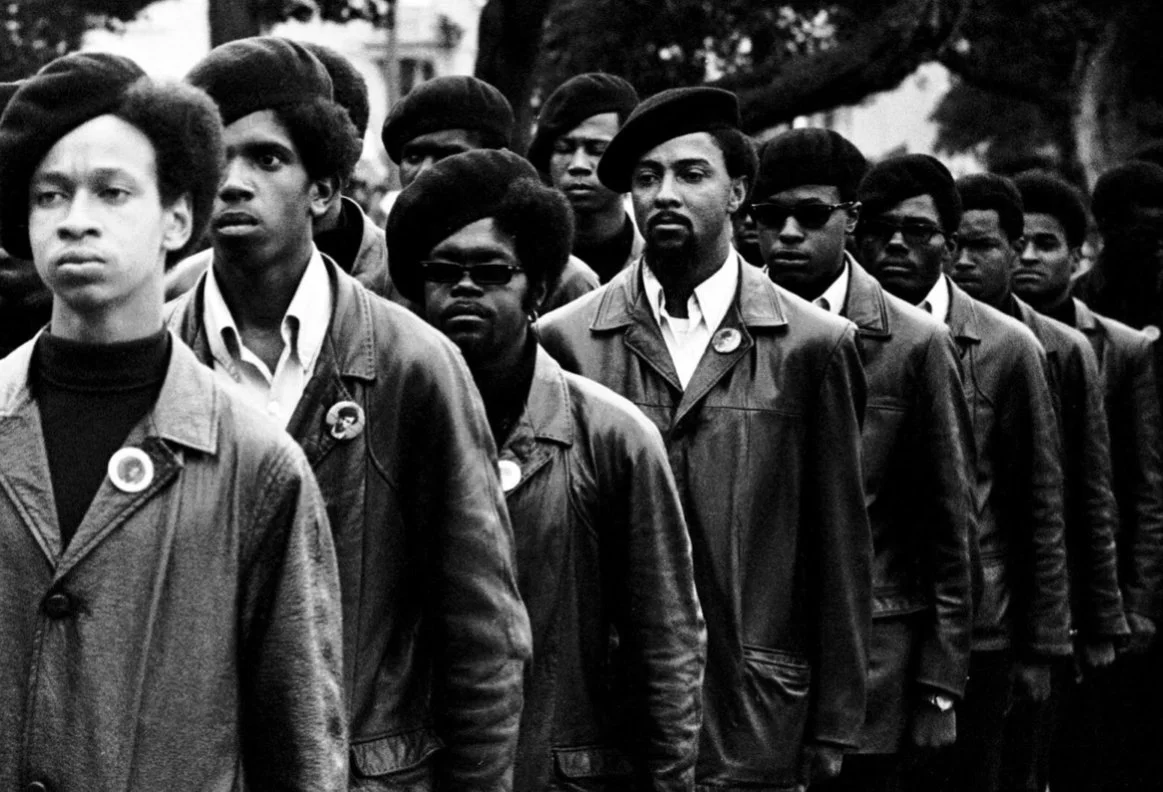
Courtesy of In These Times
The leather jacket was a practical item many people already owned, making matching more convenient and accessible. The jacket’s color varied by chapter, but most often included black, camouflage and green. Sunglasses were used to shield their identities from the ever growing presence of the Federal Bureau of Investigation (FBI), and its director, J. Edgar Hoover, who heavily surveilled the group.
Both a symbolic and tactical piece of machinery, the firearm, like the Black Panther namesake, was not to be used offensively. The weapon acted as a warning of what could occur, if harm was brought to themselves or other community members. Newton and Seale used California’s open carry gun law to their advantage making their armed neighborhood surveillance completely legal.
Due to pressure from the FBI and ongoing leadership disputes, the Black Panther Party was disbanded in 1982, but their contributions to society continue to influence today’s politics. The Panthers placed Black Pride, non-conformity, and philanthropy at the forefront of their movement. This was channeled through their social initiatives, and strengthened through the Party’s use of fashion. BPP’s rejection of the status-quo continues to inspire new generations, leaving behind a legacy of strength through reclamation and advancement of their community.
Revisiting historical events through the lens of fashion allows us to become more conscious of the power clothing has in defining who we are.
As stated by Andrew Bolton, Curator in Charge of The Costume Institute at the Metropolitan Museum of Art, “Fashion functions as a mirror to our times, so it is inherently political. It’s been used to express patriotic, nationalistic, and propagandistic tendencies as well as complex issues related to class, race, ethnicity, gender, and sexuality.”
How we dress is a force of nature: it can inspire others, help us regain our agency, and outwardly present our beliefs to the world. So, as you prepare your outfit for your next event or work day, think critically about the clothes you choose, what they mean to you, and never forget the power fashion wields.