
FSHN FEST: A Debut, Industrial Edge & Quiet Luxury on the Runway
Inside the venue, the atmosphere is a pressurized mix of thick leather, industrial bass and the humid heat of a New York summer. The AC has been out for over an hour; designer Budah mentioned he'd been wrestling with the unit since he arrived, but the stagnant air only adds to the raw, insurgent energy of the night. This isn't the sanitized, corporate-sponsored air of a Midtown tent. This is the front line.
The event pulsed with a specific kind of grit that's often mischaracterized by the uninitiated. Critics frequently reach for the "gothic" label to describe the monochromatic, heavy-duty aesthetic on display, but the designers at the heart of this movement are quick to correct the record.
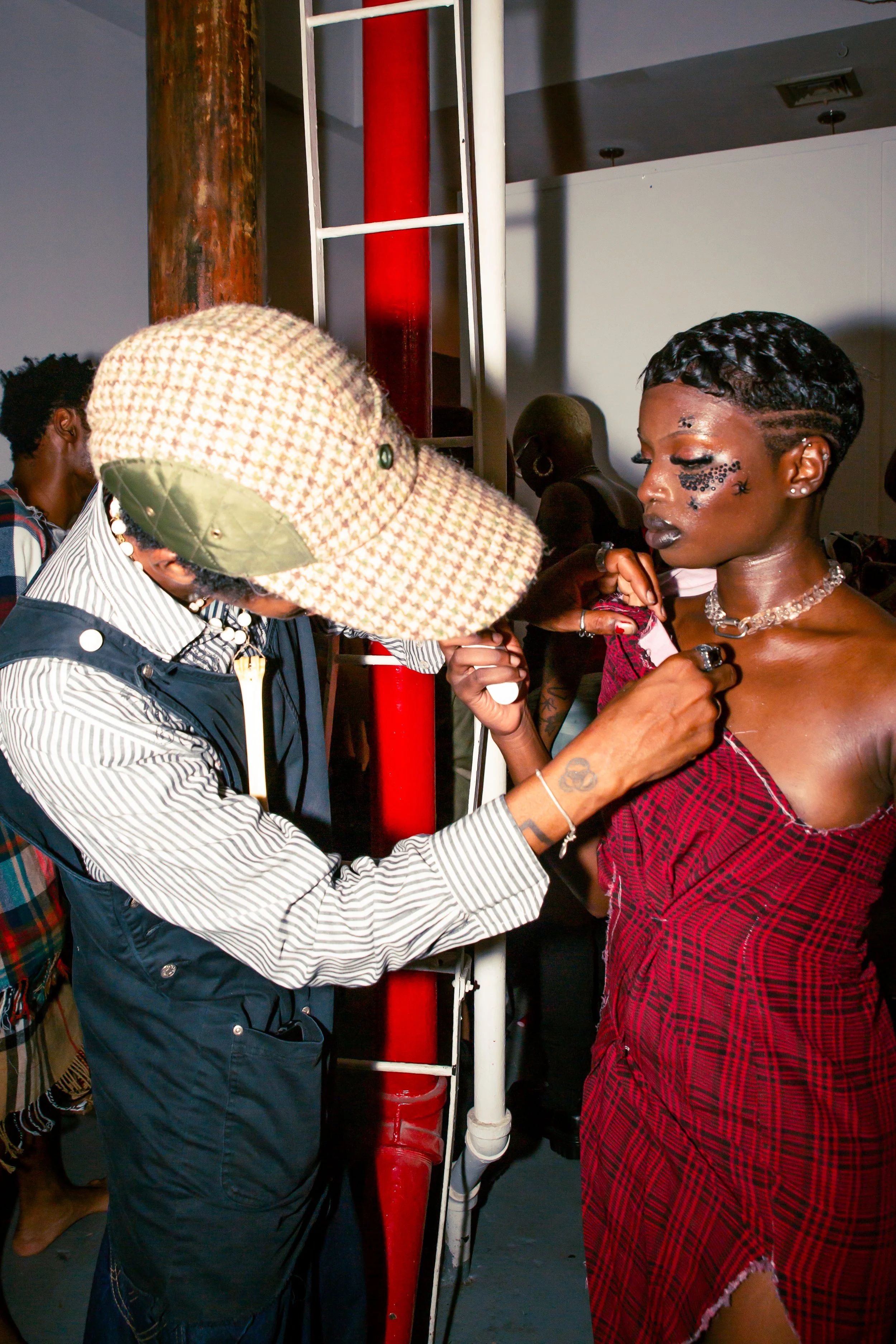
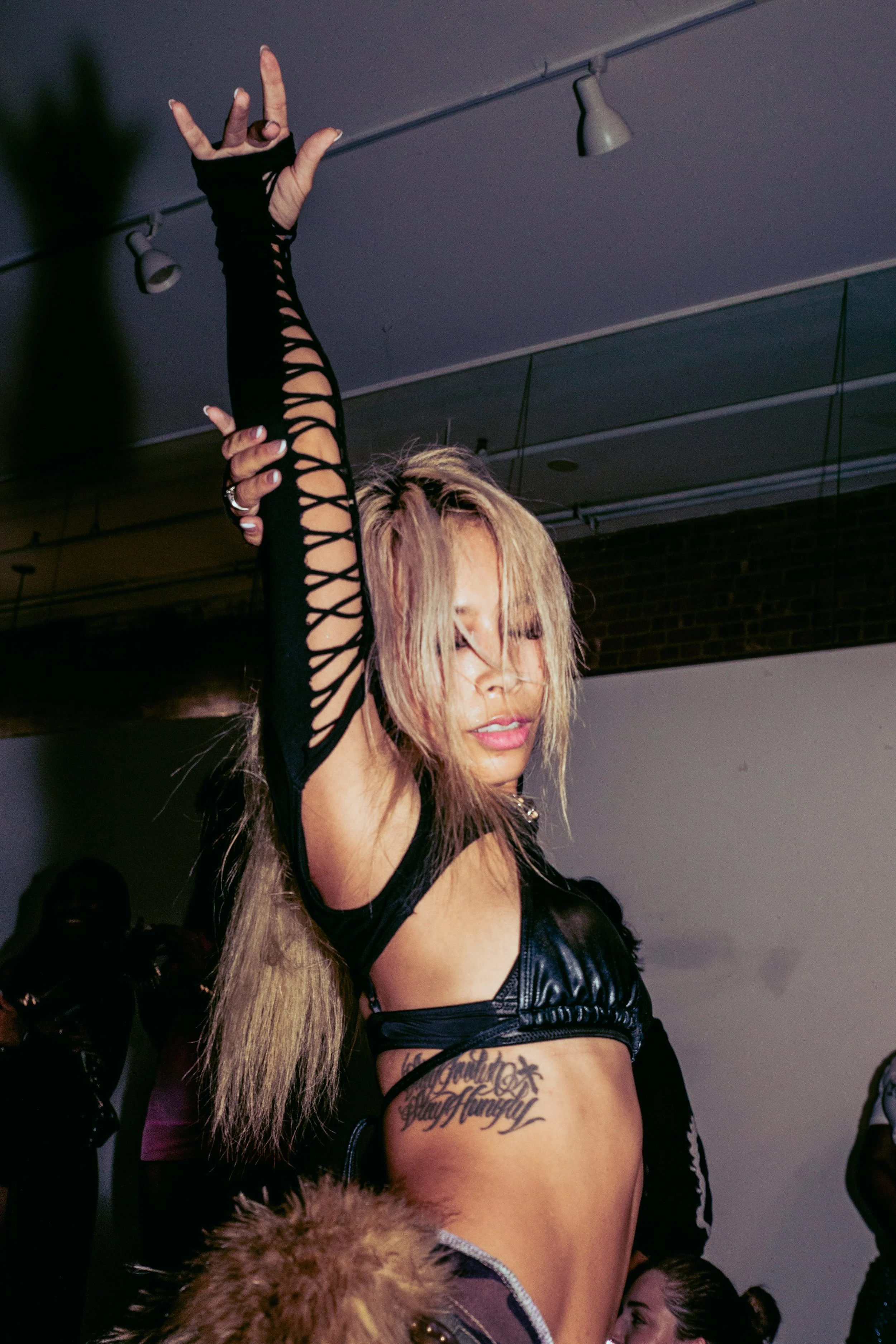
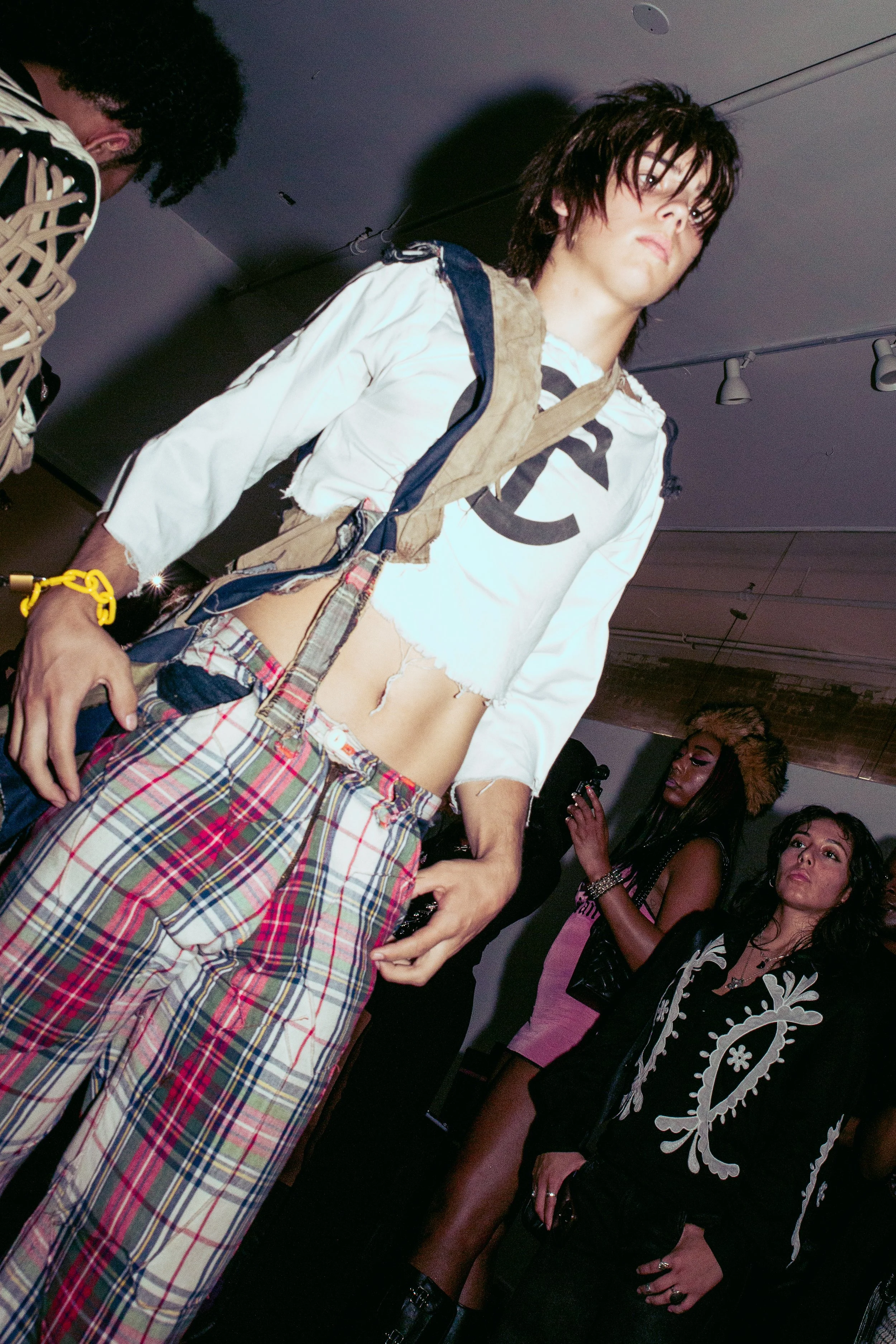
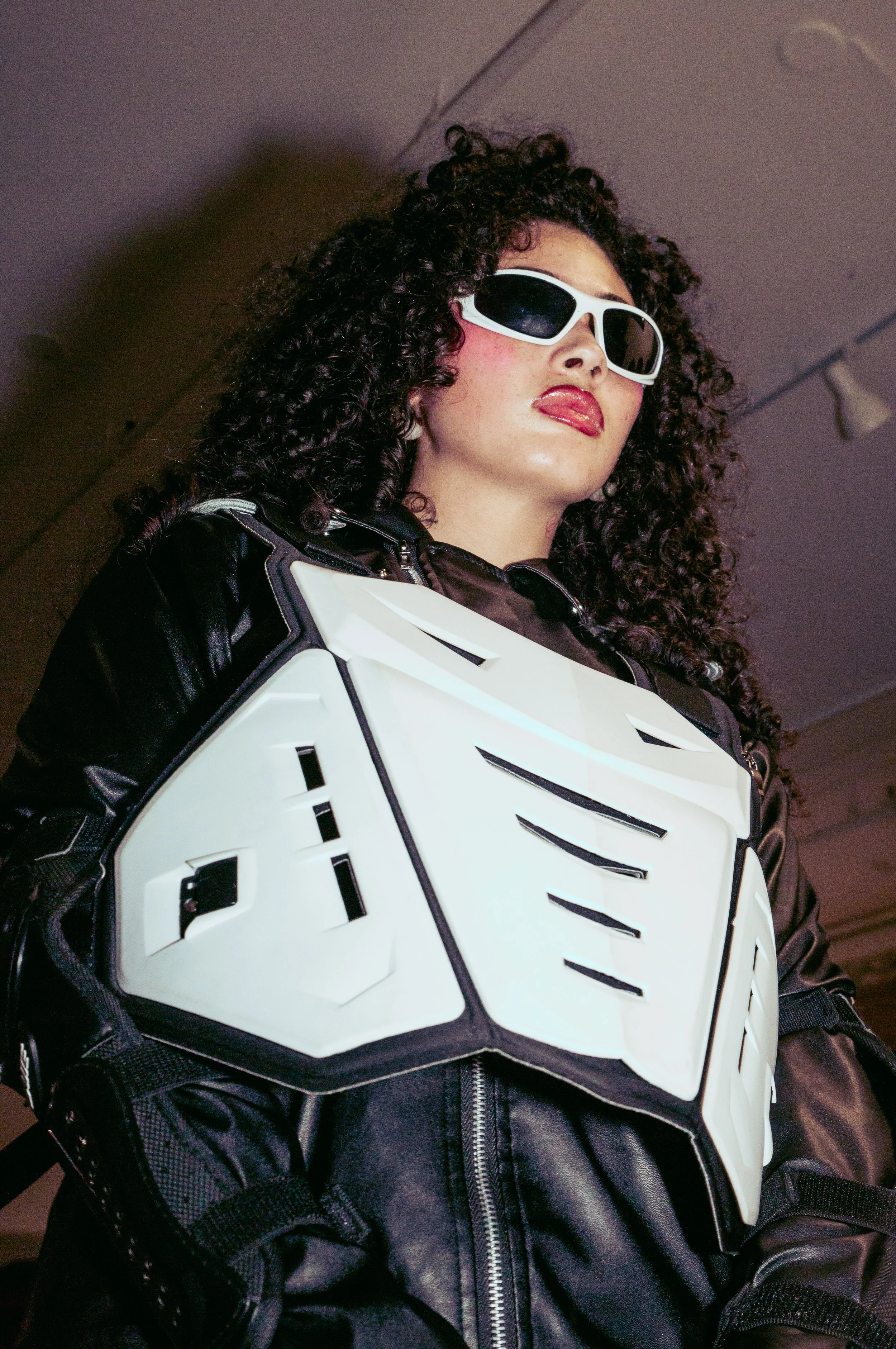
As the first look emerges, the mission statement is clear. Budah leans in, cutting through the noise: "It's not gothic... it's just industrial. It's fashion, FSHN."
Return to Monad: The Synthesis Debut
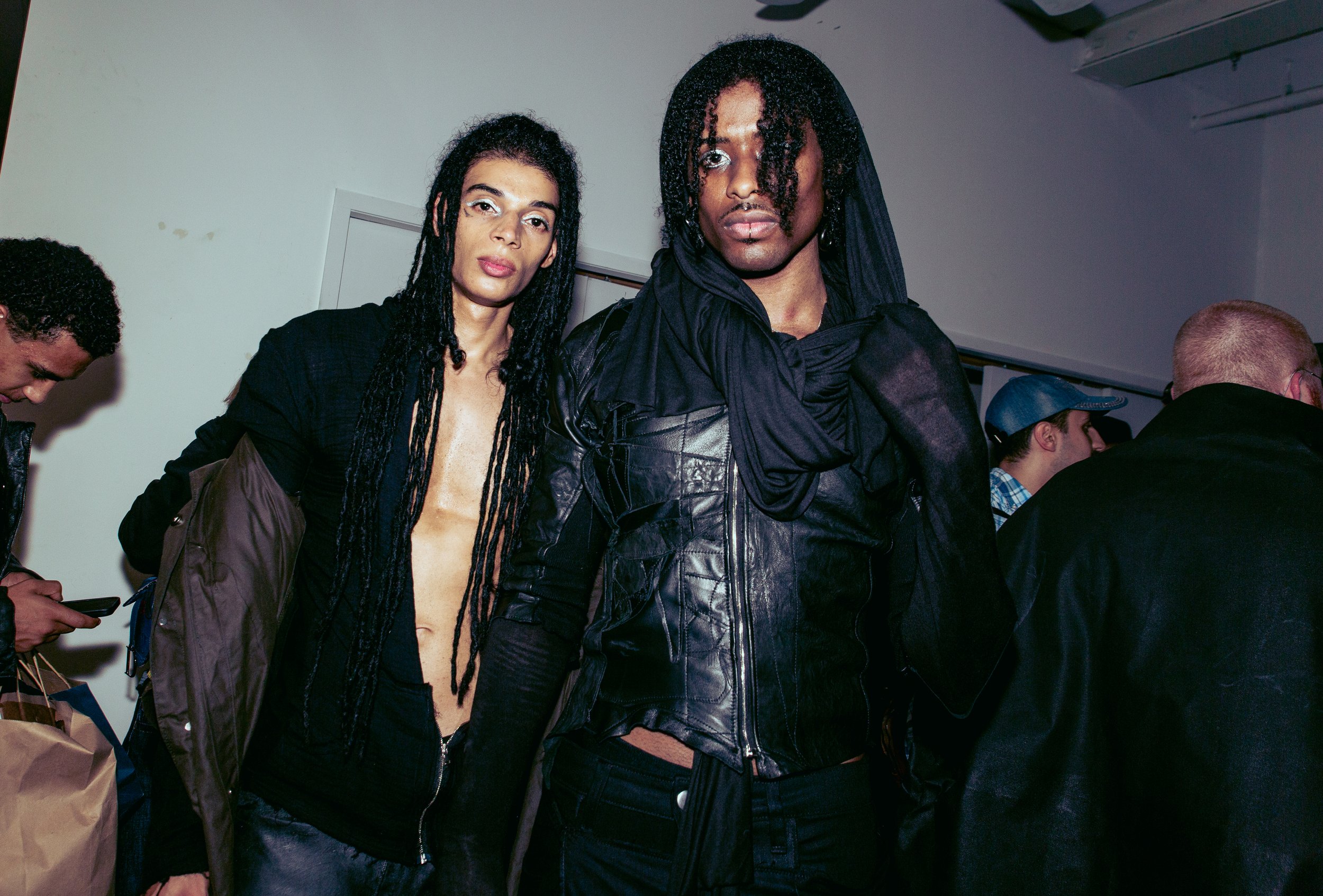
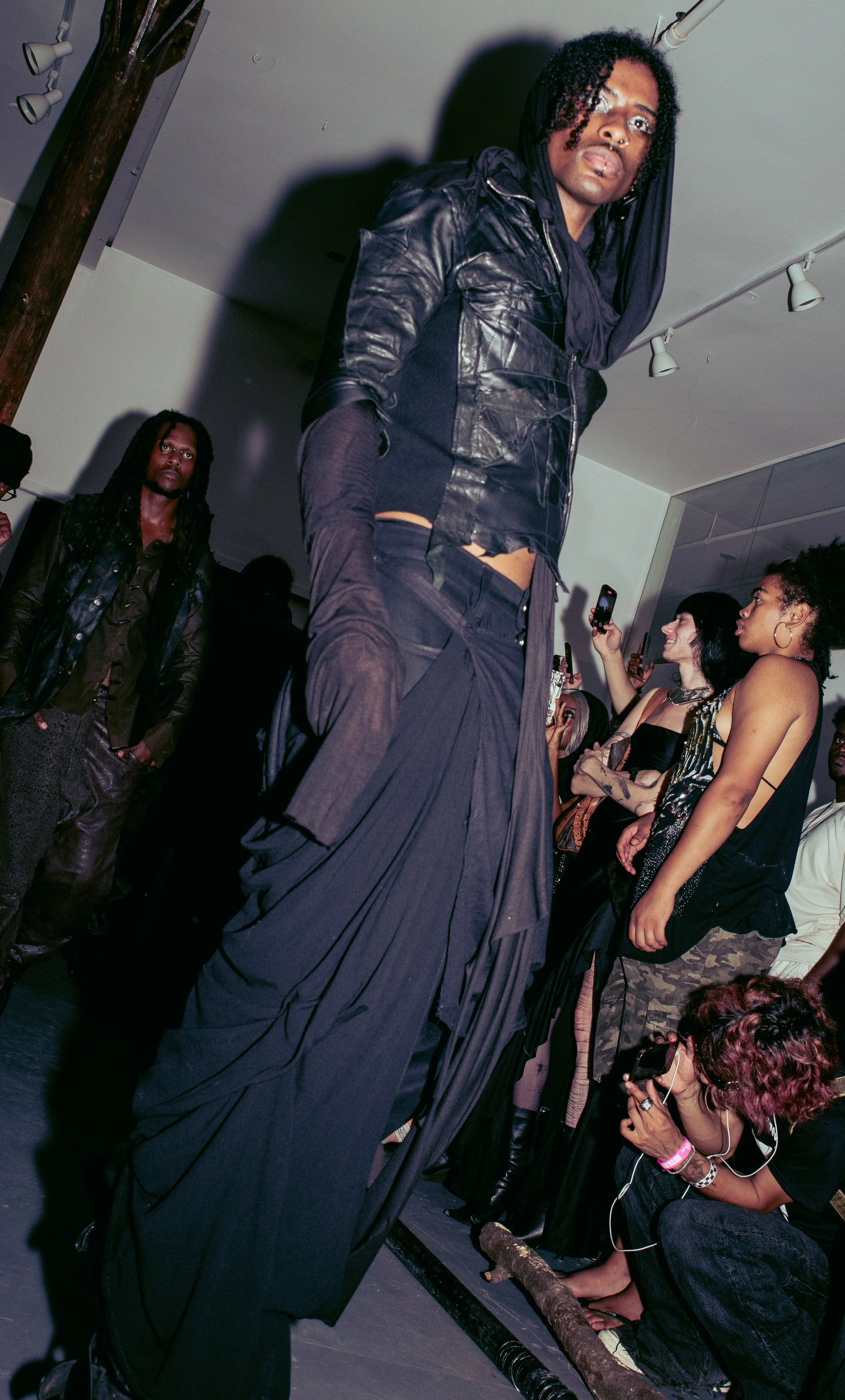
Opening the show was Reece Wakely's debut collection, Synthesis, displaying a fundamental challenge to traditional notions of fit. Working out of his Brooklyn studio and now on the New York stage, Wakely prioritizes volume and proportion over standard textile use, treating the human form as a site for structural intervention.
The collection leaned into dark, ashy-brown fabrics with oily finishes that caught the strobe lights with a metallic sheen, a monochromatic tension punctuated by a stark, all-white finale featuring a flag-bearing model, a moment of purity amid the industrial grime.
The silhouettes played aggressively with shape: tight leather jackets juxtaposed with extra-long sleeves, fabric draped in skirt-like layers over structured pants, creating a look that felt both protective and avant-garde. Breaking the monochrome was a single, deliberate pop of color of bright yellow boots, while headscarves tucked neatly under stiff leather collars blended street utility with high-fashion layering.
Wakely's approach is rooted in the idea of "clothing as a calling card." Viewing life as a video game, he invites the wearer to use clothing to become something like a superhero or a digital avatar. His background in robotics, coding, and 3D printing shows through; this isn't just apparel, its wearable sculpture. The transition from digital lab to physical runway marks Wakely as a designer who values discipline over fleeting inspiration, and his structured, architectural rigor offered a sophisticated counterpoint to Budah's high-octane energy.
The Tartarian Manifesto: Budah’s Industrial Surge
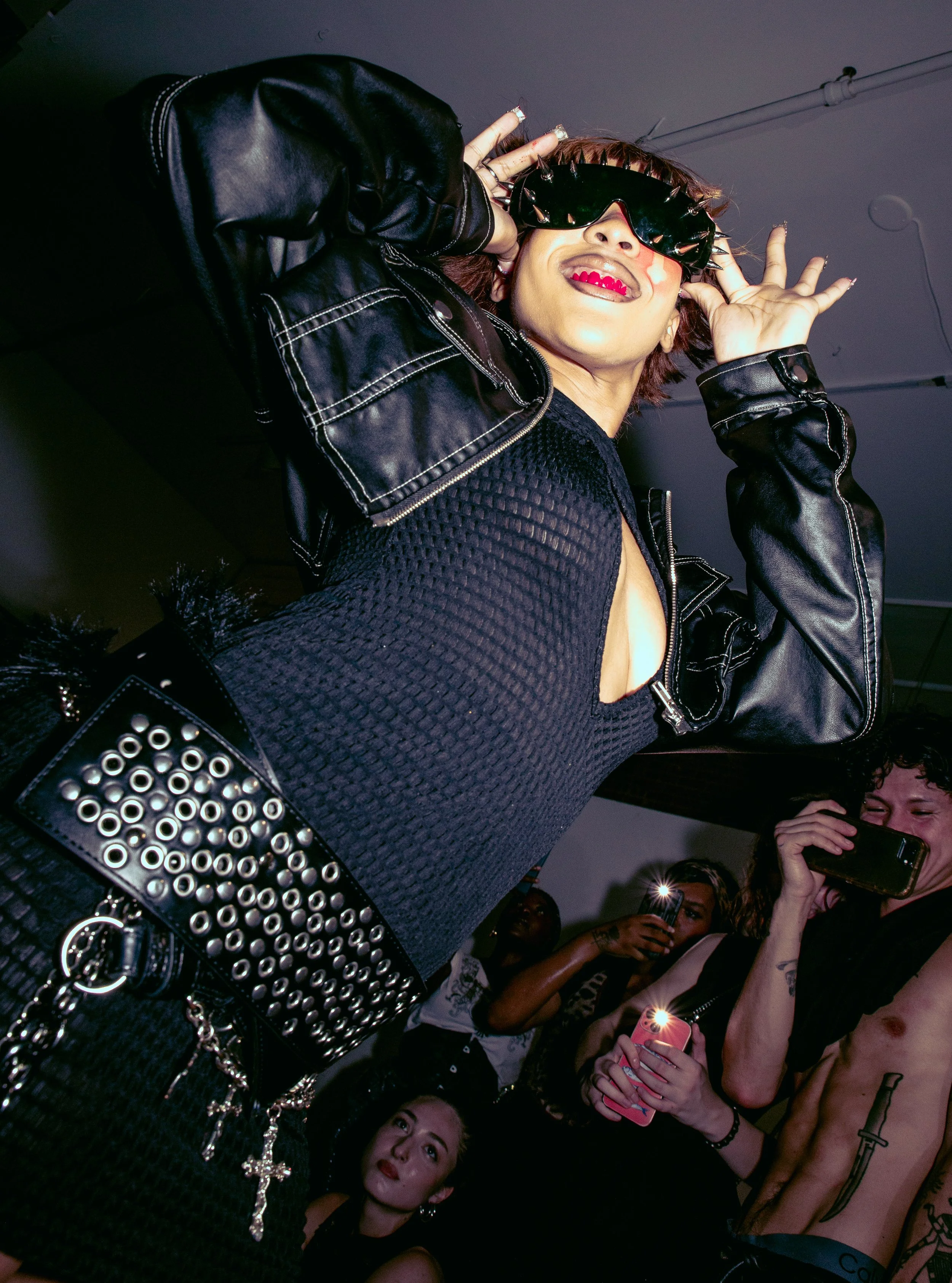
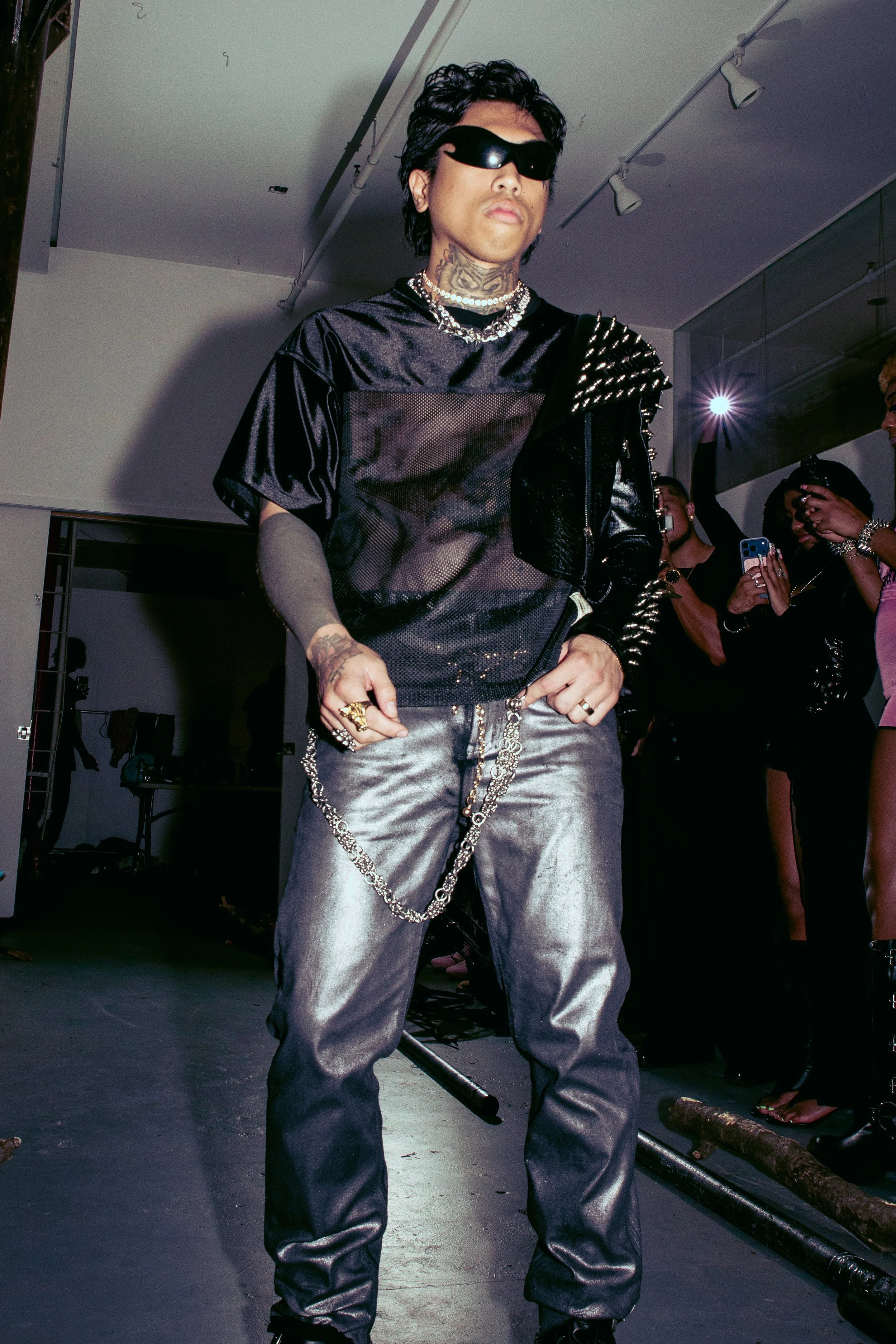
Budah’s aesthetic is a brutalist iteration of urban survivalism, a vision forged in Chicago, a city he refers to as "Tartaria." This reference to a forgotten, mysterious empire mirrors his own trajectory: a self-taught creator emerging from the shadows of the Midwest to disrupt the established orbits of New York and Paris.
The collection leaned into an absolute chromatic discipline — black, white, and silver, with gold strictly persona non grata — and the silver-heavy hardware, amplified by a high-key Playboi Carti influence, gave the collection a jagged, electric energy. The silhouettes ran on Budah's "Industrial Manifesto": motorcycle brutalism, with garments that felt like armor iterating on the speed and danger of the open road; nighttime utility, a wardrobe built for the high-contrast shadows of the city; and leather hegemony, an obsessive, multi-layered reliance on leather as the foundational medium.
Styling subverted traditional luxury tropes through a DIY lens, the runway was heavy on hardware and aggressive layering. Contrasting black-and-white vests were double-layered for structural depth, while "FSHN" branding was inescapable, printed across giant skirts that pushed the limits of traditional proportions. In a display of grassroots luxury, "sparkly orb" necklaces, repurposed pant chains, were stacked alongside heavy silver necklaces, and silver shoulder pads extended down the forearms for a robotic, elongated silhouette.
The show also embraced a bare-feet aesthetic, a deliberate subversion of runway footwear, seen on Margaret Qualley's viral Chanel moment. Most disruptive of all was the one-arm leather jacket styling, a clear echo of Demna Gvasalia's A/W 2016 Balenciaga collection, and the look was an immediate hit; by the time the final walk ended, the audience was already mimicking the off-kilter drape on their way out into the night.
Designer and Event Producer, Budah built his brand and community through sheer resourcefulness. Lacking traditional industry connections, he networks through the underground circuits of New York, LA, and Miami, driven by the ultimate insurgent's creed: "I'm gonna make it... and hopefully I make it better."
Halfway Corporate: The Architecture of Poverty
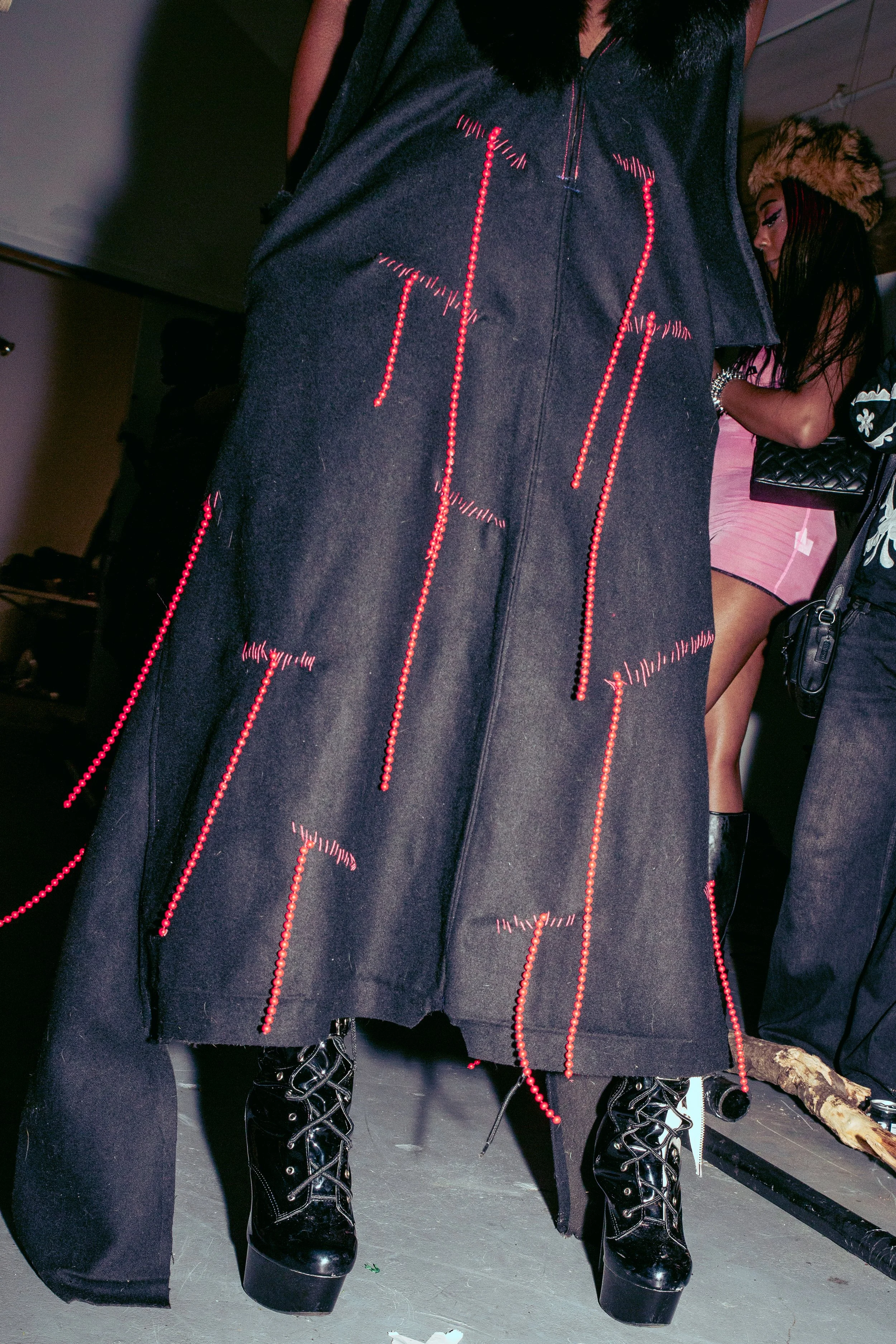
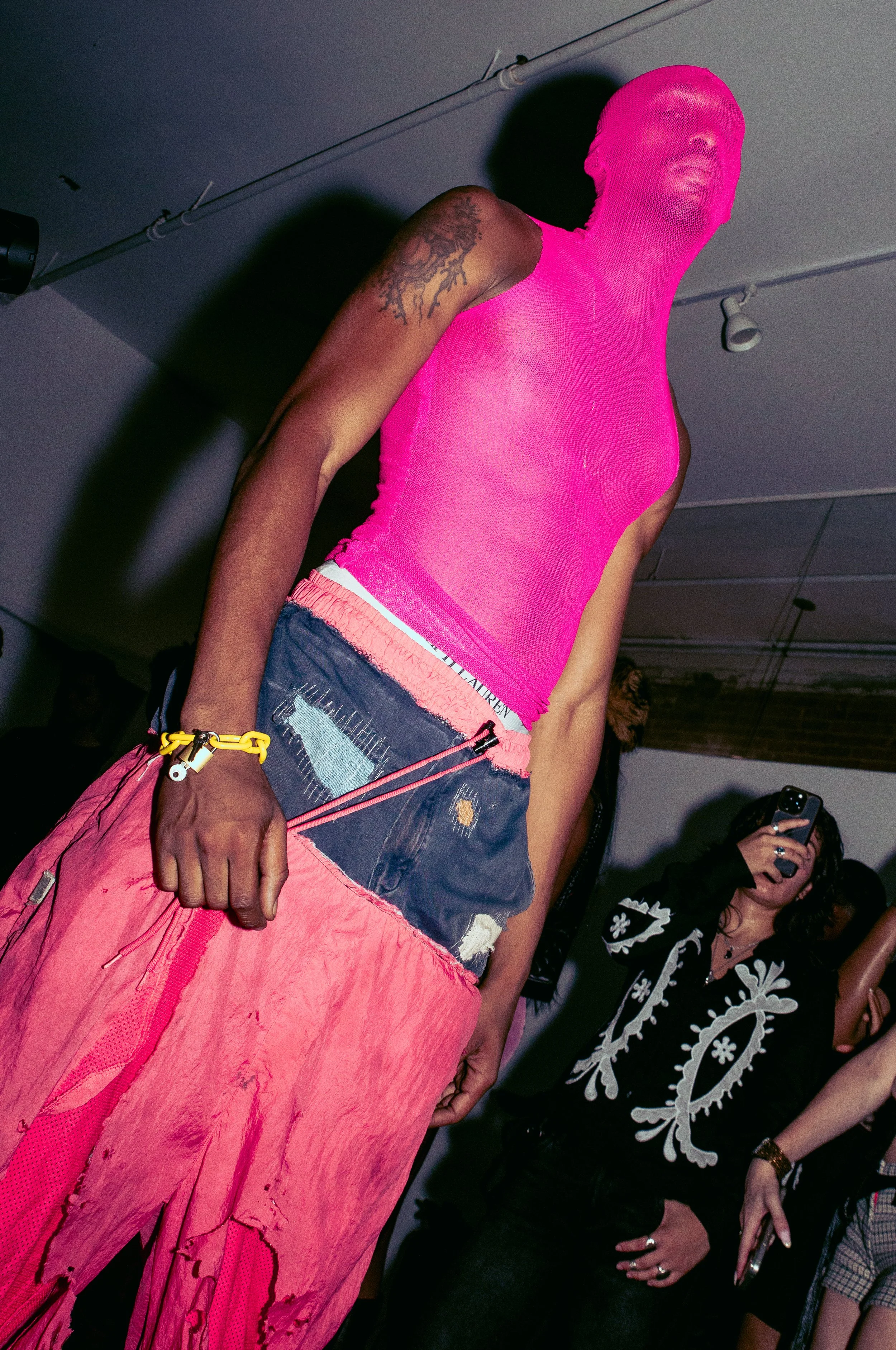
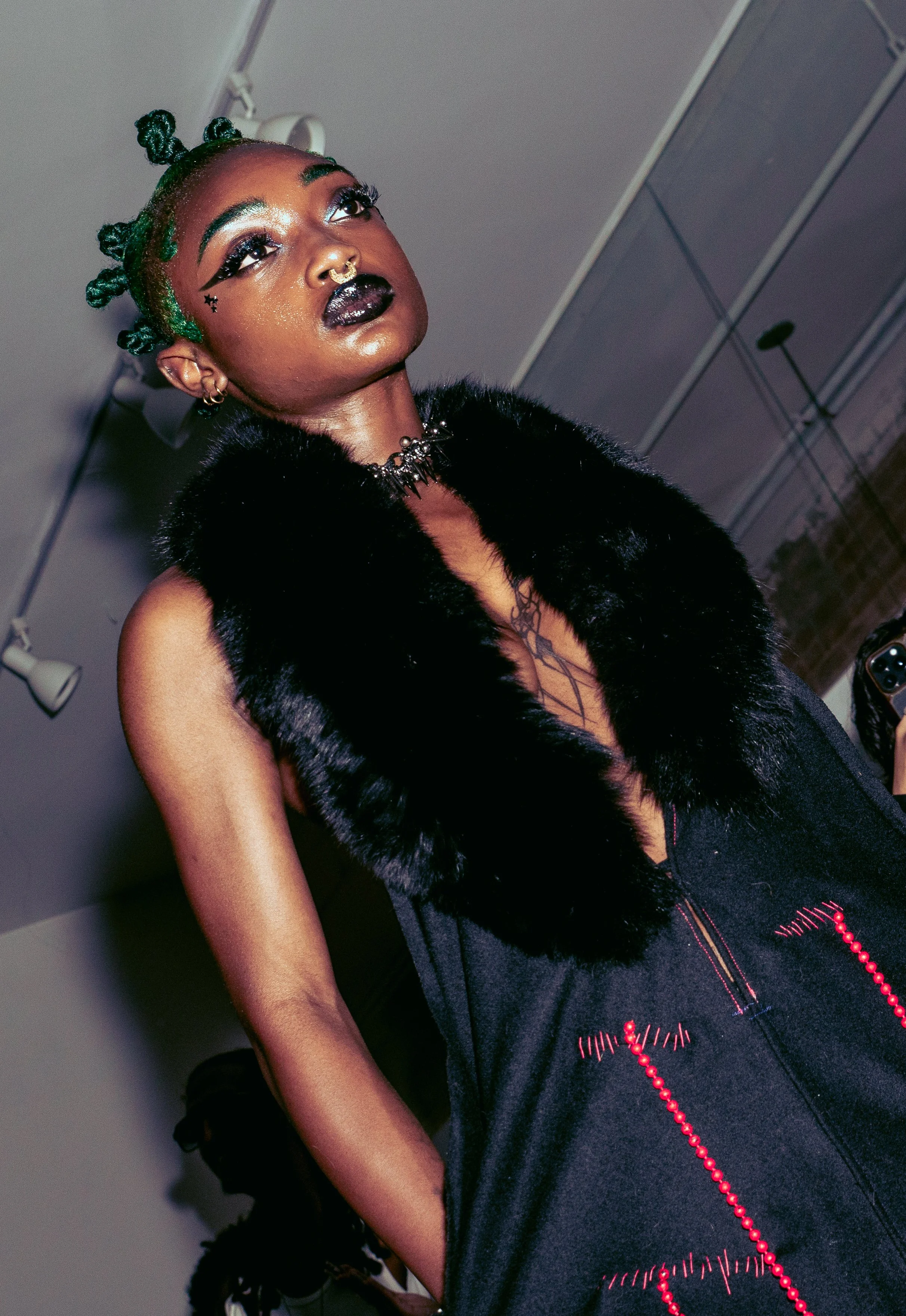
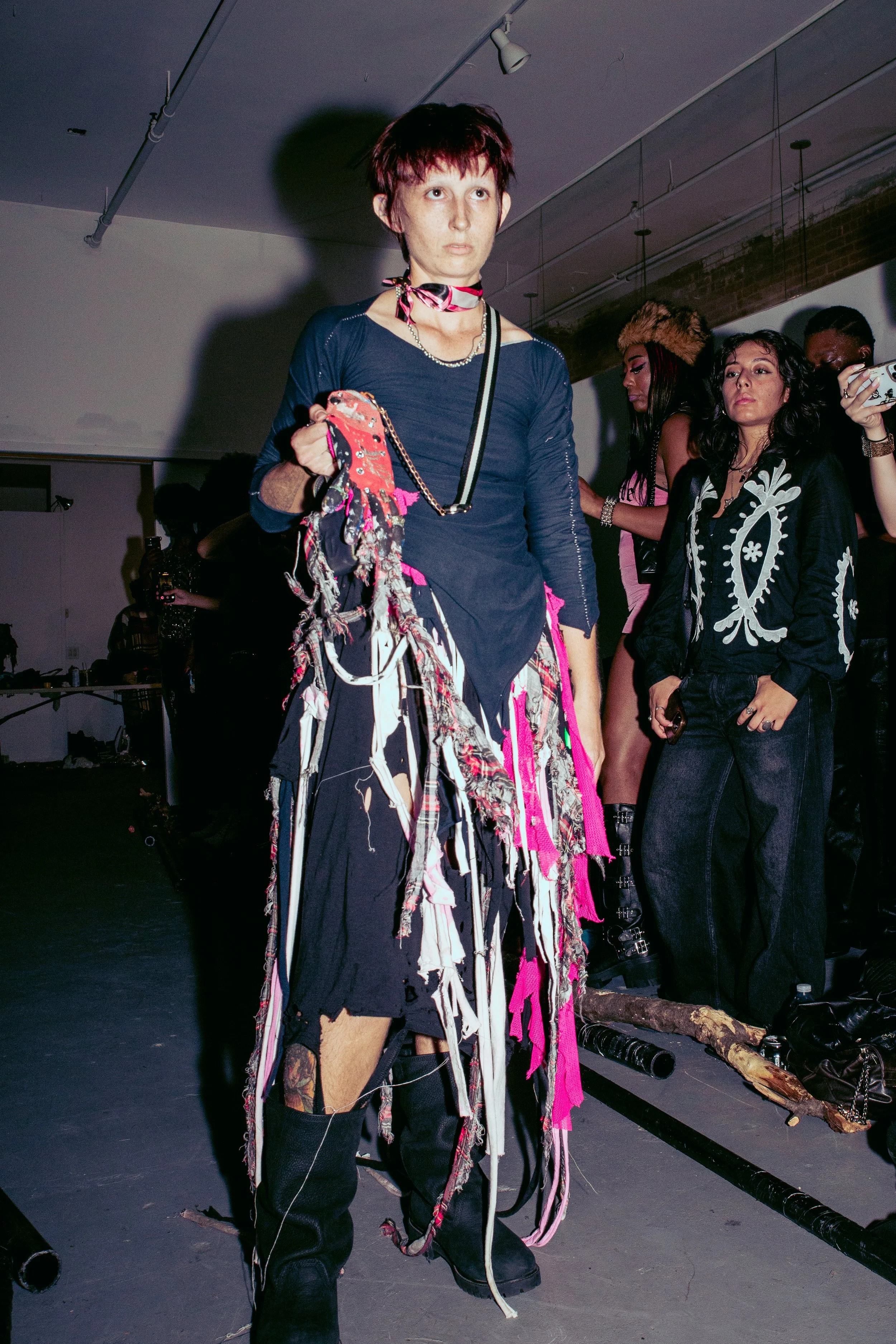
Contrasting Budah’s silver-slick industrialism is the philosophical grit of Halfway Corporate. Their ethos, "poverty turned into quiet luxury" isn't a marketing gimmick; it's a lived reality.
Growing up in the Bronx, Halfway began distressing jeans out of financial necessity, a survival tactic that evolved into a formal obsession with garment construction, and he defines fashion as "wearable architecture," a perspective shaped by a collaborative relationship and modeling history with Telfar. Like Telfar, he treats upcycling not as a trend but as a mandatory practice for the new guard, elevating repurposed textiles into a high-luxury context.
Halfway Corporate’s collection, Limera, representing "chimera, but alive.” explores the human-animal dichotomy — a commentary on the lies we tell about our own nature, suggesting that the line we draw between ourselves and the animal kingdom is a fallacy. The silhouette traces his own professional evolution, from personal utility, making clothes he'd wear himself, to objective "wearable architecture" intended for a broader, more artistic stage. By blending human and animal parallels, the collection critiques how society views poverty as "less than," transforming markers of financial struggle — distressed fabrics, worn textures — into quiet luxury.
The collection opened with a quilted, patchwork piece built from patterned fabrics, paired with a flag rendered in a matching but differently colored plaid, an early signal of the push-and-pull between unity and variation that ran through the whole show. From there it swung into more outstanding territory: models in pink morphsuits gave the lineup a jolt of unexpected color and texture against the Bronx-grit backdrop, while another look, worn with long sleeves, had its model posing as if distressed, wearing the garment's wear-and-tear almost like a performance of the fabric's own history.
Elsewhere, pieces were patchworked together from different plaid scarf fabrics, one pattern echoing the classic Burberry check. A related look carried that same patchwork treatment into the pants, paired with a cropped jacket and oversized shoulder pads. The collection included something quieter with two dresses that appeared to have been held together loosely, as if barely assembled, styled with the same bare-feet look, a stripped-down, grounded counterpoint to the more constructed pieces before them. The closing look stood out the most, an onyx fur-lined dress with red beaded strings swaying in sync with the model’s strut.
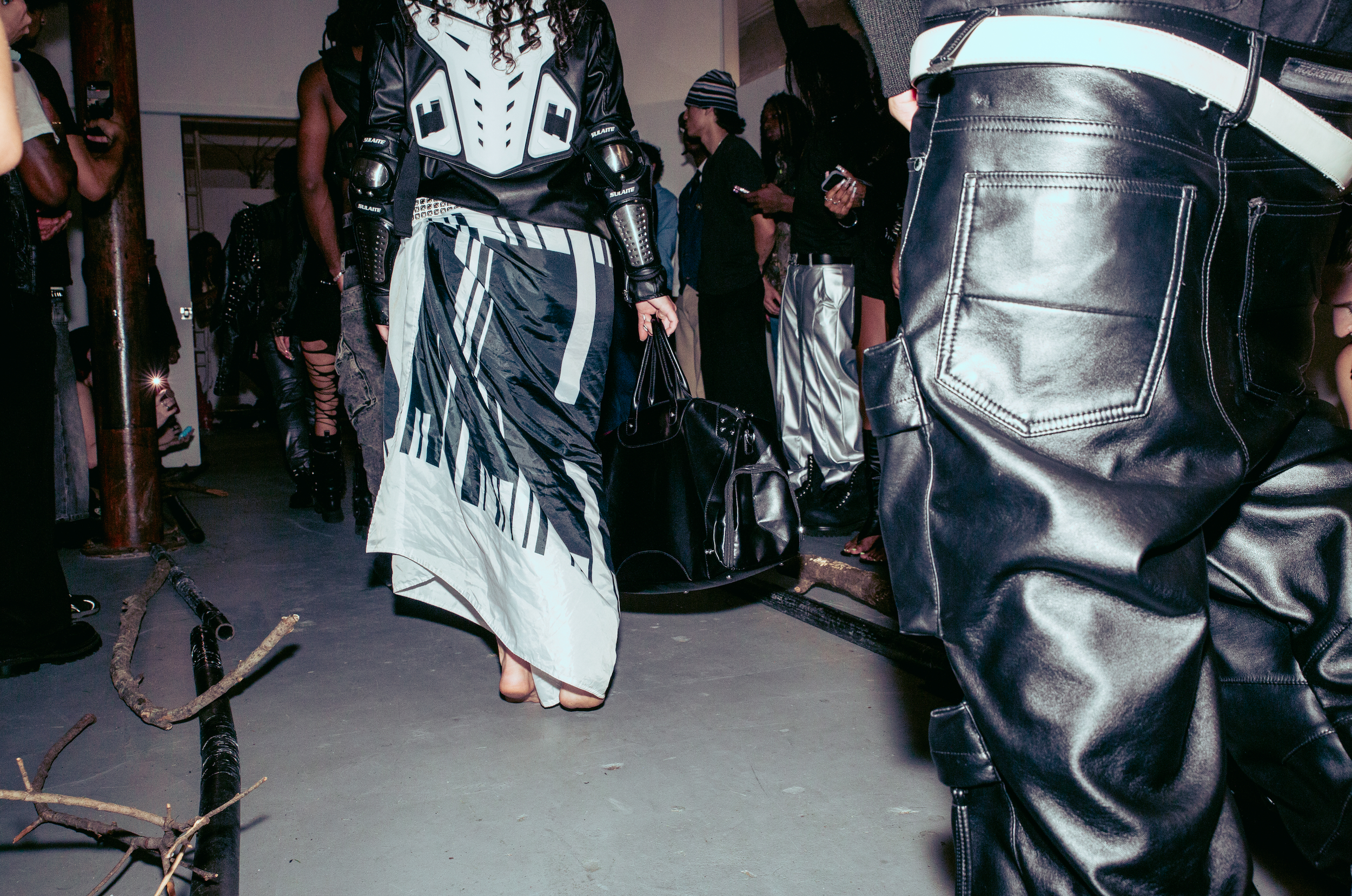
The FSHN FEAT event was defined by a level of hands-on creative direction rarely seen at larger NYFW shows. These designers functioned as their own stylists, sound engineers, and lighting technicians—managing strobe lights and environmental conditions to ensure their vision remained unmediated. This total control over the "runway mechanics" translated into a specific set of styling trends that immediately resonated with the audience.
Budah’s closing advice serves as the manifesto for this new era: "If you want to get into designing, just keep designing. Don't quit."
By proving that the only limit to one’s existence is the size of the box they place themselves in, these designers have redefined the "industrial edge" for a new generation. This is more than a runway show; it is the democratization of the atelier and the birth of a self-taught mandate that is reshaping the high-fashion landscape one leather layer at a time.
All photos by Lucía Araujo.